Mesocricetus newtoni
Romanian Hamster (Mesocricetus newtoni)
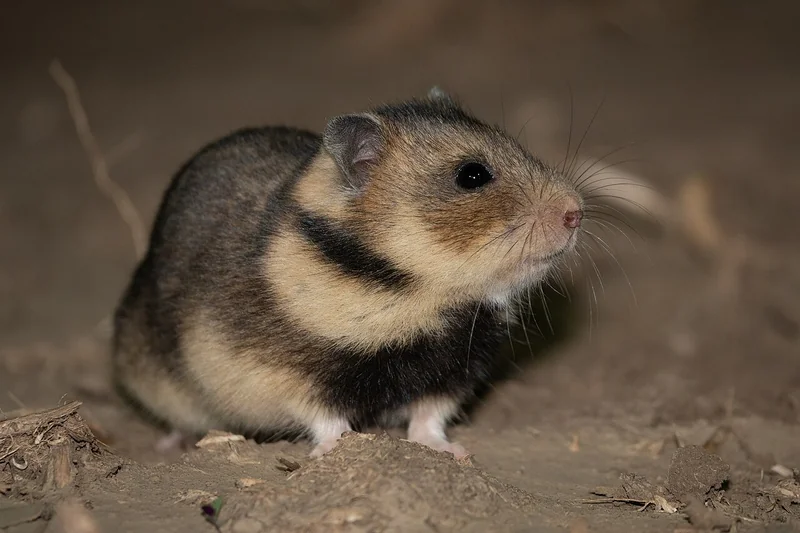 Featured photoromanian-hamster.jpg
Mesocricetus newtoni, the Romanian or Dobrudja hamster, is a small Mesocricetus species native to the steppe and agricultural landscapes between the lower Danube and the western Black Sea coast. Adults reach 13 to 17 cm — the smallest member of the genus. The wild range is restricted to parts of southern Romania and northern Bulgaria, and the IUCN Red List assesses the species as Near Threatened due to habitat loss from intensive agriculture.
Quick facts
- Lifespan
- 1.5–2.5 years
Overview
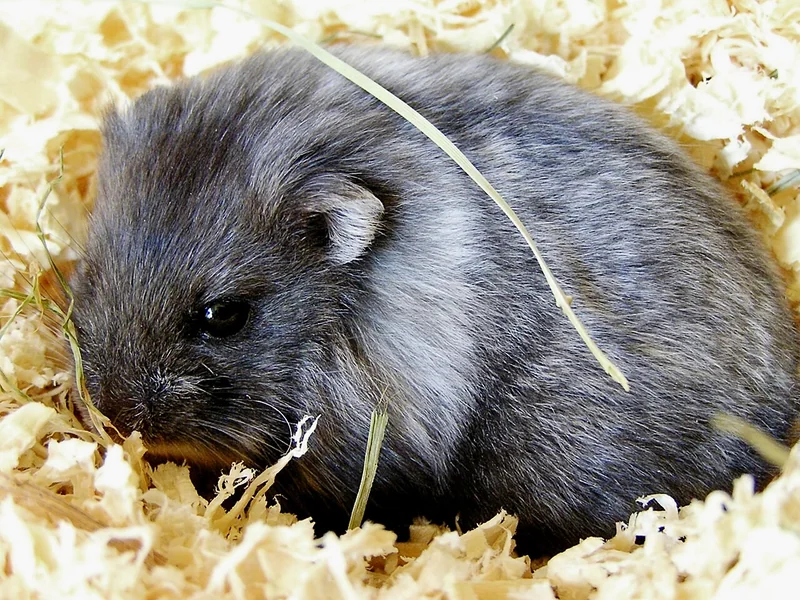
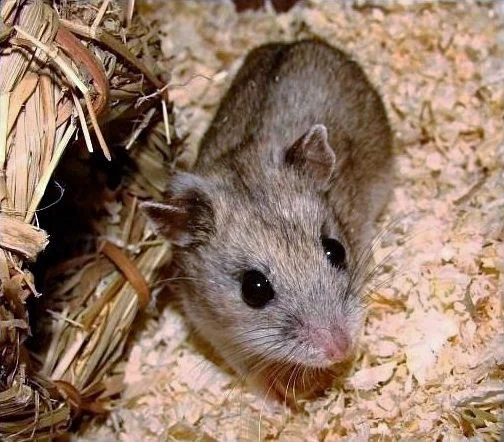
Mesocricetus newtoni resembles a smaller, paler version of M. auratus. The dorsal coat is buff-grey with a slightly darker dorsal stripe; the belly is grey-white rather than the contrasting white of the Syrian. The species is named after the British zoologist Alfred Newton.
Distribution
The wild range covers the Dobrudja steppe of southeastern Romania and northeastern Bulgaria, with disjunct records reaching the western Black Sea coast. Habitat is open dry grassland and grain-field margin. The IUCN Red List assesses the species as Near Threatened on account of agricultural intensification through the range.
Behaviour
Solitary and crepuscular. The species hibernates from late autumn through early spring in deep burrow systems. Caching behaviour is pronounced — autumn larders of cereal grain can exceed several kilograms in a single burrow, contributing to the agricultural-pest perception in some parts of the range.
Conservation
The population trend is declining. Agricultural intensification, ploughing of margin habitat, and rodenticide use all reduce wild density. The species is listed in Annex II of the EU Habitats Directive, requiring Special Areas of Conservation across the wild range.
Sources & further reading (2)
- iucn-red-list — accessed 2026-04-29
- encyclopedia — accessed 2026-04-29
Frequently asked questions
Why is the Romanian hamster considered threatened?
Habitat loss from intensive cereal agriculture in southern Romania and northern Bulgaria is the principal driver. Rodenticide use and ploughing of marginal grassland reduce burrow density across the range; the IUCN Red List lists the species as Near Threatened.
Where does the name come from?
The species was described in 1898 by Walther Nehring and named after Alfred Newton, a British zoologist who held the chair of comparative anatomy at Cambridge and was a founding figure of European ornithology and mammalogy.
How does the Romanian compare to other Mesocricetus?
Mesocricetus newtoni is the smallest of the four species in the genus. It carries a paler, less contrasting coat than the larger M. auratus and M. brandti, and it occupies a more western and lowland range than its eastern relatives.