Mesocricetus raddei
Ciscaucasian Hamster (Mesocricetus raddei)
 Featured photociscaucasian-hamster.jpg
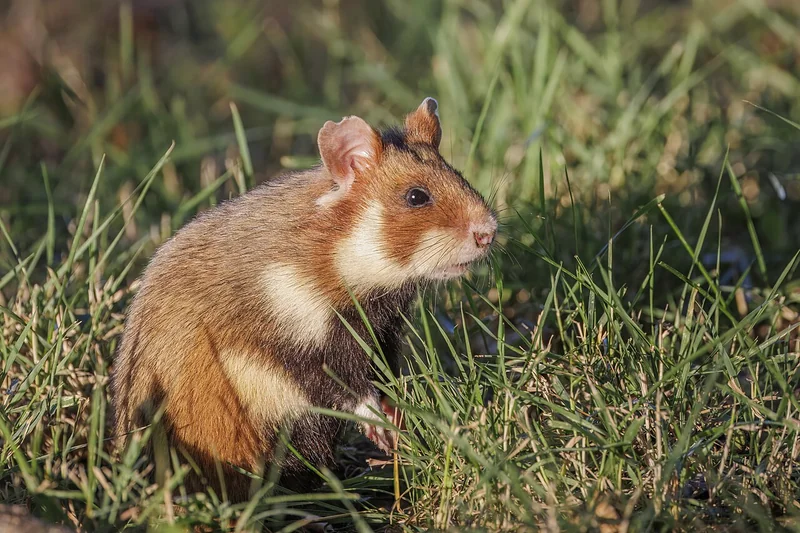
Mesocricetus raddei, the Ciscaucasian or Caucasian hamster, is a large Mesocricetus species native to the steppe and foothill habitats of the Greater Caucasus. Adults reach 16 to 28 cm, making this the largest member of the genus. The species hibernates for up to six months a year in deep multi-chambered burrows that may extend more than two metres below ground. The IUCN Red List assesses the species as Least Concern.
Quick facts
- Lifespan
- 2–3.5 years
Overview
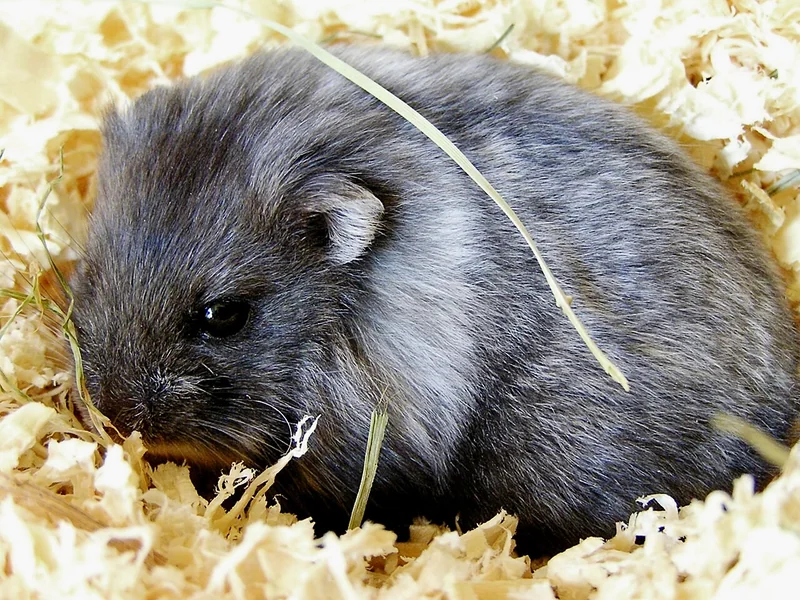
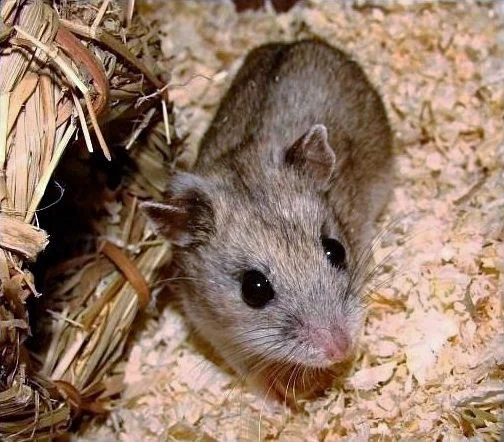
Adults are heavy-bodied, with a coat that is buff-grey above and a sharply contrasting black belly. The species is named after the German naturalist Gustav Radde, who collected widely in the Caucasus during the late nineteenth century. Cheek pouches are exceptionally well developed.
Distribution
The wild range covers the steppe and foothill belts north of the Greater Caucasus, from the Russian Stavropol Krai through Kalmykia to the Kuban steppes and parts of Dagestan. Habitat is open dry grassland and grain-field margin between sea level and 1500 m elevation.
Behaviour
Solitary and crepuscular. Hibernation extends from October through March or April depending on elevation and is preceded by an autumn caching frenzy that can stockpile more than ten kilograms of grain in a single burrow. Burrow architecture includes separate larder, nest, and waste chambers.
Conservation
The population trend is stable across most of the wild range despite localised decline in heavily farmed areas. The species is more tolerant of agricultural landscapes than the smaller M. newtoni, and remains widespread.
Sources & further reading (2)
- iucn-red-list — accessed 2026-04-29
- encyclopedia — accessed 2026-04-29
Frequently asked questions
How big does the Ciscaucasian hamster get?
Adults reach 16 to 28 cm in body length and may exceed 700 g in pre-hibernation condition, making Mesocricetus raddei the largest species of the genus and one of the largest hamsters worldwide.
How long does the species hibernate?
Hibernation extends from October through March or April — up to six months a year, depending on elevation and winter severity. The species fattens heavily in autumn and stockpiles grain in dedicated burrow chambers.
Where is Mesocricetus raddei found?
The Ciscaucasian foothills and steppes north of the Greater Caucasus, principally across the Russian Stavropol Krai, Kalmykia, the Kuban basin, and parts of Dagestan. Habitat is open dry grassland and grain-field margin.