Phodopus campbelli
Campbell's Dwarf Hamster (Phodopus campbelli)
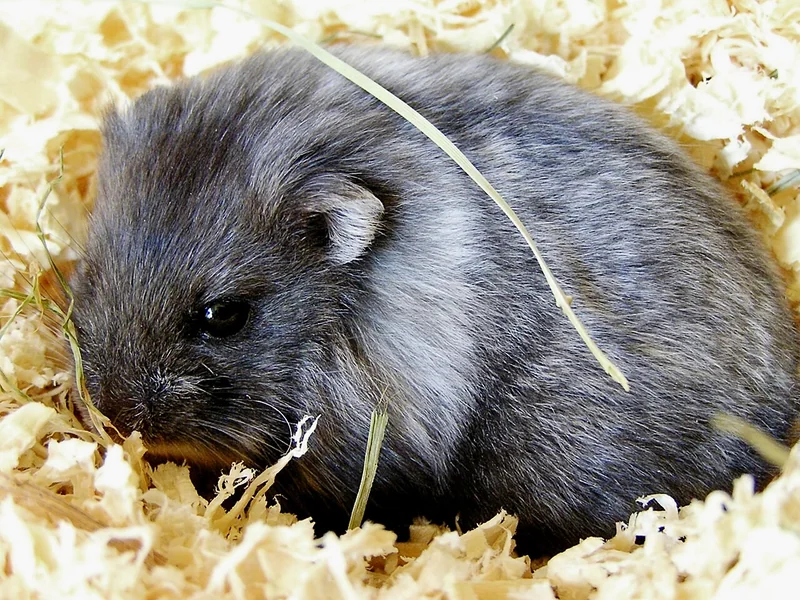 Featured photocampbells-dwarf-hamster.jpg
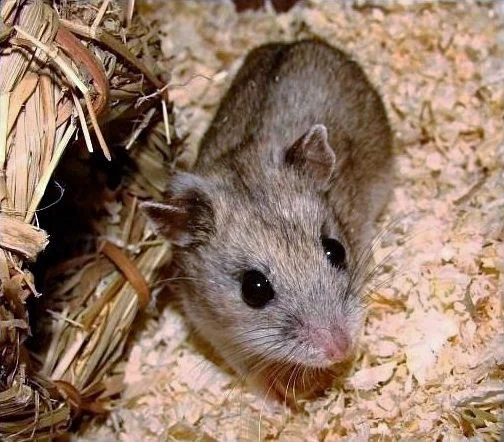
Phodopus campbelli is a small dwarf hamster of the Mongolian and northern Chinese steppes, named after the British zoologist Charles William Campbell who collected the type specimen in 1902. The species is a sister taxon to Phodopus sungorus and was historically lumped with it; modern mammal taxonomies treat the two as separate species. Coat colour stays grey through winter — campbelli does not undergo the seasonal moult to white that defines its sibling species.
Quick facts
- Lifespan
- 1.5–2.5 years
Overview
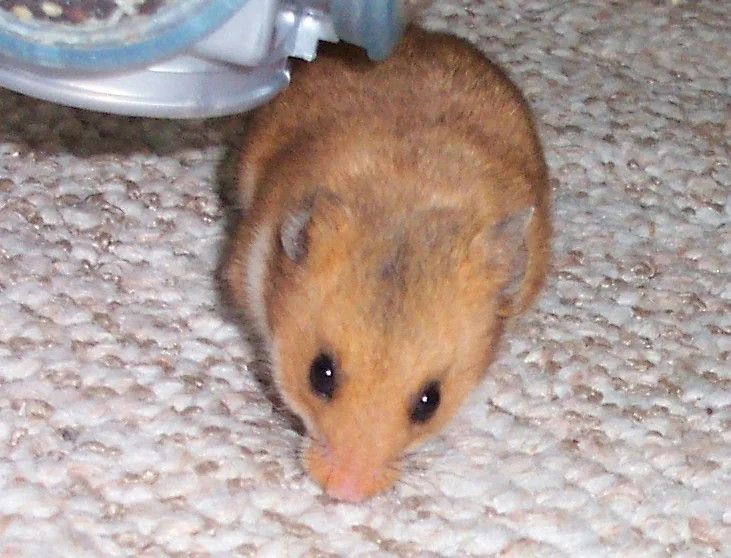
Phodopus campbelli measures eight to ten centimetres as an adult and weighs 20 to 25 grams. The dorsal coat is grey-brown with a distinct darker dorsal stripe; the underside is white and the foot pads are densely furred — an adaptation to walking on cold steppe substrate. Eye colour is dark in the wild form, in contrast to the occasional ruby-eyed lines bred from related species.
Distribution
The wild range covers Mongolia, the Trans-Baikal region of Russia, and the Heilongjiang and Inner Mongolia provinces of northern China. The IUCN Red List assesses the species as Least Concern: the steppe habitat is large and the wild population is widespread, though precise density estimates are not available.
Behaviour
Crepuscular more than strictly nocturnal — wild Phodopus campbelli are typically active at dusk and again before dawn. The species digs shallow burrow systems with multiple entrances and is among the more sociable hamsters in the wild, with overlapping home ranges sometimes shared between siblings outside the breeding season.
Taxonomy
Campbell's dwarf and the winter white (Phodopus sungorus) were treated as a single species through much of the twentieth century. Karyotype work and modern molecular phylogenies confirmed them as distinct species that diverged in the late Pleistocene. The two are interfertile in captivity, but hybrid offspring show reduced fitness.
Sources & further reading (2)
- iucn-red-list — accessed 2026-04-29
- encyclopedia — accessed 2026-04-29
Frequently asked questions
Are Phodopus campbelli and Phodopus sungorus the same species?
No. They are sister species that share a recent common ancestor and were historically lumped into a single taxon. Karyotype work and molecular phylogenies confirm them as distinct species; they remain interfertile in captivity, but hybrid offspring show reduced fitness.
Where does the species' name come from?
Phodopus campbelli was named after the British zoologist Charles William Campbell, who collected the type specimen in 1902 during travel in Mongolia. The genus name Phodopus comes from the Greek phodos (boil or pustule) plus pous (foot), a reference to the soles' rounded fur pads.
Why does the coat stay grey in winter?
Phodopus campbelli lacks the photoperiod-driven seasonal moult that produces the near-white winter coat in the sister species Phodopus sungorus. The grey-brown dorsal coat with darker stripe persists year-round across the wild range.