Canis lupus familiaris
Portuguese Sheepdog
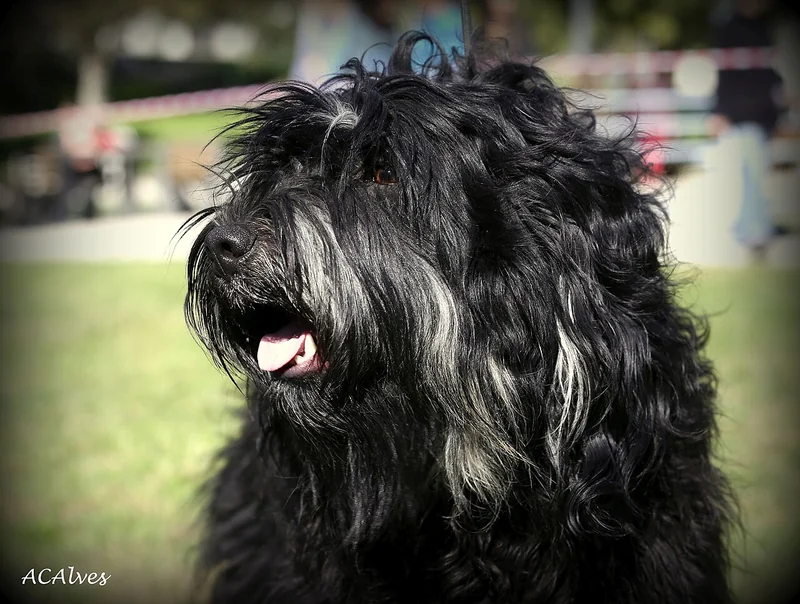 Featured photoportuguese-sheepdog.jpg
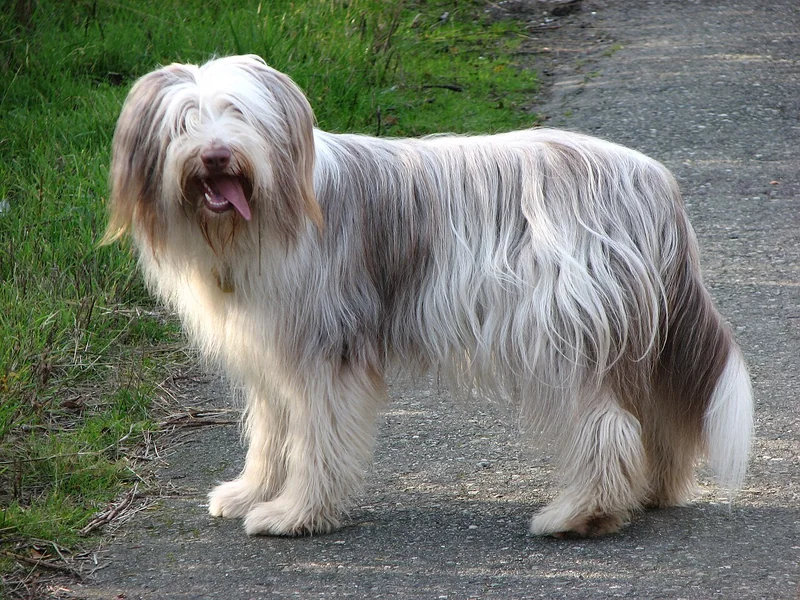
The Portuguese Sheepdog is a medium-sized, long-coated Portuguese herding dog native to the Serra de São Mamede and Alentejo mountain regions of central Portugal, used since at least the 13th century as a sheep and goat herder. The breed has a distinctive flat-faced, goat-like expression from its abundant moustache and beard. The FCI registers it as No. 93 under Portugal's patronage. Males stand 45–54 cm.
Quick facts
- AKC group
- Herding
- Origin country
- Portugal
- Origin period
- Medieval, standardised 20th century
- Coat type
- Long
- Coat colors
- Yellow, Chestnut, Grey, Fawn, Black, Wolf-grey, Bi-colour with White
- Average lifespan
- 12-13 years
- Recognition
- FCI 1954 · Group 1 — Sheepdogs and Cattledogs (Section 1: Sheepdogs)
Origin
The Cão da Serra de Aires ('Dog of the Serra de Aires') is named for the Serra de São Mamede and its surrounding highlands in the Alentejo province of central Portugal, where the breed was the traditional working dog of mixed sheep and goat flocks. Its ancestry is linked to the broader group of long-coated Iberian herding dogs, and some Portuguese authorities have suggested a connection to the Briard introduced by the Conde de Castro Guimarães in the early 20th century, though this is debated. The breed's informal nickname 'Macaco' (monkey) is a reference to the flat, expressive face framed by its abundant beard, moustache, and eyebrows, which resembles a primate's face.
Recognition
The Clube Português de Canicultura standardised the breed, and the FCI registered the Portuguese Sheepdog under standard No. 93 in 1954, assigning it to Group 1, Section 1 (Sheepdogs) with Portugal as patron country. The breed is one of seven officially recognised Portuguese breeds. It is not recognised by the AKC or UKC. The breed remains used as a working herding dog in the Alentejo and has also become a companion and show dog in Portugal and neighbouring countries.
Standard
The FCI standard describes a medium-sized, slightly longer-than-tall dog with a round, slightly domed skull, a short, wide, deep muzzle, and large, round, dark eyes. The abundant, long, wavy coat covers the entire body including the face, forming a full beard, moustache, and eyebrows that give the breed its characteristic monkey-like expression. No undercoat is present. All colours are accepted except white — common colours include yellow, chestnut, grey, fawn, black, wolf-grey, and bi-colour with white. Males stand 45–54 cm and weigh 12–18 kg.
Sources & further reading (3)
- fci-standard — accessed 2026-05-27
- encyclopedia — accessed 2026-05-27
- kennel-club-registry — accessed 2026-05-27
Frequently asked questions
Why is the Portuguese Sheepdog called 'Macaco'?
The informal nickname 'Macaco' (Portuguese for monkey) refers to the breed's distinctive flat facial expression created by its abundant beard, moustache, and overhanging eyebrows. These facial features, combined with the round, dark eyes and short muzzle, give the dog a primate-like appearance that has earned it this affectionate if unusual nickname among Portuguese shepherds.
Is the Portuguese Sheepdog AKC recognised?
The Portuguese Sheepdog (Cão da Serra de Aires) is not recognised by the AKC or UKC. The FCI has recognised the breed since 1954 under standard No. 93, with Portugal as patron country. The breed is one of seven officially recognised Portuguese dog breeds.
What is the Portuguese Sheepdog used for?
The Portuguese Sheepdog was developed as a herding dog for the mixed sheep and goat flocks of the Alentejo highlands in central Portugal, a region where herding was traditionally done on foot over mountainous terrain. The breed drives and controls the flock through intelligent, independent herding behaviour. Today it is still used as a working herder in some areas, and has become a companion and show dog nationally.