Canis lupus familiaris
Majorca Shepherd Dog
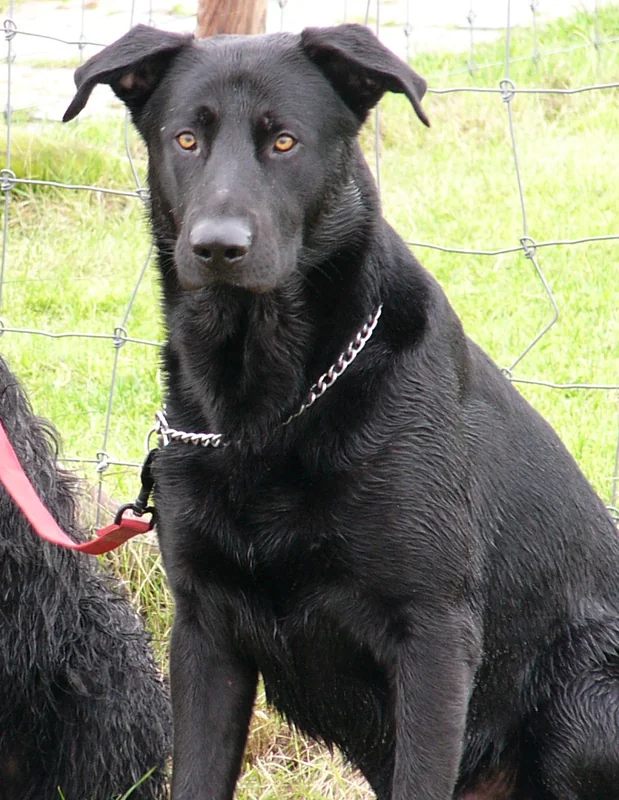 Featured photomajorca-shepherd-dog.jpg
The Majorca Shepherd Dog is a medium-large, predominantly black herding and guarding dog native to the island of Majorca (Mallorca) in the Spanish Balearic Islands, used since the Moorish occupation (902–1229 AD) as a sheep drover and estate watchdog. The breed exists in long and short coat varieties. The FCI registers it as No. 321 under Spain's patronage. Males stand 62–69 cm.
Quick facts
- AKC group
- Herding
- Origin country
- Spain (Majorca / Balearic Islands)
- Origin period
- Medieval, documented from Moorish period
- Coat type
- Short
- Coat colors
- Black, Black with White Marking on Chest (permissible)
- Average lifespan
- 11-13 years
- Recognition
- FCI 1982 · Group 1 — Sheepdogs and Cattledogs (Section 1: Sheepdogs)
Origin
The Majorca Shepherd Dog's origins on the island of Majorca are traced to the period of Moorish occupation (902–1229 AD), during which the island's agriculture and livestock economy were substantially developed. The breed was the standard working dog of Mallorcan farms: it drove sheep to and from pasture, guarded estates from intruders, and assisted with various farm tasks. After the Christian Reconquista of Majorca in 1229, the breed continued in the same roles under the new Aragonese and later Spanish administration. Its isolation on the island and specialised breeding for working utility produced a genetically distinct population.
Recognition
The Real Sociedad Canina de España standardised the breed in the 1970s, and the FCI registered the Majorca Shepherd Dog under standard No. 321 in 1982, classifying it in Group 1, Section 1 (Sheepdogs) with Spain as patron country. The breed is maintained primarily on the Balearic Islands and in mainland Spain. It is not recognised by the AKC or UKC. The breed exists in two coat varieties — short-haired (short, dense) and long-haired (medium length, straight) — which compete in separate classes at FCI shows.
Standard
The FCI standard describes a large, well-proportioned, slightly longer-than-tall dog with a broad, slightly domed skull, a moderately long, strong muzzle, and medium-sized, oval, dark amber or hazel eyes. The colour is predominantly black — both short-haired and long-haired varieties are always black; a small white marking on the chest is permissible but not preferred. Males stand 62–69 cm; females 58–66 cm, weighing 30–40 kg.
Sources & further reading (3)
- fci-standard — accessed 2026-05-27
- encyclopedia — accessed 2026-05-27
- kennel-club-registry — accessed 2026-05-27
Frequently asked questions
What does 'Ca de Bestiar' mean?
The name is in Catalan, the regional language of the Balearic Islands: 'Ca' means dog (from the Latin 'canis'), and 'bestiar' means livestock or cattle. 'Ca de Bestiar' therefore means 'livestock dog'. This name accurately describes the breed's traditional working function as the general-purpose farm dog of Mallorcan agriculture, used for herding, guarding, and driving livestock.
Is the Majorca Shepherd Dog AKC recognised?
The Majorca Shepherd Dog is not recognised by the AKC or UKC. The FCI has recognised the breed since 1982 under standard No. 321, with Spain as patron country. The breed is maintained primarily in the Balearic Islands and Spain.
Is the Ca de Bestiar the same as the Ca de Bou?
No. The Ca de Bestiar (Majorca Shepherd Dog, FCI No. 321) and the Ca de Bou (Majorca Mastiff / Perro de Presa Mallorquín, FCI No. 249) are two distinct Mallorcan breeds. The Ca de Bestiar is a large, agile herding and guarding dog; the Ca de Bou is a shorter, heavier molosser-type dog that was used historically in bull-baiting. Both originate from Majorca but have very different origins, builds, and traditional working functions.