Canis lupus familiaris
German Pinscher
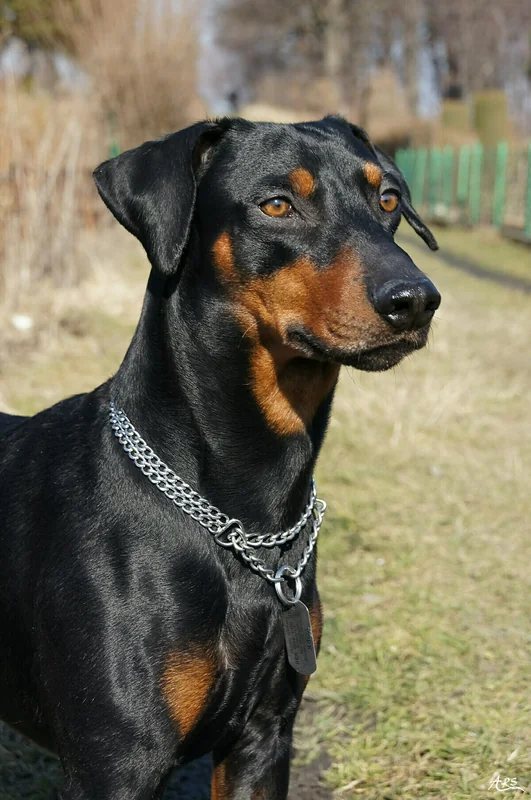 Featured photogerman-pinscher.jpg
The German Pinscher is a medium-sized, smooth-coated German working dog of great antiquity, documented from the early 19th century as a rat catcher, stable guardian, and general farm dog throughout Germany. The breed is the ancestral form from which the Dobermann Pinscher and Miniature Pinscher were developed. The AKC admitted the German Pinscher in 2003 and places it in the Working Group. The FCI registers it as No. 184. Males stand 45–50 cm.
Quick facts
- AKC group
- Working
- Origin country
- Germany
- Origin period
- Early 19th century (standardised 1895)
- Coat type
- Short
- Coat colors
- Black and Tan, Blue and Tan, Isabella and Tan, Fawn (red shades)
- Average lifespan
- 13-15 years
- Recognition
- AKC 2003 · FCI 1955 · UKC 1991 · Group 2 — Pinscher and Schnauzer-Molossoid Breeds, Swiss Mountain and Cattle Dogs (Section 1: Pinscher and Schnauzer type)
Origin
The German Pinscher and the Standard Schnauzer share a common origin in the smooth and wirehaired farm dogs of 18th and 19th-century Germany. Early stud books of the Pinscher-Schnauzer Klub (founded 1895) registered smooth-coated puppies as Pinschers and wire-coated puppies as Schnauzers from the same litters — the coat type, not the parents, determined the entry. The Pinscher type worked on German farms as a rat catcher and stable guardian, a role identical to that of the Schnauzer. The name 'Pinscher' derives from the English or French term for a terrier-type dog, reflecting an early association with earth work and vermin control.
Recognition
The FCI registered the German Pinscher under standard No. 184 in 1955, classifying it in Group 2, Section 1 (Pinscher and Schnauzer type) with Germany as patron country. Post-World War II the breed had nearly disappeared; Werner Jung's revival program in the 1950s–1960s — selectively breeding from four surviving dogs and smuggling additional stock from East Germany — established the modern population. The UKC recognised the breed in 1991 and the AKC granted full Working Group recognition in 2003.
Standard
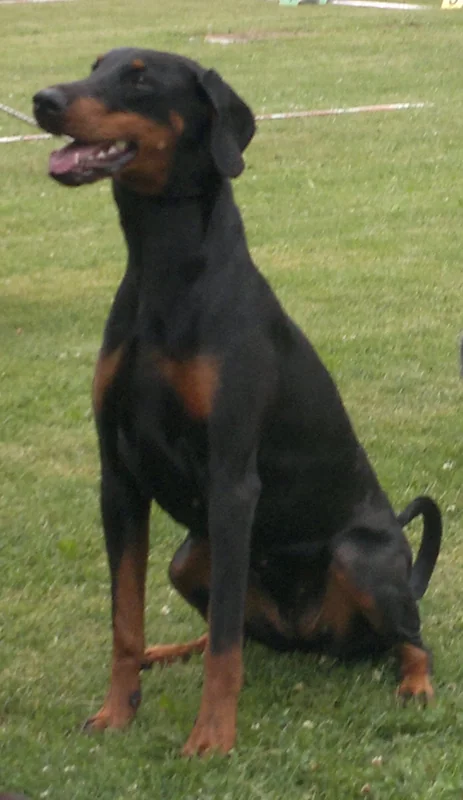
The FCI and AKC standards describe a square-built, elegant, muscular dog with a clean, elongated head, dark oval eyes, and high-set, folded V-shaped ears (natural) or erect cropped ears where permitted. The coat is short, dense, and close-lying with a high gloss. Recognised colours are black and tan, blue and tan, Isabella (fawn-blue) and tan, and solid fawn (red shades from light fawn to stag red). Males stand 45–50 cm; females 43–48 cm. The breed is the ancestral form of the Dobermann (developed from German Pinscher, Rottweiler, Weimaraner, and Manchester Terrier crosses) and the Miniature Pinscher.
Sources & further reading (3)
- kennel-club-registry — accessed 2026-05-27
- encyclopedia — accessed 2026-05-27
- fci-standard — accessed 2026-05-27
Frequently asked questions
Is the German Pinscher related to the Dobermann?
Yes. Karl Friedrich Louis Dobermann used the German Pinscher as one of the primary foundation breeds when creating the Dobermann in the 1880s. He crossed German Pinschers with Rottweilers, Weimaraners, and Manchester Terriers to produce a larger, more imposing guard dog. The German Pinscher and the Dobermann share the same general build, colour patterns (black and tan, red), and clean coat type.
When did the AKC recognise the German Pinscher?
The AKC granted the German Pinscher full Working Group recognition in 2003, after the breed entered the Miscellaneous Class in 2001. The UKC had recognised the breed in 1991 and the FCI in 1955. The breed had nearly gone extinct after World War II and was revived through the efforts of Werner Jung in Bavaria in the 1950s and 1960s.
What is the difference between the German Pinscher and the Dobermann?
The German Pinscher is the ancestral form; the Dobermann was created from German Pinscher crosses in the 1880s and is substantially larger (68–72 cm vs 45–50 cm for the German Pinscher). Both share the same elegant, smooth-coated build and the same colour vocabulary (black and tan, red). The German Pinscher is the FCI Group 2 Section 1 mid-size standard; the Dobermann sits separately in FCI Group 2 Section 1 as a distinct, much larger breed.