Canis lupus familiaris
Finnish Lapphund
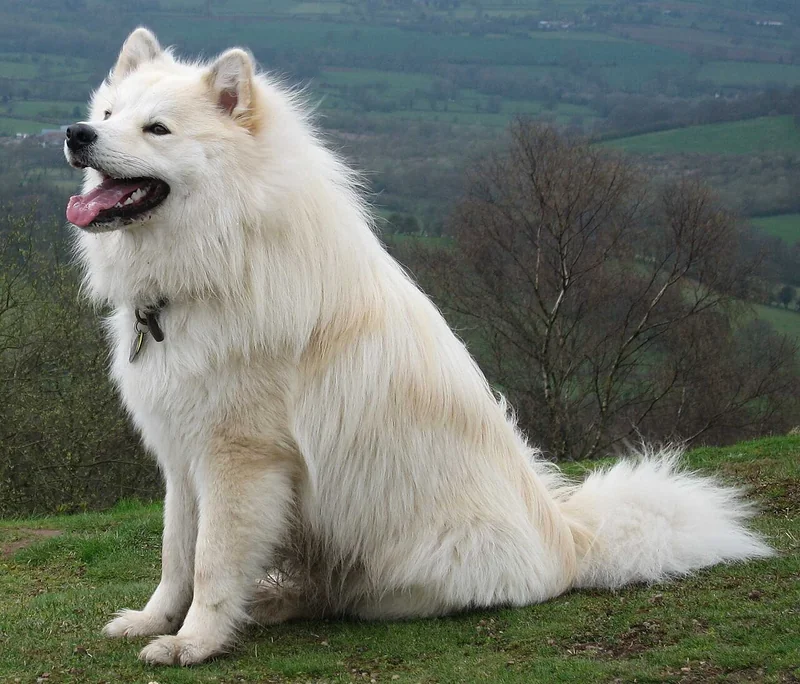 Featured photofinnish-lapphund.jpg
The Finnish Lapphund is a medium-sized Spitz-type herding dog of Lapland, used by the Sámi (Lapp) people of northern Finland, Sweden, and Norway to herd reindeer for thousands of years. The breed has a profuse double coat adapted for Arctic conditions and a calm, friendly disposition developed through long association with the Sámi. The AKC admitted the Finnish Lapphund in 2011 and places it in the Herding Group. The FCI registers it as No. 189. Males stand 46–52 cm.
Quick facts
- AKC group
- Herding
- Origin country
- Finland
- Origin period
- Ancient (standardised 1945)
- Coat type
- Double
- Coat colors
- Any colour permissible as the main colour, Common: Black, Brown, Red, Sable, Cream — with tan, white, or cream secondary markings
- Average lifespan
- 12-15 years
- Recognition
- AKC 2011 · FCI 1954 · UKC 1994 · Group 5 — Spitz and Primitive Types (Section 3: Nordic Watchdogs and Herders)
Origin
The Finnish Lapphund's ancestors were the herding dogs of the Sámi people of Lapland, who have lived in the Arctic regions of Finland, Sweden, Norway, and the Kola Peninsula of Russia since prehistoric times. Archaeological finds of dog remains consistent with Arctic Spitz types in northern Scandinavia date to approximately 5,000–7,000 BC. The Sámi's traditional semi-nomadic reindeer herding depended heavily on their dogs to gather and drive herds. The traditional Sámi dog is smaller and lighter-built than the modern standardised Finnish Lapphund.
Recognition
The Suomen Kennelliitto (Finnish Kennel Club) standardised the Finnish Lapphund in 1945, separating it formally from the Swedish Lapphund. The FCI recognised the breed under standard No. 189 in 1954, classifying it in Group 5, Section 3 (Nordic Watchdogs and Herders) with Finland as patron country. The UKC recognised the breed in 1994. The AKC admitted the Finnish Lapphund to the Herding Group in 2011, after a period in the Miscellaneous Class.
Standard
The FCI and AKC standards describe a medium-sized, sturdy Spitz-type dog slightly longer than tall, with a broad, slightly domed skull, a medium-length muzzle, almond-shaped eyes, and upright, slightly pointed ears. The profuse double coat has a long, straight to slightly wavy outer coat and a dense, soft undercoat. Any colour is permissible as the main colour, though there must always be a secondary colour on the head, chest, legs, and under the tail. Males stand 46–52 cm; females 44–49 cm, weighing 15–24 kg.
Sources & further reading (3)
- kennel-club-registry — accessed 2026-05-27
- encyclopedia — accessed 2026-05-27
- fci-standard — accessed 2026-05-27
Frequently asked questions
When did the AKC recognise the Finnish Lapphund?
The AKC granted the Finnish Lapphund full Herding Group recognition in 2011, after the breed entered the Miscellaneous Class in 2009. The FCI had recognised the breed since 1954 and the UKC since 1994.
What is the difference between the Finnish Lapphund and the Swedish Lapphund?
The Finnish Lapphund and Swedish Lapphund are closely related breeds sharing a common Sámi reindeer-herding ancestry. The Finnish Lapphund (FCI No. 189) tends to be slightly larger and can appear in any colour, while the Swedish Lapphund (FCI No. 135) is traditionally bear-brown or black and slightly smaller. The Suomen Kennelliitto standardised the Finnish variety in 1945 as a distinct breed. Both are FCI Group 5, Section 3.
Are Finnish Lapphunds still used to herd reindeer?
Traditional reindeer herding by dog has largely been replaced by snowmobiles and all-terrain vehicles since the mid-20th century, as motorised transport is faster and more efficient for the large herds kept by modern Sámi families. A small number of traditional herders still use Finnish Lapphunds for close-work herding and rounding up, particularly in areas inaccessible by snowmobile. The breed has transitioned largely to a companion, show, and dog sport role in Finland and internationally.