Canis lupus familiaris
Drentsche Patrijshond
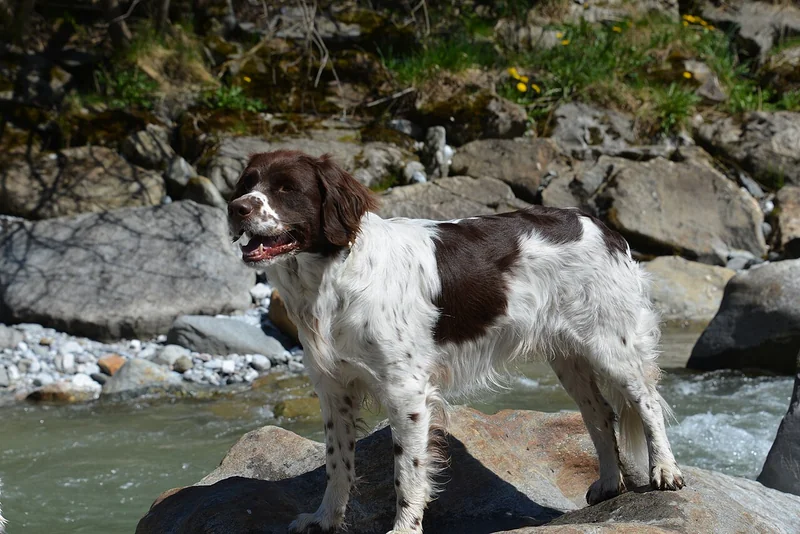 Featured photodrentsche-patrijshond.jpg
The Drentsche Patrijshond is a medium-sized Dutch pointing dog of great antiquity, developed in the province of Drenthe in the northeastern Netherlands from setting spaniels that arrived via France and Spain in the 16th century. The breed is used for pointing, flushing, and retrieving all types of game. The FCI registers it as No. 224; the breed has been recognised by the Canadian Kennel Club and is listed in the AKC Foundation Stock Service. Males stand 57–63 cm.
Quick facts
- AKC group
- Sporting
- Origin country
- Netherlands
- Origin period
- 16th century
- Coat type
- Medium
- Coat colors
- White and Brown, White and Orange, White with Brown or Orange Patches and Ticking
- Average lifespan
- 12-13 years
- Recognition
- FCI 1959 · Group 7 — Pointing Dogs (Section 1.2: Continental Pointing Dogs, Spaniel type)
Origin
The Drentsche Patrijshond takes its name from the Dutch province of Drenthe and 'patrijshond' (partridge dog), its primary quarry. Setting spaniels closely related to the French Épagneul and Spanish Perdiguero reached the Low Countries through trade and aristocratic networks during the 16th century. In Drenthe, these dogs were used by both nobility and ordinary farmers — the region's economic history shows the breed was a working farm and hunting dog rather than an exclusively aristocratic one. Dutch Golden Age paintings by Jan Steen (c. 1650) include dogs with the characteristic white-and-brown coat, pendant ears, and spaniel-type proportions of the modern Drent.
Recognition
The Drentsche Patrijshond Club was founded in 1948 and formalised the breed's standard. The Raad van Beheer (Dutch Kennel Club) and subsequently the FCI recognised the breed in 1959 under standard No. 224, assigning it to Group 7, Section 1.2 (Continental Pointing Dogs, Spaniel type) with the Netherlands as patron country. The breed has been recognised by the Canadian Kennel Club and is listed in the AKC Foundation Stock Service; the UKC and several Scandinavian kennel clubs also recognise the Drent.
Standard
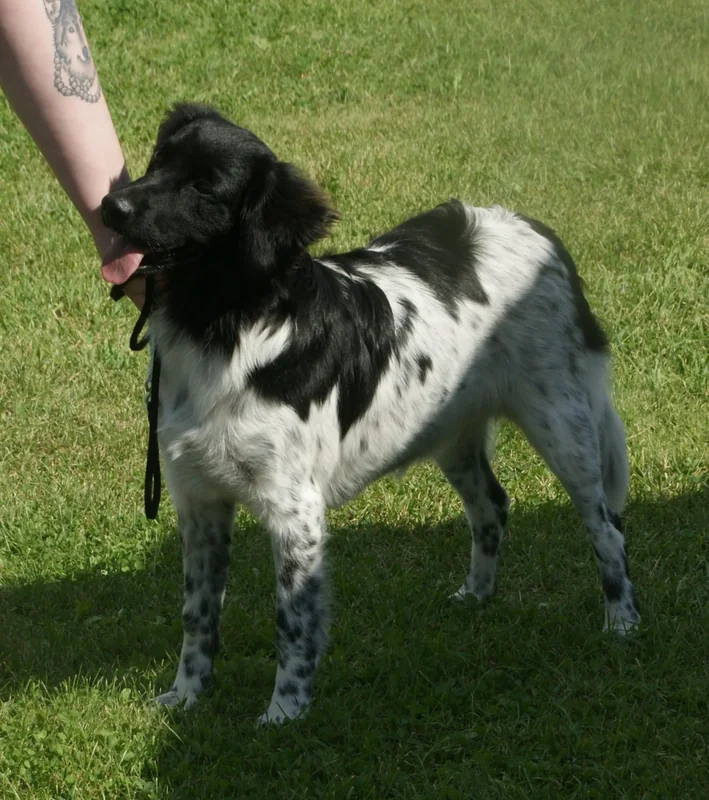
The FCI standard describes a medium-sized, elegant, well-proportioned dog with a slightly longer-than-tall build. The coat is dense, smooth to slightly wavy, and of medium length, with longer hair on the ears, neck, chest, backs of the legs, and tail. The recognised colours are white with brown or orange patches and markings, usually with ticking in the same colour. Males stand 57–63 cm; females 55–60 cm. The breed is known for its working versatility — it points, flushes, and retrieves, and was historically expected to serve as a general farm dog as well.
Sources & further reading (3)
- fci-standard — accessed 2026-05-27
- encyclopedia — accessed 2026-05-27
- kennel-club-registry — accessed 2026-05-27
Frequently asked questions
Is the Drentsche Patrijshond AKC recognised?
The AKC has not granted the Drentsche Patrijshond full recognition; the breed is in the AKC Foundation Stock Service (FSS). The FCI recognised the breed in 1959 as No. 224 with the Netherlands as patron country. The Canadian Kennel Club and several Scandinavian clubs also recognise the breed, and it is particularly popular in the Netherlands as both a hunting dog and companion.
What does 'Drentsche Patrijshond' mean?
The name translates directly from Dutch as 'Drenthe Partridge Dog'. 'Drentsche' refers to the province of Drenthe in the northeastern Netherlands, where the breed developed in isolation. 'Patrijshond' means 'partridge dog', identifying the breed's primary quarry in the flat, agricultural landscape of the region.
What FCI group does the Drentsche Patrijshond belong to?
The FCI assigns the Drentsche Patrijshond to Group 7 — Pointing Dogs, Section 1.2 (Continental Pointing Dogs, Spaniel type), FCI No. 224. The Netherlands is the patron country. The breed is classified alongside other Continental spaniel-type pointers, reflecting its shared ancestry with French and Iberian setting spaniels.