Canis lupus familiaris
Barbet
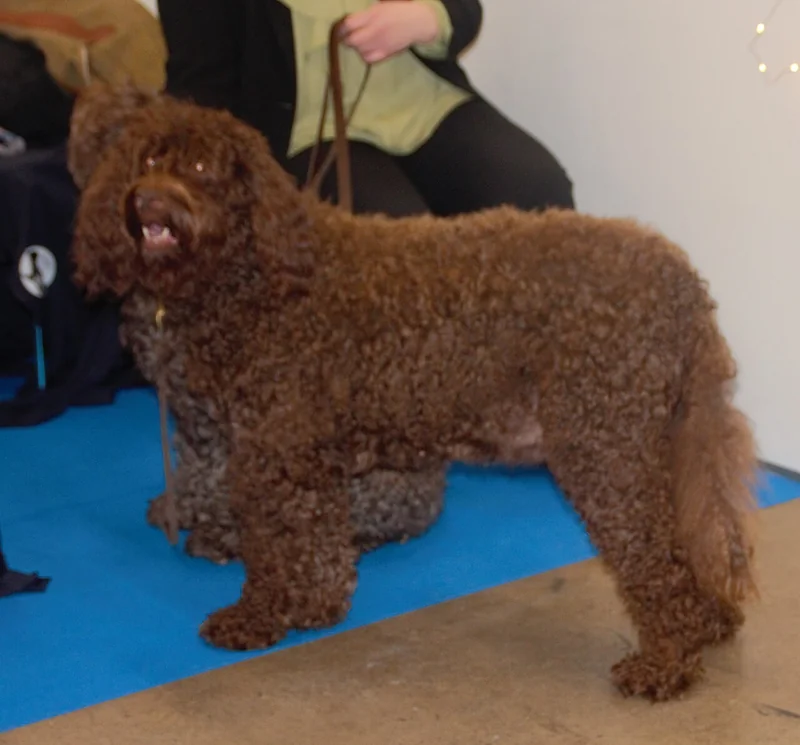 Featured photobarbet.jpg
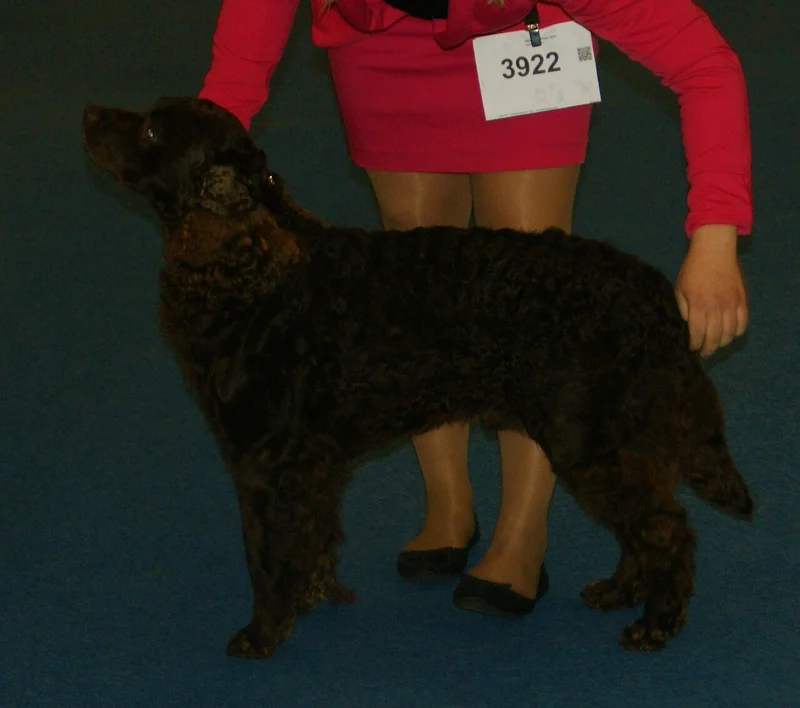
The Barbet is an ancient French water dog with a profuse, curly or wavy coat that is entirely waterproof, used for centuries to retrieve waterfowl from marshes and rivers. The breed is documented in France from at least the 16th century and is considered an ancestor of several modern breeds, including the Poodle and Bichon Frise. The FCI registered it as No. 105; the AKC admitted the Barbet in 2020 and places it in the Sporting Group. Males stand 58–65 cm.
Quick facts
- AKC group
- Sporting
- Origin country
- France
- Origin period
- Medieval, documented from 16th century
- Coat type
- Curly
- Coat colors
- Black, Grey, Brown, Fawn, Pale Fawn, White, Black and White, Brown and White
- Average lifespan
- 12-14 years
- Recognition
- AKC 2020 · FCI 1954 · UKC 2016 · Group 8 — Retrievers, Flushing Dogs, Water Dogs (Section 3: Water Dogs)
Origin
The Barbet is documented in France from the 16th century; Pierre Belon's 1570 natural history mentions a curly-coated water dog that closely matches the modern description. Illustrations in French hunting manuals of the 17th century show a dog with the characteristic thick, curly, bearded profile. The breed was widely kept by French nobility — Henri IV's court records mention Barbets — and was used extensively for retrieving waterfowl from the marshes and rivers of France. The word 'barbet' derives from the French 'barbe' (beard), a reference to the breed's characteristic facial hair.
Recognition
The Société Centrale Canine (SCC) of France formalised the Barbet's breed standard in 1954, and the FCI registered the breed as No. 105, assigning it to Group 8, Section 3 (Water Dogs) with France as patron country. After a period of rarity, the breed was revived through careful reconstruction in France and neighbouring countries. The UKC admitted the Barbet in 2016. The AKC placed the breed in the Miscellaneous Class and granted full Sporting Group recognition in 2020.
Standard
The FCI and AKC standards describe a medium-sized, well-balanced dog with a strong, cobby build and a distinctive profuse, curly or wavy woolly coat that covers the entire body including the face. The beard is long and covers the muzzle; the eyebrows cover the eyes somewhat. The coat can be black, grey, brown, fawn, or white in various solid and bicolour combinations. The tail is carried curved upward. Males stand 58–65 cm; females 52–61 cm. The coat's tight curls provide excellent waterproofing for work in cold marshes.
Sources & further reading (3)
- kennel-club-registry — accessed 2026-05-27
- encyclopedia — accessed 2026-05-27
- fci-standard — accessed 2026-05-27
Frequently asked questions
Is the Barbet related to the Poodle?
The Barbet is widely considered one of the ancestors of the modern Poodle. Both are water-retrieving dogs with curly, waterproof coats of French or central European origin, and historical descriptions of the two breeds overlap considerably. The Barbet is also cited as an ancestor of the Bichon Frise, the Briard, and several other European breeds. The FCI and AKC treat them as separate breeds.
When did the AKC recognise the Barbet?
The AKC granted the Barbet full Sporting Group recognition in 2020, making it one of the more recently admitted AKC breeds. The breed had been listed in the AKC Foundation Stock Service (FSS) before full recognition. The FCI had registered the Barbet since 1954 under standard No. 105.
What does 'Barbet' mean?
The name Barbet derives from the French word 'barbe', meaning beard. The reference is to the breed's characteristic profuse beard covering the muzzle, which is a defining feature of the standard. The same root gives the term 'barbiche' (French for a small pointed beard) and underlies the name 'Barbichon', the diminutive form from which 'Bichon' is derived.