Canis lupus familiaris
Carpathian Shepherd Dog
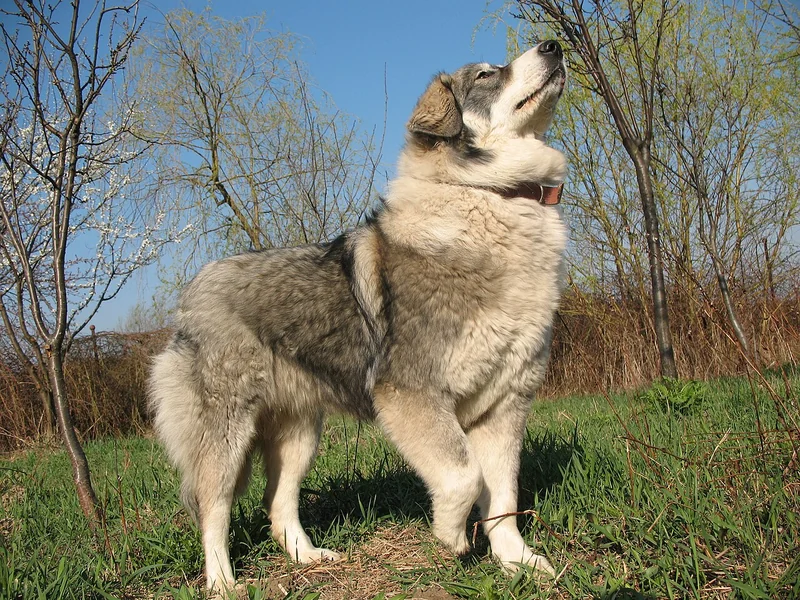 Featured photocarpathian-shepherd-dog.jpg
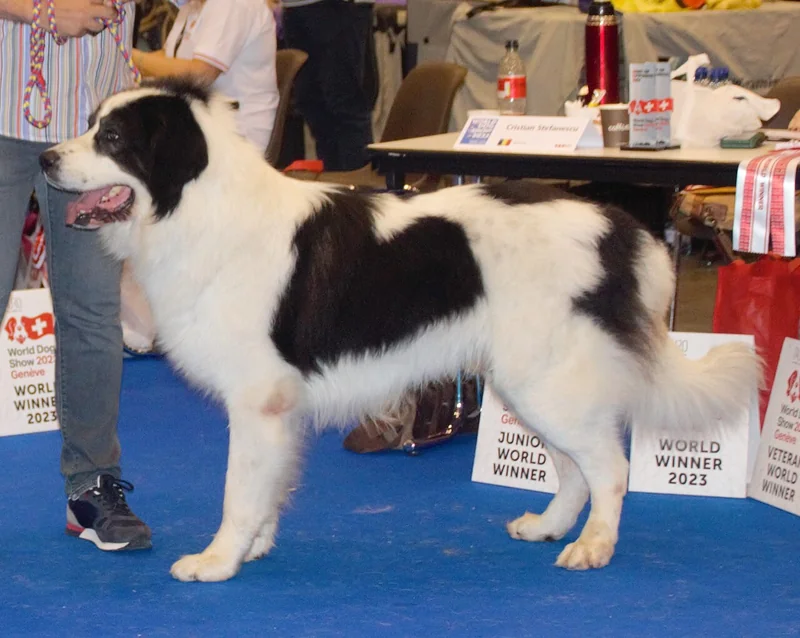
The Carpathian Shepherd Dog is a large, sandy-fawn Romanian livestock guardian developed over thousands of years in the Carpathian mountain range to protect sheep and cattle flocks from wolves and bears. The breed is Romania's most numerous livestock-guardian dog and is recognised as a national cultural symbol. The FCI registers it as No. 350 under Romania's patronage since 2002. Males stand 65–73 cm.
Quick facts
- AKC group
- Working
- Origin country
- Romania
- Origin period
- Ancient
- Coat type
- Double
- Coat colors
- Wolf-grey, Sandy-fawn (pale to dark), White with Sandy or Grey Patches
- Average lifespan
- 12-14 years
- Recognition
- FCI 2002 · Group 2 — Pinscher and Schnauzer-Molossoid Breeds, Swiss Mountain and Cattle Dogs (Section 2.2: Molossoid breeds, Mountain type)
Origin
The Carpathian Shepherd Dog's origin is associated with the pre-Roman Dacian civilisation that occupied the Carpathian region from at least 700 BC. Trajan's Column (113 AD) in Rome, depicting the Roman conquest of Dacia, includes representations of large Dacian shepherd dogs that closely resemble the modern Carpathian Shepherd. The breed developed across the full arc of the Carpathian mountains — from the northern ranges of Moldavia through Transylvania and southward to the Wallachian foothills — accompanying the transhumant shepherds who moved large sheep flocks seasonally between highland and lowland pastures.
Recognition
The Asociatia Chinologica Romana (ACR) standardised the breed and submitted documentation to the FCI, which recognised the Carpathian Shepherd Dog under standard No. 350 in 2002, placing it in Group 2, Section 2.2 (Molossoid breeds, Mountain type) with Romania as patron country. The breed is one of three Romanian flock-guardian dogs registered by the FCI, alongside the Bucovina Shepherd Dog (FCI No. 357) and the Mioritic Shepherd Dog (FCI No. 349). The breed is not recognised by the AKC or UKC.
Standard
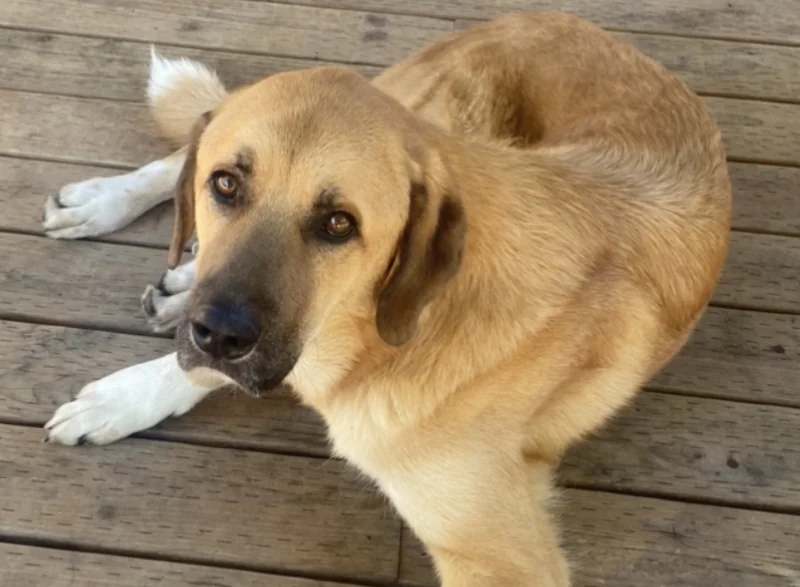
The FCI standard describes a large, strongly built, muscular dog slightly longer than tall, with a broad, slightly domed skull and a strong, moderately long muzzle. The double coat is approximately 7–10 cm on the body, dense, slightly wavy to straight, and harsh, with a thick, short undercoat. The predominant colour is a sandy-fawn (all shades from pale cream to dark fawn) or wolf-grey, sometimes with a black saddle overlay or white markings. Males stand 65–73 cm; females 59–67 cm, weighing 32–50 kg.
Sources & further reading (3)
- fci-standard — accessed 2026-05-27
- encyclopedia — accessed 2026-05-27
- kennel-club-registry — accessed 2026-05-27
Frequently asked questions
What is the Carpathian Shepherd Dog's relationship to the Dacians?
The Dacians were the pre-Roman inhabitants of the Carpathian mountain region (modern Romania and parts of neighbouring countries). Trajan's Column in Rome, erected in 113 AD to commemorate the Roman conquest of Dacia, depicts large shepherd dogs in Dacian pastoral scenes that bear close resemblance to the modern Carpathian Shepherd Dog. Romanian cynologists cite this as evidence of the breed's continuity over more than two millennia, though the connection cannot be established with absolute certainty.
When was the Carpathian Shepherd Dog recognised by the FCI?
The FCI granted recognition to the Carpathian Shepherd Dog in 2002 under standard No. 350, with Romania as patron country. It is one of three Romanian flock-guardian breeds in the FCI registry, alongside the Bucovina Shepherd Dog (2005) and the Mioritic Shepherd Dog (2005).
How does the Carpathian Shepherd Dog compare to the Bucovina Shepherd Dog?
Both are large Romanian flock-guardian breeds from adjacent regions. The Carpathian Shepherd Dog (FCI No. 350) is distributed across the full Carpathian mountain arc, is typically sandy-fawn or wolf-grey, and is lighter (32–50 kg) than the Bucovina. The Bucovina Shepherd Dog (FCI No. 357) originates specifically from the northeastern sub-Carpathian Bucovina region, is heavier (50–90 kg), and displays a distinctive piebald white-and-coloured pattern rather than a solid sandy-fawn coat.