Felis catus
British Shorthair
 Featured photobritish-shorthair.jpg
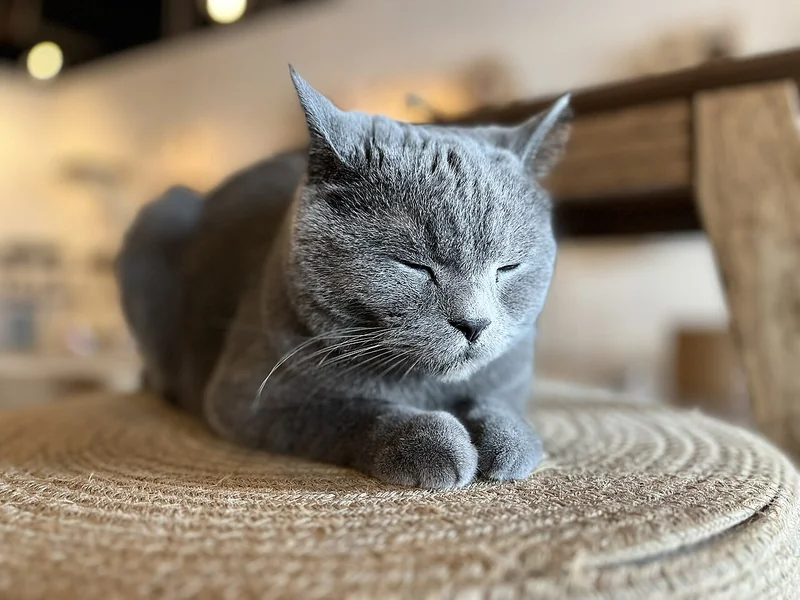
The British Shorthair is among the oldest formally recognized cat breeds in Britain. It traces to the working domestic cat of the British Isles and was systematized in the late 19th century — Harrison Weir's 1871 Crystal Palace cat show is the documented anchor. GCCF registered the breed in 1898; FIFe (1949) and TICA (1979) followed at their foundings; CFA admitted it to championship status in 1980. The standard describes a compact, powerful cat with a dense coat — the British Blue is the most-cited colour variant.
Quick facts
- Origin country
- United Kingdom
- Origin period
- Late 19th century (foundational breed at the 1871 Crystal Palace cat show)
- Coat type
- Short
- Coat colors
- British Blue, Solid Black, Solid White, Solid Cream, Solid Red, Tabby (Classic), Tabby (Mackerel), Tabby (Spotted), Bicolor, Tortoiseshell, Calico, Smoke, Silver, Colorpoint
- Size category
- Medium
- Average lifespan
- 12-17 years
- Recognition
- CFA 1980 · TICA 1979 · GCCF 1898 · FIFe 1949
Origin
The British Shorthair is the formalized show variety of the working domestic cat of the British Isles. The breed was systematized in the late 19th century at the founding events of the British cat fancy. Harrison Weir's 1871 Crystal Palace cat show — the founding event of the British cat fancy — is the documented anchor for the show form, and Weir's 1889 manual 'Our Cats and All About Them' codifies the early standard. The post-1945 revival admitted controlled outcrosses to the Persian to consolidate the modern dense double-textured coat and rounded conformation.
Recognition
The Governing Council of the Cat Fancy registered the British Shorthair in 1898, making it among the earliest pedigreed breeds on the GCCF register. The Fédération Internationale Féline published its standard at its 1949 founding in continental Europe. The International Cat Association recognized the breed at its 1979 founding in Texas. The Cat Fanciers' Association admitted the British Shorthair to championship status in 1980, completing recognition across the four major international registries.
Standard
The CFA and GCCF standards describe a compact, well-balanced, powerful cat with a broad chest, short strong legs, and a thick tail with a rounded tip. The head is round and massive with full cheeks, a short broad nose, and small to medium rounded ears set well apart. The coat is short, very dense, and resilient — described in the GCCF standard as 'crisp' rather than 'plush'. Recognized colours span every traditional pattern; the British Blue (a solid blue-grey) is the most-cited variant and the colour at which the breed was first standardized in the 1890s.
Sources & further reading (3)
- registry-breed-profile — accessed 2026-04-30
- encyclopedia — accessed 2026-04-30
- gccf-registry — accessed 2026-04-30
Frequently asked questions
Is the British Shorthair an old breed?
The British Shorthair is the formalized show variety of the working domestic cat of the British Isles. The breed was systematized at Harrison Weir's foundational 1871 Crystal Palace cat show and registered by the Governing Council of the Cat Fancy in 1898 — making it among the earliest pedigreed breeds on the GCCF register.
When was the British Shorthair recognized internationally?
The Governing Council of the Cat Fancy registered the breed in 1898. The Fédération Internationale Féline published its standard at its 1949 founding. The International Cat Association recognized the breed at its 1979 founding, and the Cat Fanciers' Association admitted the British Shorthair to championship status in 1980.
What is the British Blue?
British Blue is the colour name for the solid blue-grey variant of the British Shorthair, and historically the colour at which the breed was first standardized in the 1890s. The British Blue is sometimes referenced as a separate breed in 19th-century literature, but contemporary CFA, GCCF, FIFe, and TICA standards treat it as one of the recognized colour divisions of the British Shorthair.