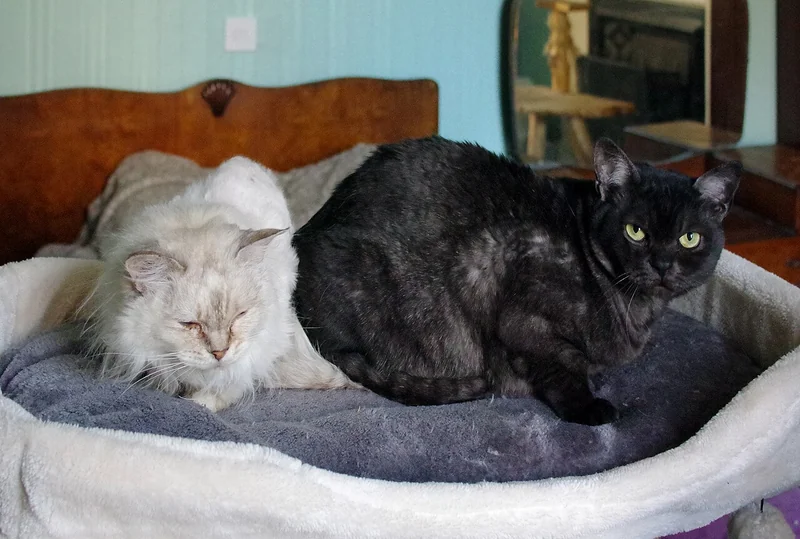
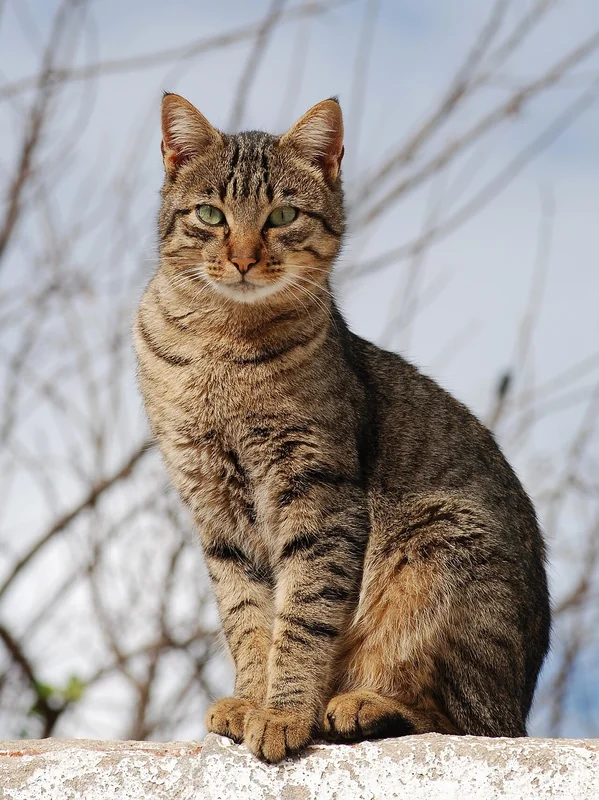
Felis catus
Asian Shorthair
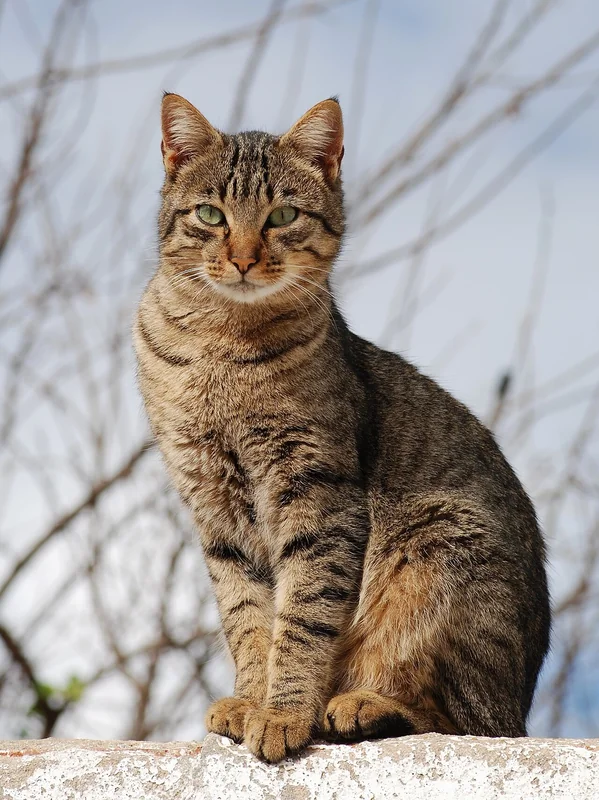 Featured photoasian-shorthair.jpg
The Asian Shorthair is a GCCF breed group encompassing self-colored, smoke, tabby, and ticked variants of the Asian (Burmese-type) conformation developed in the United Kingdom. Originating from the Burmilla breeding program launched in 1981, the Asian group was established by GCCF to cover the full range of Burmese-type shorthairs outside the traditional Burmese color classes. The Asian Shorthair group does not include the Burmilla (chinchilla tipped) or the Tiffanie (semi-longhaired), which are registered separately.
Quick facts
- Origin country
- United Kingdom
- Origin period
- Developed from Burmilla program, 1981; GCCF Asian group recognition 1990s
- Coat type
- Short
- Coat colors
- All Burmese-type solid colors, Smoke, Tabby (classic, mackerel, spotted), Ticked
- Size category
- Medium
- Average lifespan
- 12-16 years
- Recognition
- GCCF 1991
Origin
The Asian Shorthair group descends from the 1981 accidental mating between a Burmese (Fabergé, owned by Baroness Miranda von Kirchberg) and a Chinchilla Persian (Jamari of Sanquist). The resulting silver-tipped kittens led to the formal Burmilla program. As the breeding program expanded, kittens appeared in a variety of coat patterns beyond the chinchilla tipping: smoked, self-colored, tabby-patterned, and ticked. GCCF created the Asian group to register these variants coherently. The Tiffanie (semi-longhaired) was also included in a separate Asian group registration as the Asian Semi-Longhair.
Varieties within the Group
The GCCF Asian group includes several distinct coat-pattern varieties: the Asian Self (solid-colored, including the Bombay UK type in black), the Asian Smoke (smoke-pattern), the Asian Tabby (classic, mackerel, or spotted tabby), the Asian Ticked (ticked tabby), and the Burmilla (chinchilla or shaded tipping). All share the same Burmese-derived conformation: a medium-sized, rounded, muscular cat with a slightly dome-shaped head, wide-set ears, and large, expressive eyes. The Tiffanie (semi-longhaired) is registered separately within the Asian group.
Standard
The GCCF standard for the Asian Shorthair describes a cat of the foreign-Burmese type: medium-sized, well-muscled, with a slightly rounded, blunt-wedge head; cheekbones are wide-set; the nose has a distinct break from forehead. Ears are medium to large, wide-set, and pricked. Eyes are large, oval to slightly rounded, and vivid in color (chartreuse, gold, yellow-green range depending on coat color and silver status). The coat is short, very close-lying, and satin-like in texture with a natural high gloss.
Sources & further reading (2)
- gccf-registry — accessed 2026-05-07
- encyclopedia — accessed 2026-05-07
Frequently asked questions
What is the difference between an Asian Shorthair and a Burmese?
The Asian Shorthair and Burmese share the same conformation type and derive from the same breeding foundation. The distinction is primarily coat color and pattern: the Burmese is recognized in a defined set of solid colors (sable/brown, blue, champagne/chocolate, platinum/lilac, and some additional colors in UK registries), while the Asian Shorthair group covers self, smoke, tabby, and ticked variants in all colors. An Asian Self in brown is sometimes called a Burmese type but is registered separately within GCCF.
What is a UK Bombay in the Asian group?
The UK Bombay (also called the Asian Black Self or Asian Black) is a black self-colored Asian Shorthair. It is distinct from the CFA Bombay, which was independently developed in the United States from Burmese and American Shorthair crosses. Both are solid black cats of Burmese conformation, but they have separate breed histories and are registered differently. In GCCF, the UK Bombay is registered as an Asian Self Black within the Asian group.
When did GCCF recognize the Asian group?
GCCF recognized the Asian breed group in the early 1990s, building on the Burmilla's recognition from 1989. The group structure allowed the various coat patterns emerging from the Burmilla program to be systematically registered. Recognition of individual varieties within the group occurred progressively through the 1990s as sufficient breeding populations were established.