Felis catus
Arizona Lynx
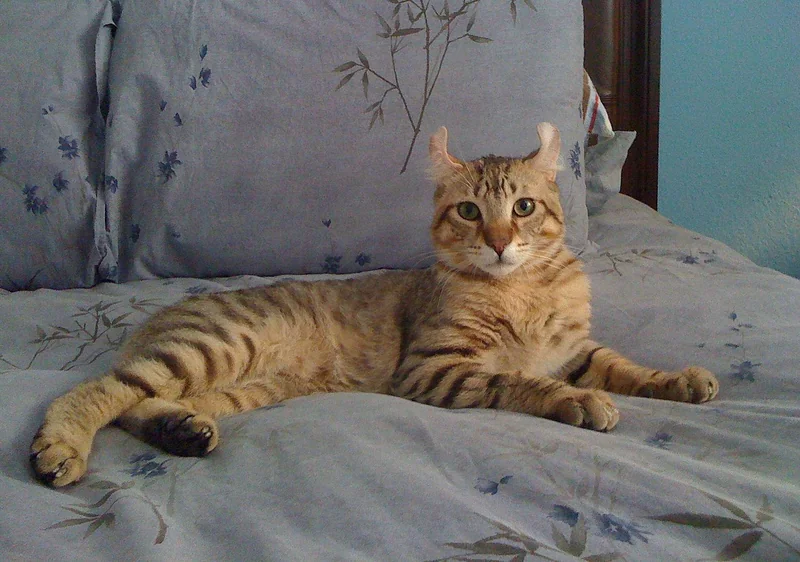
The Arizona Lynx is a TICA experimental breed that combines multiple naturally occurring mutations: polydactyly, a short bobtail, and curled or tufted ears. The breed is maintained within TICA's experimental programme. The standard describes a medium to large, sturdy cat with a lynx-like appearance and multiple distinctive trait combinations.
Quick facts
- Origin country
- United States (Arizona)
- Origin period
- TICA experimental programme
- Coat type
- Short
- Coat colors
- Brown mackerel tabby, Brown spotted tabby, Lynx-point tabby, All tabby patterns
- Size category
- Large
- Average lifespan
- 12–15 years
- Recognition
- —
Origin
The Arizona Lynx is an experimental breed developed in the American Southwest combining three naturally occurring domestic cat mutations: polydactyly (extra toes), a shortened bobtail, and curled or lynx-tufted ears. The combination of these traits in a large, muscular cat produces a strong resemblance to the North American bobcat or lynx. TICA's experimental programme allows registration and exhibition without full championship status.
Standard
The working standard describes a large, heavily muscled cat with a broad, rounded head, large tufted ears, and tufted toes — with extra digits on the forefeet. The tail is a short bob 5–15 cm long. The coat is short to medium, dense, and weather-resistant in tabby patterns. Spotting and mackerel patterns that emphasize the wild appearance are preferred.
Multi-Mutation Breeding Complexity
Breeding the Arizona Lynx requires managing three separate dominant mutations: the Pd (polydactyl) gene, the bobtail gene, and the ear-curl/tuft gene. Because all three are dominant, crosses between Arizona Lynx cats and standard domestic cats can produce offspring expressing one, two, or all three traits. The breeding programme tracks each trait separately and aims to produce cats expressing all three simultaneously while maintaining healthy, non-inbred lines.
Sources & further reading (2)
- encyclopedia — accessed 2026-05-27
- registry-breed-profile — accessed 2026-05-27
Frequently asked questions
How does the Arizona Lynx differ from the Desert Lynx?
Both are American experimental lynx-appearance breeds. The Desert Lynx focuses on the bobtail + wild-pattern combination without requiring polydactyly. The Arizona Lynx combines polydactyly + bobtail + tufted ears as all three required traits. The breeds overlap in appearance and some breeders participate in both programmes.
Is the Arizona Lynx a hybrid with a bobcat or lynx?
No. The Arizona Lynx is a purely domestic cat that mimics the wild lynx appearance through selective use of domestic cat mutations. There is no verified wild-cat hybridization in the breed's foundation stock.
Are all three traits (polydactyl, bobtail, tufted ears) required to be an Arizona Lynx?
Yes, the Arizona Lynx standard requires all three traits simultaneously: polydactyly (extra toes), a shortened bobtail, and curled or tufted ears. Cats expressing only one or two of the three traits are not categorized as Arizona Lynx under the experimental standard; they would be registered under the relevant single-trait breed (American Polydactyl, Desert Lynx, etc.).