Felis catus
British Tipped
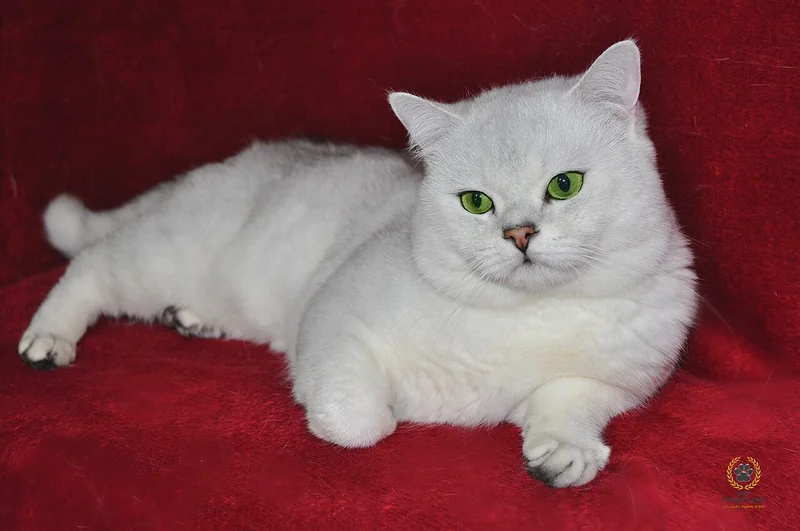 Featured photobritish-tipped.jpg
The British Tipped is a GCCF-recognized color/pattern variant of the British Shorthair family, defined by a tipped or shaded coat in which only the tips of the guard hairs are colored while the rest of the hair shaft is white or pale gold. Recognized separately by GCCF within the British Shorthair breed group, the most sought-after variety is the British Silver Tipped with its distinctive white-silver coat, emerald-green eyes, and brick-red nose leather. The breed shares the British Shorthair's round, plush conformation.
Quick facts
- Origin country
- United Kingdom
- Origin period
- Developed within British Shorthair program; GCCF recognition as separate breed class
- Coat type
- Short
- Coat colors
- Silver tipped (white undercoat, black tips), Golden tipped (warm gold undercoat, black tips), Blue tipped, Chocolate tipped, Other tipped colors
- Size category
- Large
- Average lifespan
- 12-17 years
- Recognition
- GCCF 1978
Origin
The British Tipped developed within British Shorthair breeding programs after breeders crossed British Shorthairs with Persian Chinchillas to introduce the tipping (inhibitor) gene. The resulting cats had the round, plush British body with the sparkling, color-tipped coat of the Chinchilla Persian. GCCF formalized the group within its British Shorthair breed evaluation, accepting the silver-tipped British Shorthair into the show schedule. The golden-tipped variant, which has an apricot-gold undercoat rather than white, was recognized as a separate color later.
Recognition
GCCF recognizes the British Tipped as a color division within the British Shorthair breed group. The Cat Fanciers' Association and TICA also recognize tipped color classes within the British Shorthair standard. FIFe likewise accepts tipped British Shorthairs under its registration. The breeds are not maintained as entirely separate registrations by most major registries; they are color divisions within the unified British Shorthair standard.
Standard
The British Tipped conforms to the full British Shorthair type standard: a large, compact, powerfully built cat with a massive round head; full chubby cheeks; round, wide-set eyes; small, wide-set ears; and a dense, crisp, plush coat. The defining feature of the tipped variety is the coat pattern: in silver tipped cats, the guard-hair tips are black against a pure white undercoat, giving a sparkling shimmer. Eye color is a pure emerald or blue-green in silver cats; copper or gold in other tipped colors. The nose leather is brick-red in silver-tipped cats, a reliable identifying feature.
Sources & further reading (2)
- gccf-registry — accessed 2026-05-07
- encyclopedia — accessed 2026-05-07
Frequently asked questions
What is the tipping gene in cats?
The tipping pattern is controlled by the inhibitor gene (I locus). In tipped cats, the inhibitor gene restricts melanin production to only the very tip of each guard hair, leaving the rest of the shaft unpigmented (white or pale). The extent of tipping varies: lightly tipped coats are called chinchilla or silver-tipped; more heavily tipped coats (tipping extends down 1/3 to 1/2 of the hair shaft) are called shaded. The British Tipped is the lightly tipped (chinchilla) variety.
Why do British Tipped cats have emerald-green eyes?
The silver inhibitor gene that produces the white undercoat also affects eye pigmentation. Cats carrying the silver inhibitor gene and the black tipping gene (silver series) typically develop vivid emerald-green eyes rather than the gold or copper eyes standard in other British Shorthair color classes. This is a consistent breed characteristic: the green-eye color is genetically linked to the silver tipping and is required by the GCCF standard for silver-tipped cats.
What is the difference between a tipped and a shaded British Shorthair?
The degree of tipping (how far the color extends down the hair shaft) distinguishes the two. In the tipped (chinchilla) British, only the very tips of the guard hairs carry color, so the overall coat appears nearly white with a sparkle of color. In the shaded British, the colored portion extends further down the hair, giving a more prominently colored appearance. The British Tipped is the more lightly patterned of the two.