Hero
Suro
The golden-egg king who descended from heaven to found the Gaya confederacy in southern Korea.
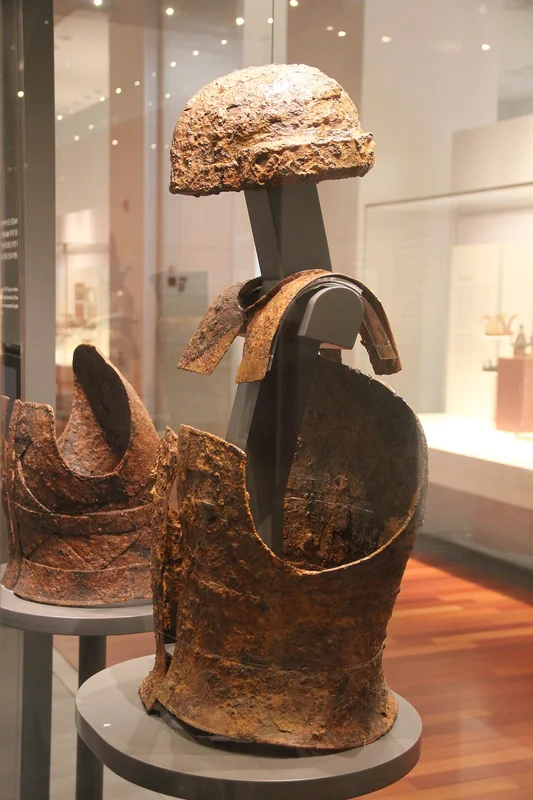
Suro (수로, 首露, 'First to Emerge') is the legendary founder of the Geumgwan Gaya kingdom (金官伽倻), the leading state of the Gaya confederacy in the Nakdong River delta region of southern Korea. According to the Samguk Yusa (1281 CE), the Gaya region was without a ruler. A voice from heaven called to nine chiefs and commanded them to look at a purple rope descending from the peak of Gujibong mountain. At the peak they found six golden eggs wrapped in red cloth. Six boys emerged, grew rapidly, and became the kings of the six Gaya states; the first to hatch, the largest and most radiant, was Suro. He founded Geumgwan Gaya in what is traditionally 42 CE. He later married the foreign princess Heo Hwang-ok, who legend says came by boat from the kingdom of Ayuta (possibly identified with Ayodhya in India). Recorded in the Samguk Yusa (1281 CE).
Quick facts
- Pantheon
- Korean
- Figure type
- Hero
- Period
- Legendary founding of Geumgwan Gaya: 42 CE; recorded in Samguk Yusa (1281 CE)
- Primary sources
- Samguk Yusa (1281 CE), Book 2: 'Garak Guk gi' (Record of the Garak Kingdom), by Iryeon
- Related figures
- heo-hwang-ok, bak-hyeokgeose, jumong
Descent and founding
The Samguk Yusa (1281 CE, Book 2, 'Garak Guk gi') narrates that the region of Gaya had no ruler and the nine chiefs governed their peoples by custom. In March of the traditional date of 42 CE, a strange voice called from the summit of Gujibong, telling the people to gather and dig the earth there while singing the Gaya Song (Gujiga, '龜旨歌'): 'Turtle, turtle, come up / If you don't we will bake you and eat you.' The chiefs led the people in this ritual; a purple rope descended from heaven with a red cloth bundle at its end. Inside were six golden eggs, each wrapped in crimson silk. The twelve chiefs bowed and rejoiced. The next day they opened the cloth and found six children, already formed and beautiful, who grew at a miraculous rate. Within twelve days they were full grown. Suro, the largest and first to emerge, became king of Geumgwan Gaya; the other five became kings of the remaining five Gaya kingdoms.
Marriage to Heo Hwang-ok
The Samguk Yusa (1281 CE) includes a remarkable account of how Suro came to marry Heo Hwang-ok (허황옥, 許黃玉), a princess said to have come from the kingdom of Ayuta (阿踰陀國) by boat. Heo Hwang-ok explained she was a princess of Ayuta sent by a divine message to marry Suro. She brought gifts of silk, jade, and gold, and presented stones of a reddish-purple colour (traditionally identified as agate). Suro accepted her as his queen and they ruled Gaya together for 150 years (in the legendary account). The marriage of Suro and Heo Hwang-ok produced ten sons; two took their mother's surname Heo, continuing a Korean family lineage. The tradition of Heo Hwang-ok's Indian origin has been a subject of ongoing scholarly and cultural debate, with some Korean and Indian scholars proposing historical connections to the ancient city of Ayodhya.
Sources & further reading (2)
- encyclopedia — accessed 2026-05-06
- primary-source — accessed 2026-05-06
Frequently asked questions
What is the Gujiga and why was it sung?
The Gujiga (龜旨歌, 'Turtle Peak Song') is a short ritual song recorded in the Samguk Yusa (1281 CE, 'Garak Guk gi') as the chant that summoned Suro from heaven: 'Turtle, turtle, come up / Show your head / If you do not show your head / We will bake you and eat you.' The turtle (거북, geobuk) in Korean mythology is an auspicious creature associated with heaven and longevity; the command-and-threat form of the chant is a common structure in Korean shamanistic invocations (mudan) that ritually commands a spirit or deity to manifest. The song was a ritual invocation performed by the nine chiefs and the assembled people of Gaya, with the digging of the earth and the chanting functioning together as a summoning ceremony. It is one of the oldest surviving Korean songs in written record.
Was Heo Hwang-ok really from India?
The Samguk Yusa (1281 CE) identifies Heo Hwang-ok's homeland as 'Ayuta' (阿踰陀國), which some scholars have identified with Ayodhya in northern India — the birthplace of Rama in Hindu tradition. The presence of Indian-origin red stones (sanghyang myeongju in some versions) and the name 'Ayuta' have led some Korean and Indian scholars to propose that the tradition preserves a memory of genuine maritime contact between India and southern Korea in the early CE period. Others argue that 'Ayuta' is a Chinese Buddhist transliteration of Sanskrit 'Ayodhya' used as a generic name for a distant and exotic kingdom, and that the story is a later legendary elaboration. The Gim Hae Kim clan and the Heo clan (both descended from Suro and Heo Hwang-ok according to tradition) have sponsored cultural exchanges with Ayodhya based on this tradition. The question remains debated among historians.