Hero
Cheoyong
The demon-defying son of the Dragon King who taught Korea the power of graceful endurance over wrath.
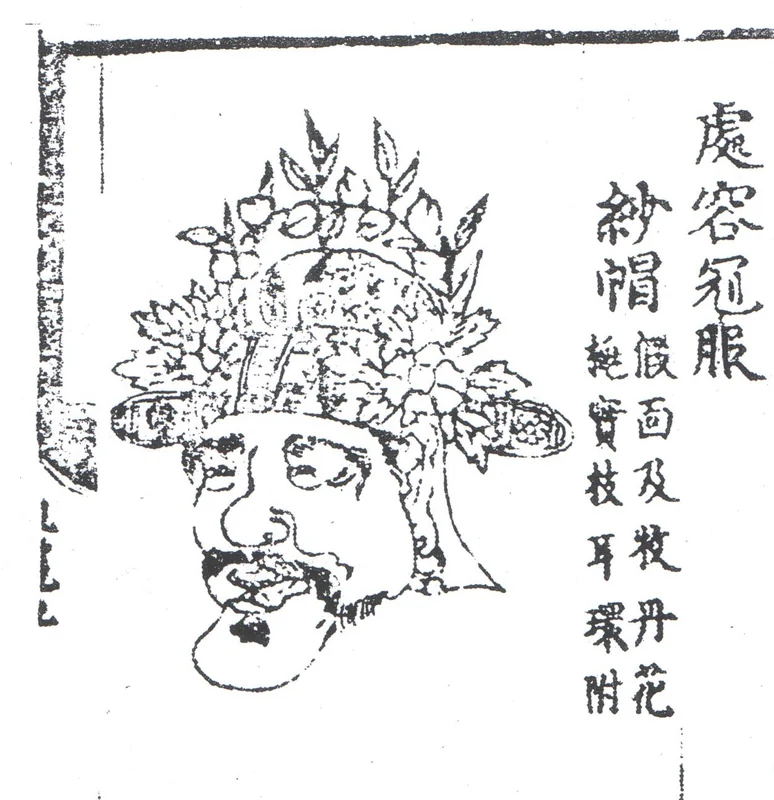
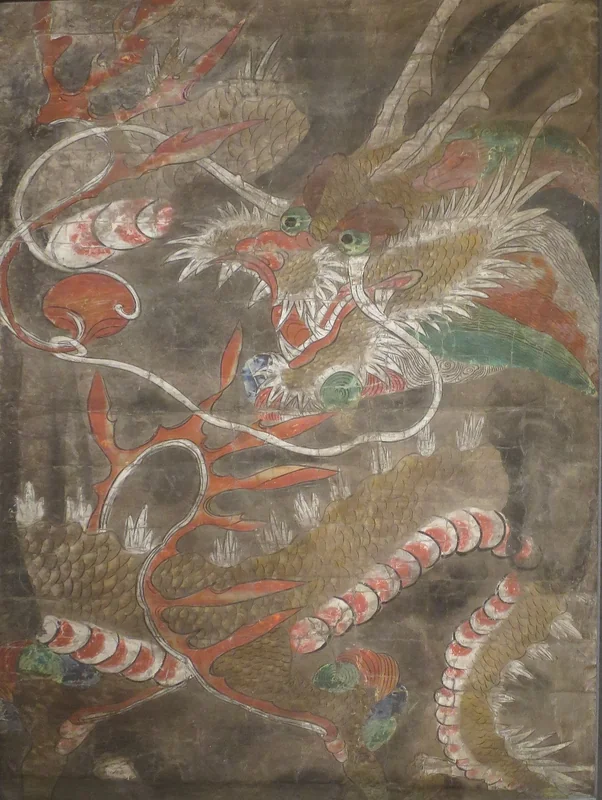
Cheoyong (처용, 處容) is a legendary figure from the Silla period whose story is recorded in the Samguk Yusa (1281 CE) under the reign of King Heongang (875–886 CE). Cheoyong was one of seven sons of Ryong-wang (the Dragon King of the Eastern Sea), who came ashore as a handsome young man with an exotic appearance. King Heongang gave him a wife and official position. One night, the demon of smallpox (yeokshin) took human form and lay with his wife while he was absent. Cheoyong returned home, saw what had happened, and responded not with wrath but with a song and dance. So moved was the demon by Cheoyong's graceful endurance that it pledged never to enter a house bearing Cheoyong's image. Cheoyong's mask and dance became a powerful apotropaic tradition; his image was pasted on doors to ward off disease. Recorded in the Samguk Yusa (1281 CE), Book 2.
Quick facts
- Pantheon
- Korean
- Figure type
- Hero
- Period
- Reign of King Heongang of Silla (875–886 CE); recorded in Samguk Yusa (1281 CE)
- Primary sources
- Samguk Yusa (1281 CE), Book 2: 'Cheoyong-rang and Manghae Temple', by Iryeon
- Related figures
- samsin, dokkaebi, ryujin
The myth of Cheoyong
The Samguk Yusa (1281 CE, Book 2) tells the story concisely. King Heongang was at the shore of Gaeunpo when clouds and mist suddenly obscured the path. A court diviner explained that the Dragon King of the Eastern Sea was responsible and advised the king to build a temple nearby. The king gave the order; the clouds cleared. The Dragon King appeared with his seven sons and danced and sang before the king. One son, Cheoyong, remained in the human world, married a beautiful woman given by the king, and served as a local official. One night Cheoyong returned home late and found the smallpox demon (in human form) lying with his wife. Cheoyong sang the 'Cheoyong Song' (處容歌): 'Having caroused far into the night in the moonlit capital / I return home and in my bed / I see four legs. / Two are mine; whose are the other two? / Formerly mine, they have been taken: what am I to do?' He then danced and departed. The demon was so moved that it pledged never to enter a house bearing Cheoyong's image.
Cheoyong's dance and its legacy
The Cheoyong-mu (處容舞, 'Cheoyong Dance') became one of the most important court dances of the Goryeo (918–1392 CE) and Joseon (1392–1897 CE) periods. Performed by five dancers in elaborate masks representing the five directions (east, west, south, north, centre), each wearing robes of the five directional colours (blue, white, red, black, yellow), the dance was performed at court banquets and especially at New Year to drive out evil spirits and disease from the palace. The Cheoyong mask — depicting his distinctive exotic features (dark skin, large eyes, wide nose in artistic convention) — was pasted on gates and doors as a protective talisman against demons and pestilence throughout the Joseon period. Cheoyong's response to betrayal through song and dance rather than violence embodies the Confucian and Buddhist virtue of equanimity; his restraint, not his anger, is the power that defeats the demon.
Sources & further reading (2)
- encyclopedia — accessed 2026-05-06
- primary-source — accessed 2026-05-06
Frequently asked questions
What does the Cheoyong Song (Hyangga) tell us about Silla literature?
The Cheoyong Song (처용가, Cheoyong-ga) is recorded in the Samguk Yusa (1281 CE) as a hyangga — a type of Korean vernacular poem written in the idu script (a system using Chinese characters to represent Korean sounds), composed during the Silla period. It is one of the later hyangga and one of the best-preserved. The song is notable for its personal, emotionally restrained voice: Cheoyong observes the situation with almost clinical detachment, frames the betrayal through the image of 'four legs,' and closes with philosophical acceptance. Scholars have interpreted the poem as expressing the Buddhist principle of non-attachment, or as a formal apotropaic incantation whose power lies precisely in its non-angry, non-retaliatory character. The Cheoyong Song has been extensively studied as a linguistic and literary document of 9th-century CE Silla culture.
Why is Cheoyong associated with the prevention of disease?
The demon that enters Cheoyong's bed is specifically identified as the demon of smallpox (yeokshin, 疫神, 'epidemic spirit') in most versions of the Samguk Yusa (1281 CE) account. Cheoyong's graceful response, which moves the demon to a voluntary pledge of avoidance, turns his image into a protective talisman against disease specifically — not just against evil in general. His image pasted on doors is thus an apotropaic measure against epidemic illness, rooted in the myth's specific enemy (smallpox was among the most feared diseases in premodern Korea). The tradition of using Cheoyong's mask-image as a protective talisman reflects the broader Korean folk belief that the image of a spirit-taming figure can serve as a guardian against the spirits that figure overcame. The Cheoyong-mu court dance served the same function at the palace level: a ritual enactment of Cheoyong's spirit-subduing power.