Hero
Bak Hyeokgeose
The egg-born founder of the Silla kingdom who hatched from a purple-white gourd and brought radiant light.
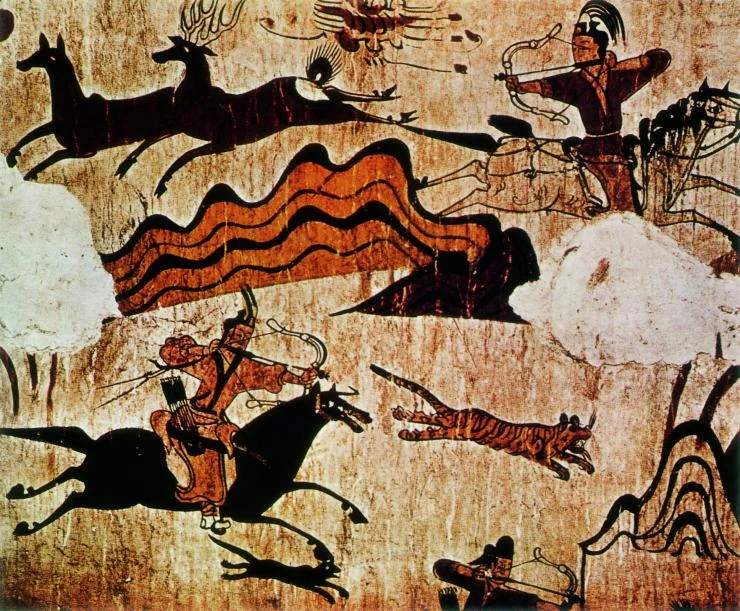
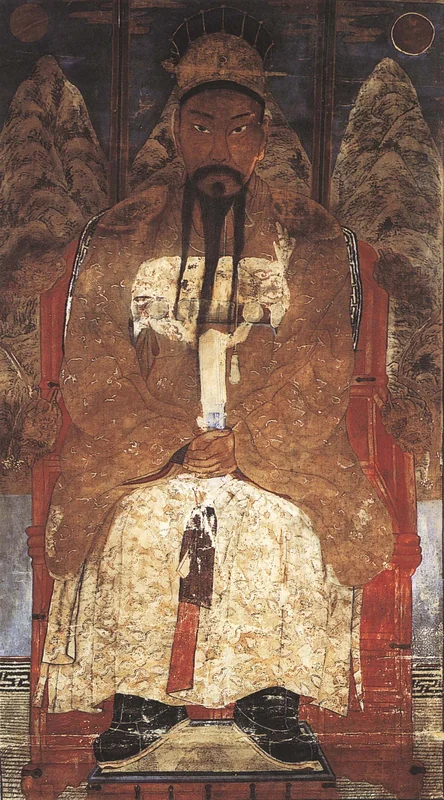
Bak Hyeokgeose (박혁거세, 朴赫居世, 'Bak who brightens the world') is the legendary founder of the kingdom of Silla (57 BCE – 935 CE), one of the Three Kingdoms of Korea. According to the Samguk Yusa (1281 CE), the elders of six Gojoseon tribes met by a well and saw a white horse bowing before a purple-white light on the hillside of Najeong. They found a large gourd-shaped egg from which a boy of extraordinary radiance emerged — they washed him in the Dongcheon stream and light radiated from his body. He was called Hyeokgeose ('brightening the world') and his family name Bak ('gourd') came from the egg's shape. He became king of the six tribes. On the same day, a dragon appeared with a girl from its side — she became his queen, Aryeong. Together they are the founding couple of Silla. Recorded in the Samguk Sagi (1145 CE) and Samguk Yusa (1281 CE).
Quick facts
- Pantheon
- Korean
- Figure type
- Hero
- Period
- Legendary founding of Silla: 57 BCE; myth recorded in Samguk Sagi (1145 CE) and Samguk Yusa (1281 CE)
- Primary sources
- Samguk Yusa (1281 CE), Book 1: 'Silla founding' section, by Iryeon; Samguk Sagi (1145 CE), Book 1: Silla annals, by Kim Busik
- Related figures
- aryeong, kim-alji, suro
Birth from the gourd-egg
The Samguk Yusa (1281 CE, Book 1, 'Silla founding') records the circumstances of Hyeokgeose's birth. The chiefs of the six clans of Jinhan (the proto-Silla state) gathered to choose a king. One of them, watching a valley near the Najeong well, saw a white horse bowing to the ground beside a purple light. When the horse flew away (in some versions simply ran off), they found in its place a large red egg shaped like a gourd (or large pumpkin). The egg was opened (or cracked naturally) and a well-formed boy emerged, his body radiating light. When they washed him in the stream Dongcheon, an earthly light shone from the water and birds and beasts danced. He was given the name Hyeokgeose ('brightening the world' in the old Korean language) and the family name Bak (朴), meaning 'gourd' or 'elder tree' in Chinese, because of the egg's shape.
Queen Aryeong and the founding couple
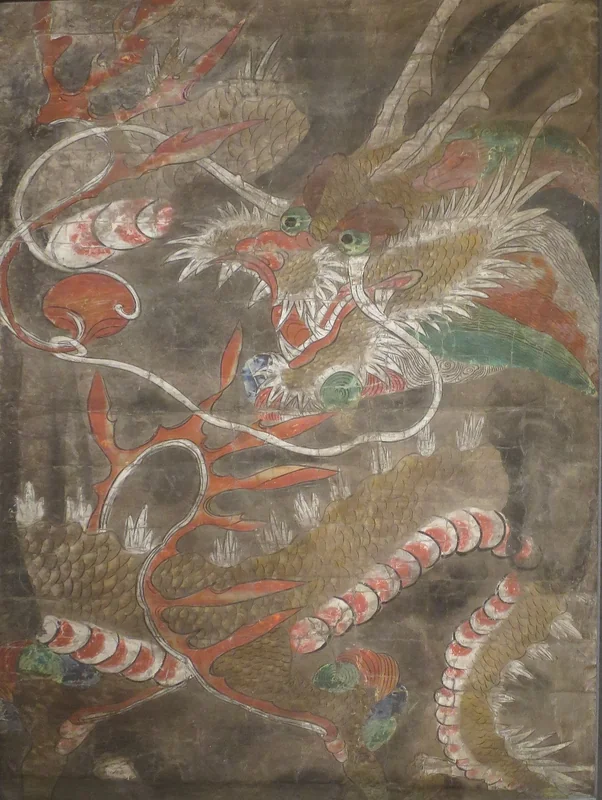
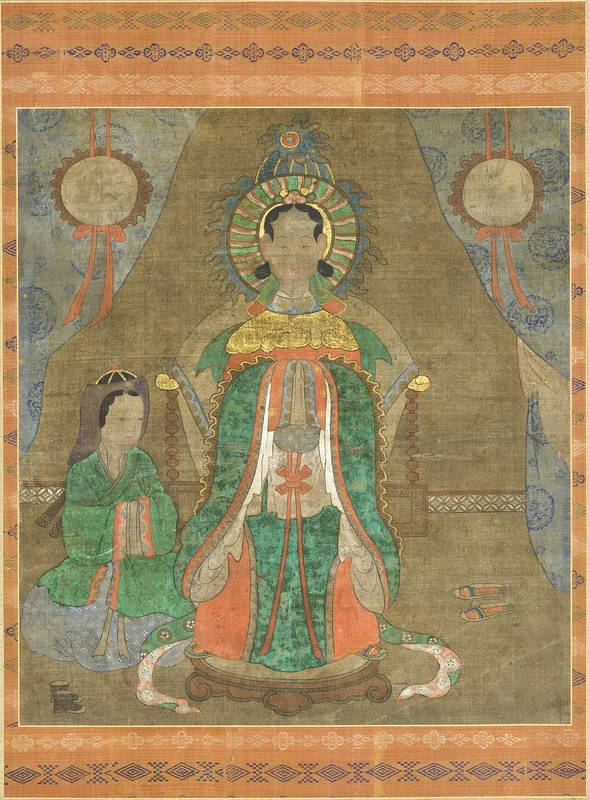
On the same day that Hyeokgeose was found at Najeong, the Samguk Yusa (1281 CE) records that a chicken-dragon (계룡, gyeryong) appeared at the Aryeong well (Aryang Well) and a girl emerged from under its left rib. She was of exceptional beauty but had a dragon's beak (in some versions: a chicken beak). When she was washed in the North River, the beak fell off and she became fully human. She was named Aryeong. Hyeokgeose and Aryeong were raised by the Saro people and ascended together as king and queen when Hyeokgeose came of age. The simultaneous miraculous birth of the founding couple — the man from a gourd-egg found by a horse, the woman from a dragon's body near a well — gives Silla a paired divine origin, the king embodying solar/celestial energy and the queen embodying dragon/water energy.
Sources & further reading (2)
- encyclopedia — accessed 2026-05-06
- primary-source — accessed 2026-05-06
Frequently asked questions
What does the family name 'Bak' (朴) signify in Korean history?
The family name Bak (박, 朴) — one of the most common Korean surnames today — derives directly from Bak Hyeokgeose's legendary family name, given because his gourd-shaped egg looked like a 'bak' (large gourd/pumpkin) in the old Silla language (Samguk Yusa 1281 CE). All people with the surname Bak (Park in the romanised form) in Korea trace their family name lineage to this founding mythology, making them nominal descendants of Silla's legendary founder. The Bak family provided several Silla kings in the early kingdom. In the broader context of Korean founding mythology, the three founding family names of Silla — Bak (Hyeokgeose's line), Seok, and Kim (Kim Alji's line) — rotate kingship for much of Silla's early history.
How common is the egg-birth motif in Korean founding mythology?
The egg-birth (난생설화, nangsaeng seolhwa) motif is a defining feature of Korean royal founding mythology. Bak Hyeokgeose (Silla) hatches from a gourd-egg; Jumong (Goguryeo) is born from an egg laid by his mother Yuhwa; Kim Suro (Gaya) descends from heaven in a golden egg. This pattern — the founding king as hatched from a cosmic egg — is widespread across East and Southeast Asian cultures and into India, suggesting ancient cultural connections across the region. The cosmic egg (Hiranyagarbha in the Vedas; Pangu's egg in Chinese tradition; Mundane Egg in Orphic Greek tradition) as the origin of primordial life is a cross-cultural mythological concept. In the Korean context, egg-birth marks the founder as non-human in origin — literally hatched rather than born — and therefore divine.