Hero
Aryeong
The dragon-born queen of Silla, consort of Bak Hyeokgeose and co-founder of the kingdom.
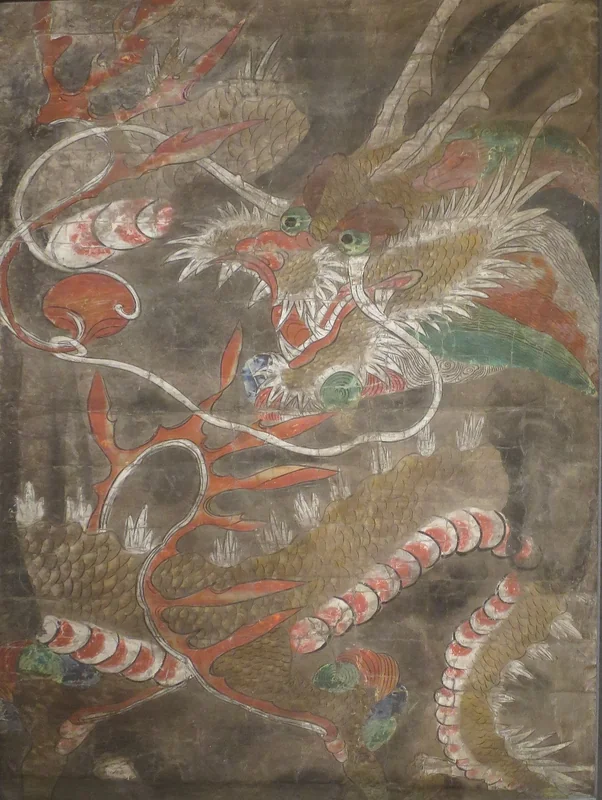
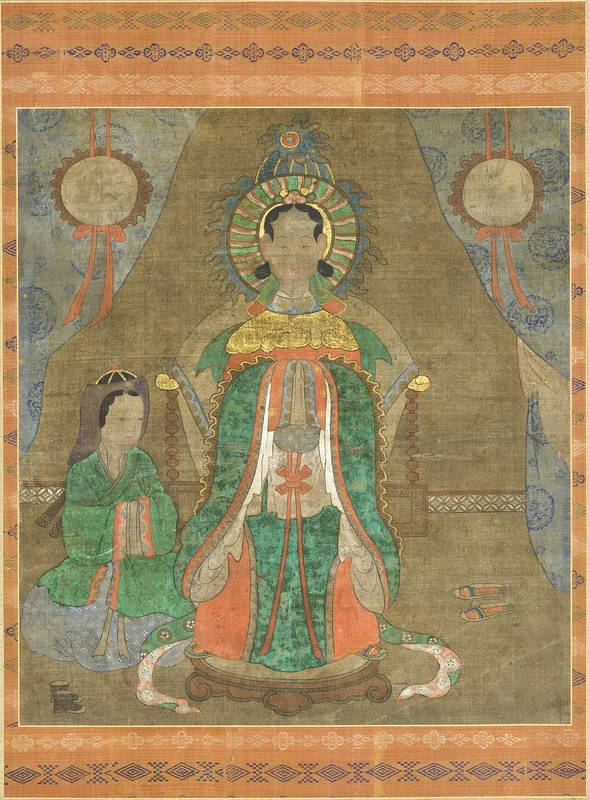
Aryeong (알영, 閼英) is the legendary founding queen of Silla, consort of Bak Hyeokgeose, born on the same day as her husband through a miraculous birth involving a dragon. According to the Samguk Yusa (1281 CE), a gyeryong ('chicken-dragon', a hybrid creature) appeared at the Aryeong Well (also called the Aryang Well) and a girl emerged from under its left side. She was beautiful in all features except for a chicken's beak. When the Six Clan elders washed her at the North River, the beak fell off and she became fully beautiful. The well where she was born was thereafter called Aryeong Well after her name. She was raised alongside Hyeokgeose and became his queen when he was crowned. Both are said to have governed virtuously together, and when they died, both ascended to heaven. Their remains fell in five pieces each, and were interred in five mounds — the Snake Mound, or Oereung ('Five Mounds'). Recorded in the Samguk Yusa (1281 CE) and Samguk Sagi (1145 CE).
Quick facts
- Pantheon
- Korean
- Figure type
- Hero
- Period
- Legendary; traditional date 57 BCE; recorded in Samguk Sagi (1145 CE) and Samguk Yusa (1281 CE)
- Primary sources
- Samguk Yusa (1281 CE), Book 1: 'Silla founding' section, by Iryeon; Samguk Sagi (1145 CE), Book 1: Silla annals, by Kim Busik
- Related figures
- bak-hyeokgeose, suro, kim-alji
Birth from the dragon
The Samguk Yusa (1281 CE) narrates that on the day the tribal chiefs found the egg-born Hyeokgeose at Najeong, a gyeryong (雞龍, 'chicken-dragon' — a fantastic creature with a chicken head and dragon body, or a dragon with rooster characteristics) appeared at the Aryeong Well south of the Saryang District. A girl was born from beneath the creature's left rib. Her form was exceedingly beautiful in all features, except for a beak like a chicken's. The elders brought her to the Bukcheon (North Stream) and washed her; the beak fell away. The stream was thereafter called Balmicheon ('beak-falling stream'). The girl was named Aryeong after the well where she was born. She was raised alongside Hyeokgeose, married him when he came of age (at thirteen, in the traditional account), and they governed the kingdom together as co-rulers.
Reign and death
The Samguk Yusa (1281 CE) and Samguk Sagi (1145 CE) both praise the virtue of Hyeokgeose and Aryeong as joint rulers. The Samguk Sagi notes that Aryeong was particularly revered for her role in agriculture and governance, with people calling her the founding queen mother. The accounts of their deaths are striking: both ascended to heaven together, and their bodies descended separately in pieces. According to both sources, the dismembered body parts of each descended and fell as five pieces; a great snake (or serpent) guarded and circled the pieces preventing burial. Eventually the people buried the ten pieces (five from each ruler) in five pairs of mounds — one piece from each in each mound. These are the Oereung ('Five Mounds') in Gyeongju, which archaeology has identified with the tumulus graves of Silla's royal cemetery. The snake-guarding motif marks the burial as protected by a divine guardian.
Sources & further reading (2)
- encyclopedia — accessed 2026-05-06
- primary-source — accessed 2026-05-06
Frequently asked questions
What is a gyeryong (chicken-dragon) in Korean mythology?
The gyeryong (雞龍, literally 'chicken-dragon') is a hybrid fantastic creature in Korean mythology — typically described as combining a dragon and a rooster or chicken. It appears in the Aryeong birth narrative (Samguk Yusa 1281 CE) as the creature from whose side the founding queen of Silla is born. The gyeryong also gives its name to the Gyeryongsan (Chicken Dragon Mountain) in South Chungcheong Province, one of Korea's sacred mountains, which is said to be in the shape of a gyeryong and has been considered a geomantically powerful site for millennia. In Korean folklore, the gyeryong is generally a benevolent creature associated with auspicious events and royal destinies. The rooster/chicken's association with the sun (its crow at dawn) combined with the dragon's celestial power makes the gyeryong a creature of double solar-celestial significance.
Are the Oereung (Five Mounds) real archaeological sites?
Yes. The Oereung (五陵, 'Five Mounds'), traditionally identified with the burial mounds of Bak Hyeokgeose and Aryeong, are located in Gyeongju, South Korea, in the area of the Silla royal tumulus cemetery. Gyeongju is known for its large number of Silla royal burial mounds (tumuli), now designated as UNESCO World Heritage sites. The specific mounds identified as Oereung are in the Gyeongju Historic Areas. While the mythological narrative (bodies descending from heaven in pieces, snake guarding) is clearly legendary, the mound tombs in the area are genuine Silla-period royal graves (approximately 1st century BCE to 7th century CE). The mythological narrative provided legitimising stories for what were probably the observed ancient tumuli in the landscape.