God
Samsin
The Three Spirit Grandmother of Korean mythology, divine protector of childbirth and the first years of life.
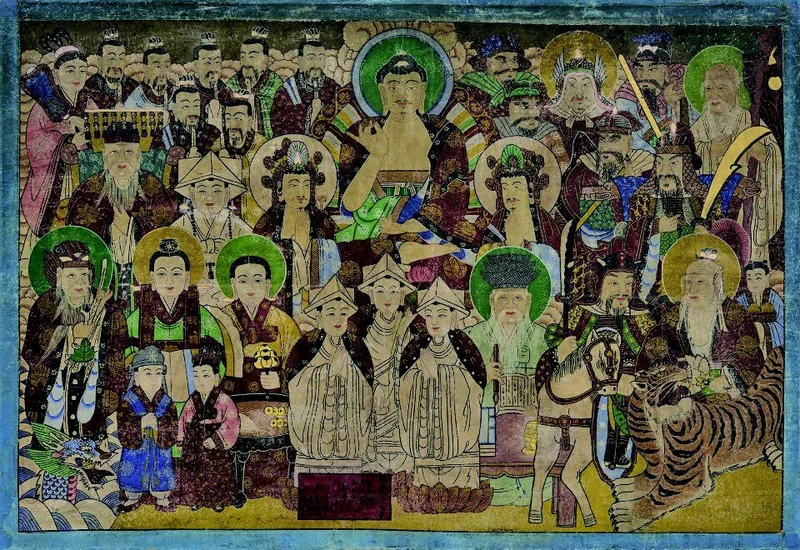
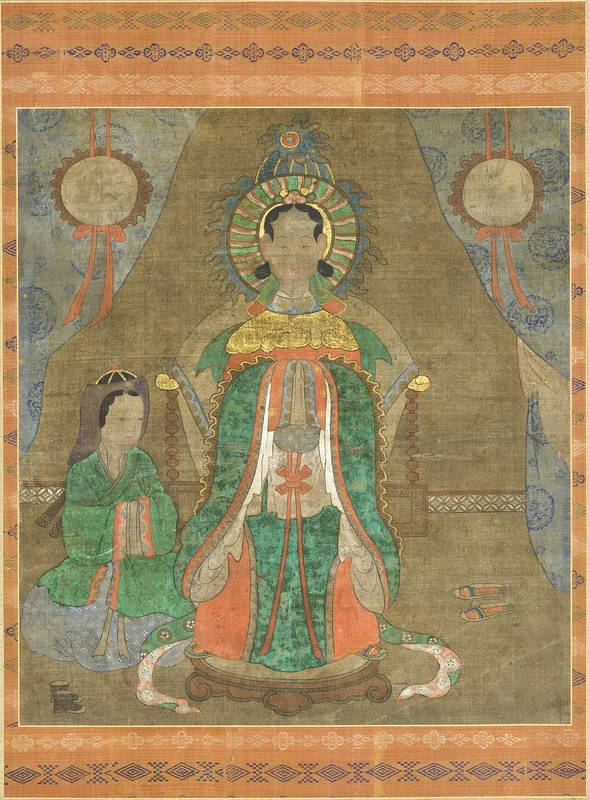
Samsin (삼신, 三神, 'Three Spirits' or 'Three-Spirit Grandmother') is the divine figure of childbirth, fertility, and the protection of infants in Korean folk religion. Often called Samsin Halmoni ('Three-Spirit Grandmother') or Samsin Halmae, she governs conception, safe birth, and the health of children through their first three years of life. She is sometimes described as a single goddess and sometimes as three spirits (a triadic divine female entity analogous to the Greek Fates or Norns), hence her name 'Three Spirits.' The samsin deity is invoked by pregnant women and mothers through household ritual — a small offering of rice and seaweed soup (miyeokguk) placed in a bowl on a shelf in the room where birth occurred. The tradition is deeply embedded in Korean domestic religious practice and is attested in Joseon-period (1392–1897 CE) household ritual manuals and documented in early 20th-century CE folklore scholarship.
Quick facts
- Pantheon
- Korean
- Figure type
- God
- Period
- Attested in Joseon-period (1392–1897 CE) household ritual tradition; probably older
- Primary sources
- Joseon-period household ritual manuals (gasinjedo) — various; Jeju Island Baridegi narrative: includes Samsin as divine figure
- Related figures
- baridegi, mago, cheoyong
Role and veneration
Samsin is the domestic deity most immediately associated with the anxieties and hopes of family life in traditional Korean society: conception, safe birth, and infant survival. She is believed to assign each soul to its body (attaching the soul, or yeong, to the infant at birth), to protect mother and child during the dangerous period of labour, and to watch over the child through the first three years of life — the most vulnerable period in a pre-modern demographic context. In Joseon-period household ritual (gasin sinang, worship of household gods), a designated space called the Samsin Jeok ('Samsin room') — typically in the inner room (anchae) of the house — was maintained with a white cloth bundle or a stone as her dwelling place. After a successful birth, the family offered rice and miyeokguk (seaweed soup) — still consumed by Korean women after childbirth as a nutrient-rich recovery food — to Samsin as thanksgiving.
Samsin in the Baridegi myth
The Korean shamanic narrative Baridegi (바리데기, 'Abandoned Princess') — one of the most important narratives in the Korean shaman (musok/mudang) repertoire — positions the princess Baridegi as the first mudang (female shaman) and frequently involves Samsin as a divine figure who assigns souls and fates. In the Baridegi narrative, the king and queen have seven daughters consecutively, and each birth involves prayer to Samsin (in most regional versions). The seventh daughter (Baridegi, 'the abandoned one') is thrown away because the king wanted a son; her subsequent journey to the underworld to retrieve her parents' souls becomes the origin myth of Korean shamanism. Samsin's role in the narrative — as the deity who controls birth and the soul's assignment — places her at the cosmological origin of human existence in Korean folk religion.
Sources & further reading (2)
- encyclopedia — accessed 2026-05-06
- primary-source — accessed 2026-05-06
Frequently asked questions
Why is seaweed soup (miyeokguk) associated with Samsin and childbirth?
Miyeokguk (미역국, seaweed soup) is the traditional food offered to the Samsin deity after a successful birth and consumed by the new mother as her first meal. The association has both ritual and practical dimensions. Ritually, the offering of rice and seaweed soup to Samsin is a thanksgiving for safe delivery, and the mother's eating of the same food she offered to the deity creates a ritual communion. Practically, miyeokguk is rich in iodine, calcium, and other nutrients essential for postpartum recovery and milk production — its nutritional value was recognised in traditional Korean medicine. The custom of new mothers eating miyeokguk on birthdays (Korean children eat miyeokguk on their birthdays in honour of their mothers' postpartum effort) connects the Samsin tradition to ongoing family ritual practice that continues in contemporary Korean culture.
Is Samsin related to the concept of the Three Fates or the Norns?
Samsin (Three Spirits/Three-Spirit Grandmother) shares the structural concept of a triadic female divine figure who governs birth and fate with similar figures in other world mythologies: the Greek Moirai (Clotho, Lachesis, Atropos) who spin, measure, and cut the thread of life; the Norse Norns (Urðr, Verðandi, Skuld) who carve runes of fate at the Well of Urðr; the Roman Parcae; and triadic goddess figures in Celtic, Slavic, and other traditions. In all these cases, birth and fate are governed by a triple female divine power. However, Samsin's specific character — as a household deity of childbirth and infant protection rather than a cosmic fate-spinner — is more intimate and domestic than the Moirai or Norns. The 'three' in her name may refer to three distinct divine functions (conception, birth, early childhood) or to a genuinely triadic nature, depending on the regional tradition.