Hero
Jumong
The divine archer and legendary founder of the kingdom of Goguryeo, son of the sun god Haemosu.
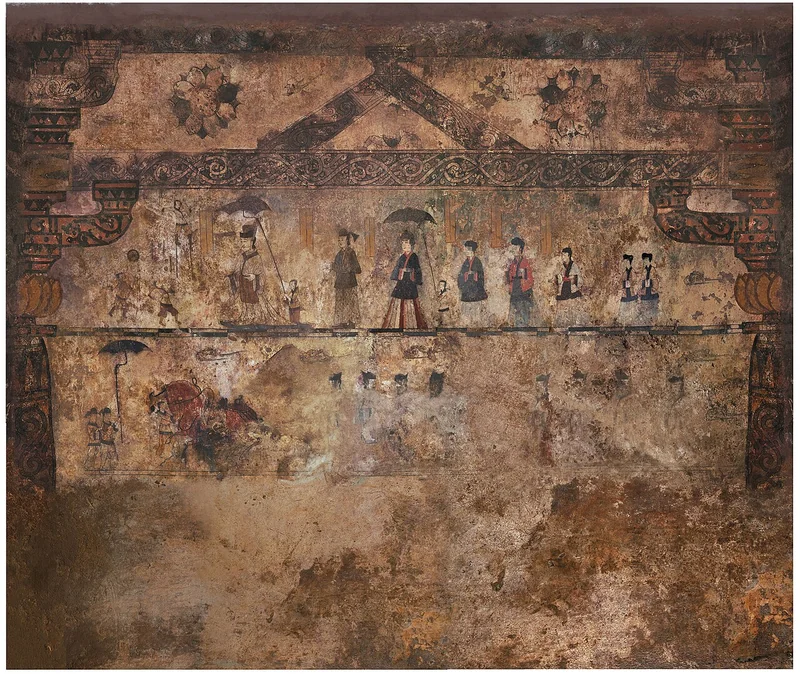
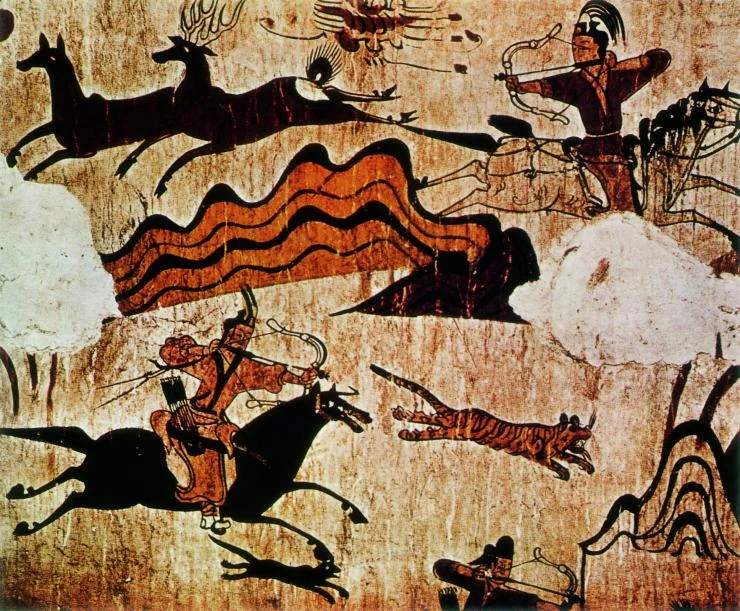
Jumong (주몽, 朱蒙, also Dongmyeong, 東明聖王, 'Holy King of the East Light') is the legendary founder of Goguryeo, one of the Three Kingdoms of Korea. Son of the sun deity Haemosu and the river goddess Yuhwa (daughter of Habaek, the river god), Jumong was born from an egg after his mother was abandoned by Haemosu and later impregnated by sunlight while imprisoned. He was an extraordinarily skilled archer from birth (his name Jumong means 'skilled archer' in the Buyeo language). After surviving assassination attempts by the jealous sons of King Geumwa (who had taken in his mother), he fled south with loyal followers, crossed a river miraculously, and founded the kingdom of Goguryeo in 37 BCE (traditionally). His founding myth is recorded in the Samguk Sagi (1145 CE) by Kim Busik and the Samguk Yusa (1281 CE) by Iryeon.
Quick facts
- Pantheon
- Korean
- Figure type
- Hero
- Period
- Legendary founding of Goguryeo: 37 BCE; myth recorded in Samguk Sagi (1145 CE) and Samguk Yusa (1281 CE)
- Primary sources
- Samguk Sagi (1145 CE), Book 13: Goguryeo annals, by Kim Busik; Samguk Yusa (1281 CE), Book 1: 'Goguryeo' section, by Iryeon; Gwanggaeto Stele (414 CE): earliest surviving mention of Jumong
- Related figures
- haemosu, yuhwa, habaek
Birth and miraculous childhood
The Samguk Sagi (1145 CE, Book 13) narrates Jumong's birth from an egg. His mother Yuhwa, daughter of the river god Habaek, was seduced or abducted by Haemosu, the sun deity. After Haemosu abandoned her, Yuhwa was found by King Geumwa of Buyeo and taken into his palace. A beam of sunlight followed her and impregnated her; she gave birth to an egg. King Geumwa set the egg out to be killed by animals, but they all refused to harm it. The egg was returned to Yuhwa and a boy burst out — Jumong, the future founder of Goguryeo. Even as a child, Jumong displayed extraordinary archery ability (his name meant 'good bowman' in the ancient Buyeo language, according to the Samguk Sagi's explanatory note). The king's sons grew jealous of his ability and urged his death.
Flight and founding of Goguryeo
Warned of the plot against him (in some versions by his mother Yuhwa, in others by divine signs), Jumong escaped from Buyeo with three loyal companions. When they reached the Eom River (Yalu) and could not cross, Jumong called out: 'I am the son of the sun deity and the grandson of the river god Habaek. Fish and turtles, make a bridge for me!' The fish and turtles rose from the river and formed a bridge; he crossed; then they dispersed so his pursuers could not follow. He continued south and founded a kingdom — Goguryeo — at the confluence of the Biryu and the Yum rivers (traditionally in 37 BCE). The founding is described on the Gwanggaeto Stele (414 CE), making Jumong's story among the earliest documented in Korean epigraphy.
Sources & further reading (2)
- encyclopedia — accessed 2026-05-06
- primary-source — accessed 2026-05-06
Frequently asked questions
What is the earliest historical evidence for the Jumong myth?
The Gwanggaeto Stele (광개토대왕릉비, erected 414 CE) in Jilin, China — the oldest large inscription concerning Korean history — contains the earliest written reference to Jumong/Dongmyeong as the founding ancestor of Goguryeo. The stele describes him as the son of Heaven and the grandson of the river god. This inscription pre-dates the Samguk Sagi (1145 CE) and Samguk Yusa (1281 CE) by over 700 years, demonstrating that the Jumong founding myth was established in the Goguryeo royal tradition by at least the early 5th century CE. The Dongmyeong narrative also appears in the Chinese source Weishu (Wei Chronicles, 6th century CE), which describes the Goguryeo founding myth, providing an independent early attestation.
How is Jumong connected to the sun deity Haemosu?
The Samguk Sagi (1145 CE) describes Haemosu as a 'son of heaven' (天帝子, cheonje-ja) who descended from heaven in a chariot drawn by five dragons and seduced Yuhwa, daughter of the river god Habaek. Haemosu is identified as a sun deity in the tradition — his name contains elements meaning 'sun' or 'bright one' in some interpretations. Jumong's dual divine ancestry — sun deity father and river goddess mother — gives him the typical hero's credentials in Korean mythology: heaven (yang, male, solar) and water (yin, female, aquatic). His birth from an egg (a cosmic egg motif found across Eurasian mythology, including in the Korean Silla founding myth of Bak Hyeokgeose) marks him as a being of exceptional origin, literally breaking out of the cosmic containment into the world.