Creature
Gumiho
The nine-tailed fox of Korean mythology — a powerful spirit that devours human livers and hearts.
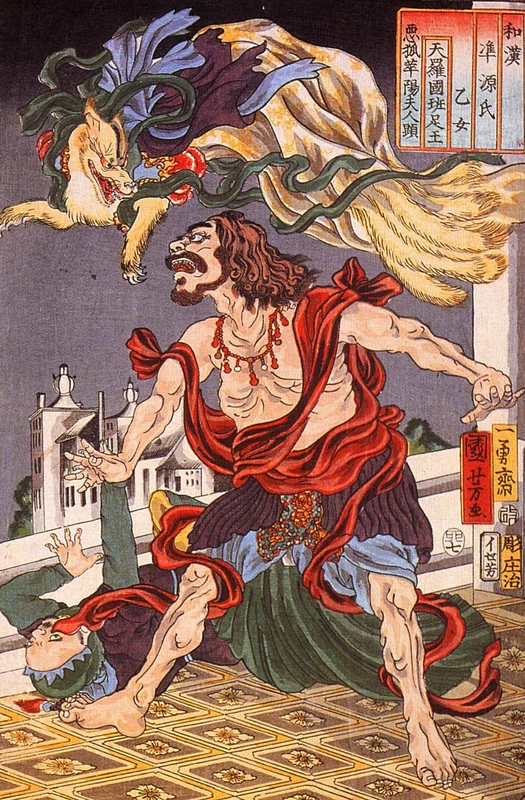
Gumiho (구미호, 九尾狐, 'Nine-tailed Fox') is a powerful supernatural fox spirit in Korean mythology and folklore. Like its counterparts in Chinese (jiuweihu) and Japanese (kitsune with nine tails) traditions, the gumiho is a fox that has lived for a thousand years and gained supernatural power, particularly the ability to shapeshift into human form. In Korean tradition, the gumiho is typically depicted as malevolent — a beautiful woman who seduces men and feeds on their livers or hearts to sustain its power or to attempt to permanently become human. A gumiho can only become fully human if it refrains from killing for a certain period (usually a thousand days). The figure appears in Joseon-period (1392–1897 CE) narrative literature and folk tales documented in the 19th–20th century CE. Unlike the Chinese and Japanese fox spirits who can be beneficial, the gumiho is almost always dangerous in Korean tradition.
Quick facts
- Pantheon
- Korean
- Figure type
- Creature
- Period
- Attested in Joseon-period (1392–1897 CE) literature; Chinese nine-tailed fox tradition introduced earlier via the Shanhaijing
- Primary sources
- Joseon-period narrative folk literature (saseol sijo, classical tales) — various; Shanhaijing (Classic of Mountains and Seas, c. 4th century BCE): nine-tailed fox source tradition
- Related figures
- dokkaebi, imugi, samsin
Nature and transformation
The gumiho in Korean folk tradition is characterised by its beauty in human form and its hidden monstrous nature. A fox that lives for a hundred years gains one tail and supernatural powers; at a thousand years, it gains nine tails and the ability to transform into human form — typically a beautiful young woman. The gumiho sustains its existence or attempts to complete its transformation into a true human by consuming human liver and/or heart, which it obtains through seduction and betrayal. Folk tales consistently depict the gumiho approaching young men or families in disguise, forming relationships, and then being exposed — typically through a magic object, a dog's bark (dogs can see through gumiho transformations in Korean tradition), or the revelation of its fox tail. The gumiho's desire to become human gives it a tragic dimension: it is almost-human, striving for full humanity, but condemned to kill to survive.
The path to humanity
A recurring folk tale motif involves a gumiho who is given (or seizes) the opportunity to become fully human: if she can live as a human for a thousand days (or a hundred days, or some specified period) without killing or eating human flesh, she will permanently become human. The stories typically end in tragedy: the gumiho fails because she is betrayed by a human man who reveals her secret too early, or because her nature overcomes her resolve. In some versions, a compassionate or brave man helps her complete the transformation. These tales place the gumiho in the ambiguous space between monster and human — a creature whose greatest desire is the humanity it lacks. The Korean attitude toward the gumiho is more unambiguously negative than the Japanese kitsune tradition, in which fox spirits can be beneficial patrons and even wives in positive tales.
Sources & further reading (2)
- encyclopedia — accessed 2026-05-06
- primary-source — accessed 2026-05-06
Frequently asked questions
How does the Korean gumiho compare to the Chinese and Japanese nine-tailed foxes?
All three traditions — Chinese jiuweihu, Japanese kitsune, Korean gumiho — share the concept of a fox that gains tails (up to nine) and supernatural powers with age, ultimately becoming able to shapeshift into human form. However, their moral valence differs significantly. In Chinese tradition (attested as early as the Shanhaijing, c. 4th century BCE), the nine-tailed white fox is both auspicious (a symbol of good fortune) and dangerous (a seductress who causes political ruin). In Japanese tradition, the kitsune can be a benevolent messenger of the deity Inari, a dangerous trickster, or a loving wife — the moral character varies widely. In Korean tradition, the gumiho is consistently presented as dangerous and malevolent — a predatory creature that kills humans for their organs. The gumiho thus represents the most uniformly threatening version of the fox spirit across the three traditions.
Why do dogs reveal gumiho in Korean folklore?
In Korean folk belief, dogs have the supernatural ability to see through the gumiho's human disguise and will bark wildly in its presence. This belief reflects a broader East Asian tradition that dogs can detect spiritual presences invisible to humans — their heightened senses are understood in folk belief as extending to the supernatural domain. The dog is also a traditional guardian of the home (gasin, household spirit) in Korean culture, and its protective role extends to alerting the household to malevolent supernatural intruders. In practical terms, the folk belief that dogs can detect fox spirits may reflect actual animal behaviour: dogs do respond differently to predator scent (foxes being genuine canid competitors), which was interpreted symbolically as supernatural detection. The dog's role as a gumiho-detector appears consistently across Joseon-period folk narratives.