God
Ares
God of war and the violence of battle in Greek mythology.
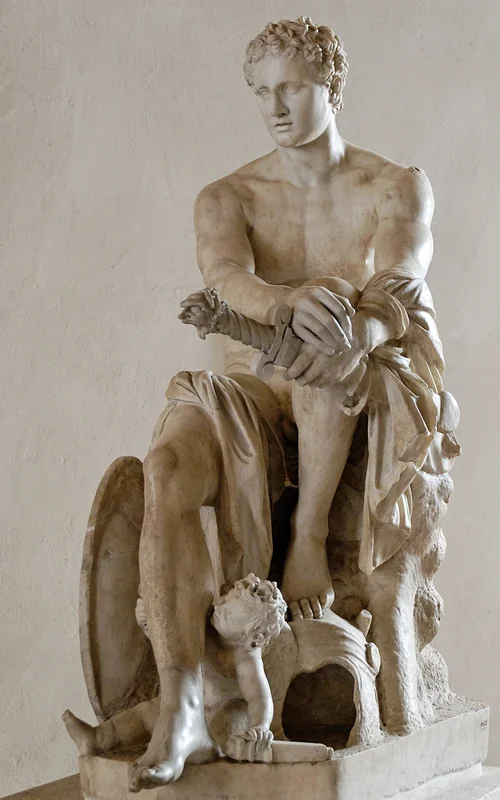
Ares is the Olympian god of war and the physical, often brutal, aspects of combat in Greek mythology. Son of Zeus and Hera, he represents the bloodlust and chaos of battle, in contrast to Athena, who governs strategic warfare and wisdom. Ares is portrayed in Homer's Iliad as fierce but also vulnerable to defeat by mortal heroes. He had a long affair with Aphrodite, recorded by Homer (Odyssey 8.266–366). His Roman counterpart is Mars, who held a more elevated position in Roman religion.
Quick facts
- Pantheon
- Greek
- Figure type
- God
- Period
- Attested from the 8th century BCE; possible Thracian origins
- Primary sources
- Homer Iliad 5.827–909; Homer Iliad 21.391–414; Hesiod Theogony 921–923; Homeric Hymn 8 (To Ares)
- Related figures
- zeus, hera, aphrodite, athena, hephaestus
Ares in the Iliad
Homer's Iliad portrays Ares as a ferocious but unreliable war-god who sides with the Trojans. In Book 5, the mortal hero Diomedes, aided by Athena, wounds Ares with a spear; the god flees to Olympus crying in pain, where Zeus rebukes him as the most hateful of the gods (Iliad 5.827–909). The episode reflects the Iliad's characterisation of Ares as the embodiment of pure aggression, often at odds with the more measured authority of Zeus and Athena. His epithets include Brotoloigos (destroyer of men) and Miaiphonos (blood-stained).
Ares and Aphrodite
The affair between Ares and Aphrodite is narrated in the Odyssey (8.266–366) as a comic interlude sung by the bard Demodocus. Hephaestus, Aphrodite's husband, crafted an invisible net and trapped the two lovers together, then summoned the other Olympians to witness their humiliation. The gods laughed at the spectacle. The story reinforces the Olympians' human-like character and the contrast between Hephaestus's patient craftsmanship and Ares's impulsive nature.
Sources & further reading (2)
- primary-source — accessed 2026-05-06
- encyclopedia — accessed 2026-05-06
Frequently asked questions
How does Ares differ from Athena as a war deity?
In Greek mythology, Ares and Athena both govern war but represent different aspects. Ares embodies raw violence, bloodlust, and the chaos of battle. Athena governs strategic thinking, military discipline, and the just use of force. In Homer's Iliad, Ares is portrayed negatively — wounded by Diomedes and rebuked by Zeus — while Athena repeatedly aids heroes with wisdom and skill. This distinction reflects Greek values placing wisdom above brute force.
Who are the children of Ares in Greek mythology?
Ares fathered several notable figures in Greek mythology. With Aphrodite he had Eros (god of love), Anteros, Harmonia, Phobos (Fear), and Deimos (Dread). With other partners he fathered various heroes and the Amazons. Romulus and Remus, the legendary founders of Rome, were said by Roman tradition to be sons of Mars (the Roman Ares) and the Vestal Virgin Rhea Silvia (Livy 1.4.2).