Sedum confusum
Sedum confusum Care Guide
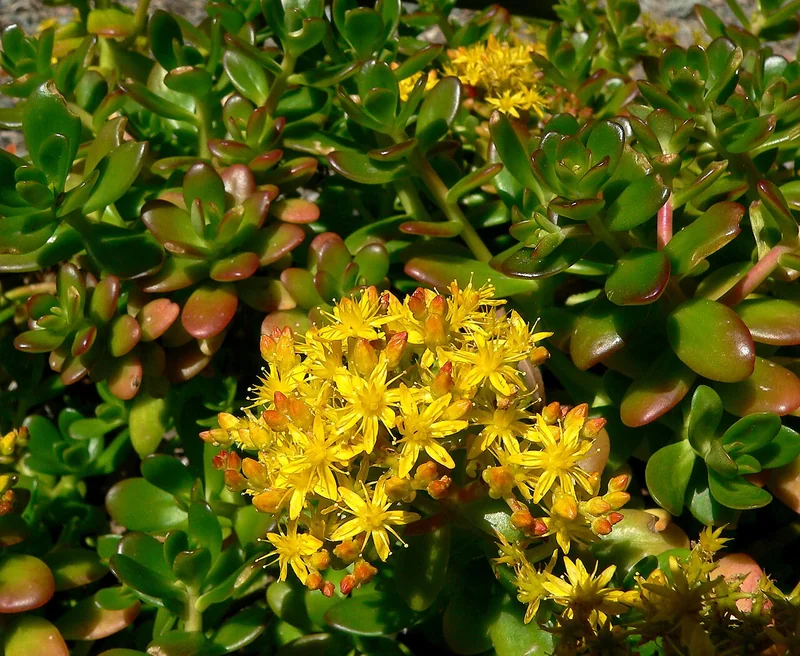 Featured photosedum-confusum.jpg
Sedum confusum is a shrubby, sprawling succulent from Mexico that produces clusters of glossy, bright-green rosette-like leaf arrangements on branching stems. It is one of the most vigorous and easily grown sedums, tolerating a wide range of indoor and outdoor conditions. The waxy, apple-green leaves form tight clusters that spread laterally, making it a popular choice for hanging baskets, ground cover, and succulent dish gardens. Yellow star-shaped flowers appear in spring.
Care facts at a glance
- Light
- Bright indirect
- Water
- Water when the soil has dried completely, roughly every 2 to 3 weeks in summer.
- Humidity
- 30–60 %
- Temperature
- 5–35 °C
- Soil
- Standard succulent mix with perlite; tolerates average garden soil with excellent drainage.
- Origin
- Rocky slopes and cliffs of Mexico.
- Mature size
- 20 to 30 cm tall; spreading to 50 cm wide.
Overview
Sedum confusum was described by Hemsley and is named for its historical confusion with related species — the name means 'confused'. It belongs to the large Crassulaceae family alongside echeveria, crassula, and aeonium. Its vigour and adaptability make it one of the most practical sedums for cultivation, and it is widely used as a landscape plant in Mediterranean climates. Indoors it performs well with any available windowsill light.
Care Priorities
- Full sun to bright indirect light encourages the most compact, attractive rosette clusters.
- Allow the soil to dry between waterings; this species handles drought well but grows more vigorously with occasional watering.
- Prune or pinch back straggly stems in spring to maintain a bushy habit.
- Propagate readily from stem cuttings; the trimmings root in any succulent mix.
Common Problems
Leggy, stretched stems with widely spaced leaves are a sign of insufficient light — move to a brighter position and trim back to encourage bushier growth. Yellowing lower leaves are normal as the plant grows and sheds older foliage. Aphids may cluster on new growth; a jet of water or dilute insecticidal soap treats minor infestations.
Sources & further reading (2)
- botanical-garden — accessed 2026-05-08
- encyclopedia — accessed 2026-05-08
Frequently asked questions
Is S. confusum good for a hanging basket?
Yes — its spreading habit and trailing stems make it well-suited for hanging baskets where stems can cascade attractively.
Can I grow it outdoors year-round?
In mild climates (above 5 °C in winter) it is a reliable outdoor perennial. Frost damages the growth tips but the plant often recovers from roots if cold is brief.
How fast does it grow?
Faster than most succulents — under good conditions it can spread 20 to 30 cm in a single growing season. Regular trimming keeps it manageable.