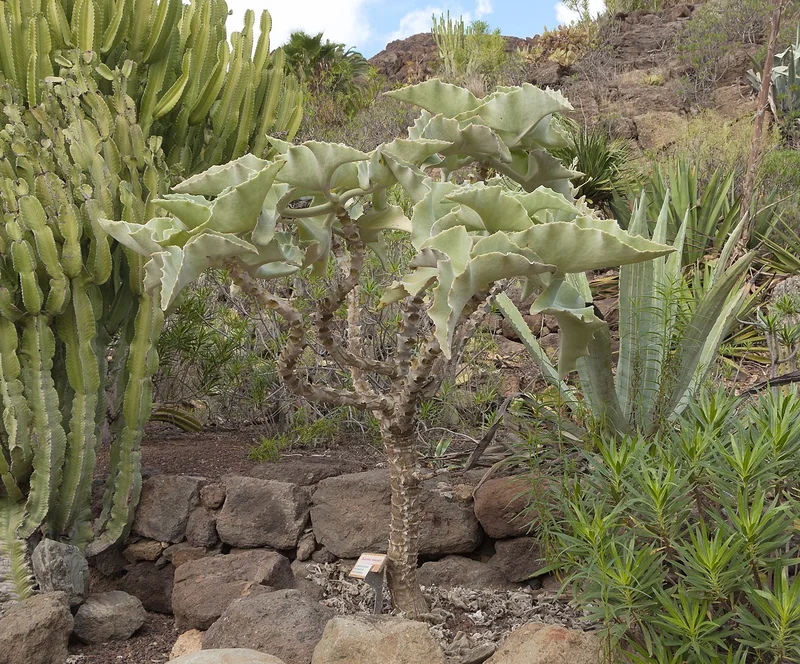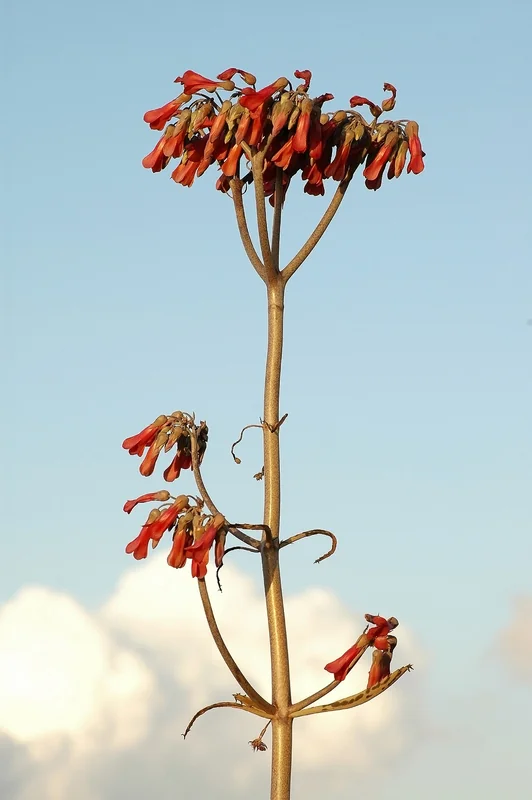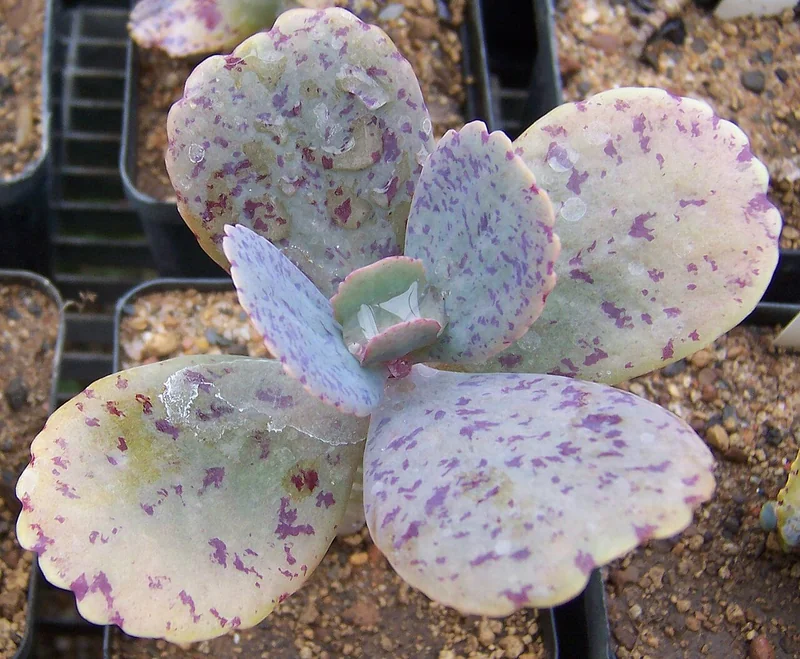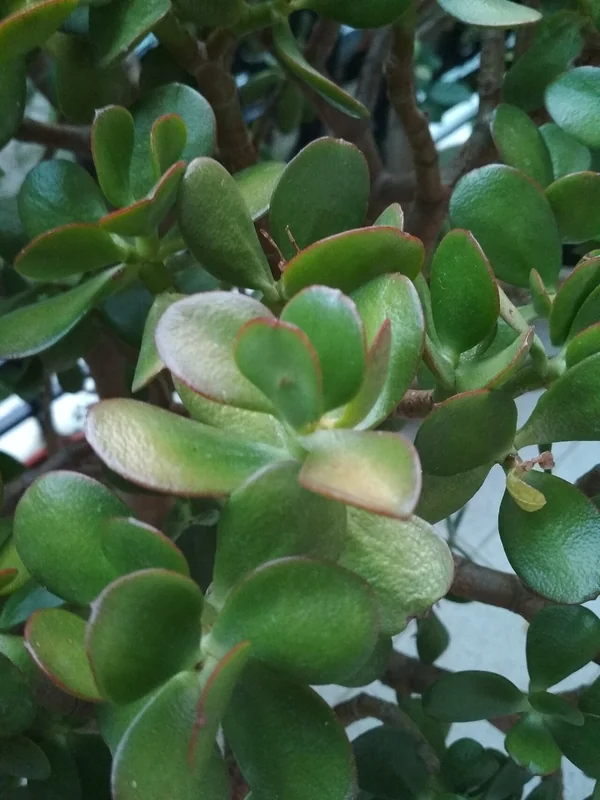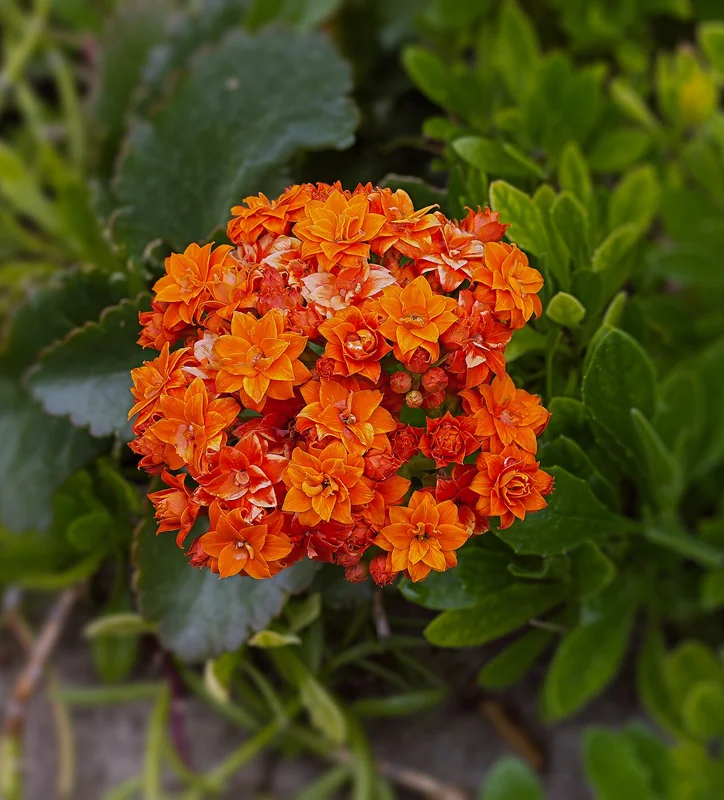
Kalanchoe blossfeldiana is the florist kalanchoe, a Madagascan succulent with thick, scalloped, glossy leaves and dense clusters of small four-petalled flowers in red, pink, orange, yellow, or white. It is one of the most-sold flowering houseplants and one of the longest-blooming, with each cluster lasting 6 to 8 weeks.
Care facts at a glance
- Light
- Bright indirect
- Water
- Water when the top 2 to 3 cm of mix has dried.
- Humidity
- 30–50 %
- Temperature
- 15–27 °C
- Soil
- Free-draining mix of standard houseplant soil with extra perlite.
- Origin
- Madagascar.
- Mature size
- 30 to 45 cm tall.
Overview
Kalanchoe blossfeldiana was introduced from Madagascar in the 1930s and quickly became a year-round florist plant through controlled-photoperiod greenhouse culture. Indoor plants flower naturally in late winter and spring.
Care Priorities
- Bright filtered light or a little direct sun.
- Allow the top of the mix to dry between waterings.
- Free-draining mix.
- After flowering, trim spent flower stalks and let the plant rest before re-blooming.
Common Problems
Mushy stems are overwatering. No re-bloom is usually because of insufficient short-day exposure (kalanchoes are short-day plants and need long nights to set flowers). Powdery mildew can occur in stagnant air.
Sources & further reading (2)
- encyclopedia — accessed 2026-04-28
- botanical-garden — accessed 2026-04-28
Frequently asked questions
How do I get it to re-bloom?
Kalanchoes are short-day plants and need 6 to 8 weeks of 14-hour nights (e.g., kept in a dark room or covered overnight) to trigger re-flowering.
Why does it stop flowering?
Each flower cluster lasts 6 to 8 weeks. The plant naturally rests between blooms; deadhead spent stalks and the plant typically pushes new flowers in 3 to 6 months.
Why won't my Kalanchoe rebloom?
Kalanchoe blossfeldiana needs about six weeks of long nights (around 14 hours of darkness) to set new flower buds. A dark cupboard from early evening to morning for six weeks usually triggers another round of blooms.