Philodendron tortum
Philodendron tortum Care Guide: Unique Split-Leaf Houseplant
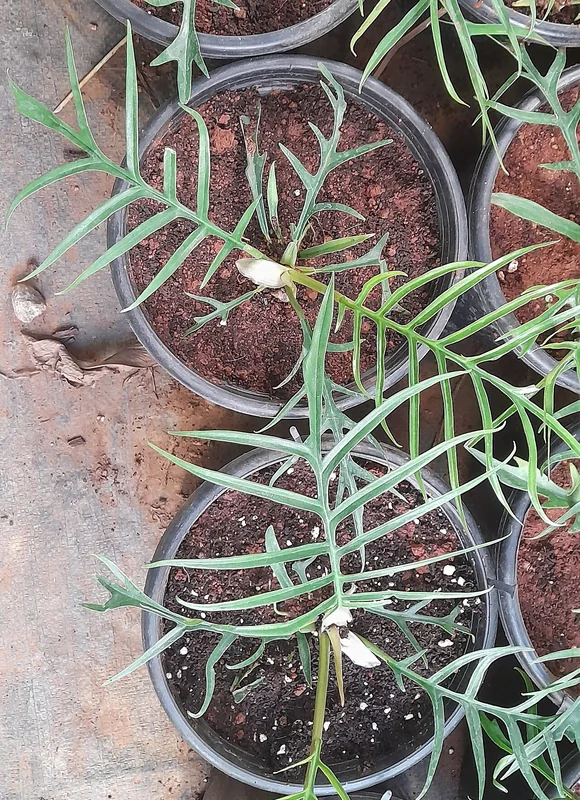 Featured photophilodendron-tortum.jpg
Philodendron tortum is a striking tropical plant known for its deeply lobed, almost skeletal leaves. It's a vining aroid that brings a unique, architectural look to any indoor space. This plant thrives in warm, humid conditions with bright, indirect light. Proper care will encourage its distinctive foliage to develop fully.
Care facts at a glance
- Light
- Bright indirect
- Water
- Water when the top 1-2 inches of soil feel dry to the touch, ensuring the soil remains consistently moist but never waterlogged.
- Humidity
- 60–80 %
- Temperature
- 18–29 °C
- Soil
- A well-draining, airy aroid mix is ideal, often containing components like orchid bark, perlite, coco coir, and a small amount of potting soil or worm castings. This mimics its natural epiphytic or semi-epiphytic habitat.
- Origin
- Native to the tropical rainforests of Brazil.
- Mature size
- Can grow 6-8 feet (1.8-2.4 meters) or more indoors with proper support, though often kept smaller through pruning.
Overview
The Philodendron tortum is a captivating member of the Araceae family, celebrated for its deeply dissected, almost skeletal leaves that give it a unique appearance. Unlike many other philodendrons, its leaves are not just lobed but appear to be cut into narrow segments, creating a dramatic visual effect. This vining plant is native to the humid rainforests of Brazil and thrives when given conditions that mimic its natural habitat, making it a rewarding challenge for houseplant enthusiasts.
Care Priorities
To ensure your Philodendron tortum flourishes, focus on these key aspects:
- Light: Provide bright, indirect light. Direct sun can scorch its delicate leaves.
- Humidity: High humidity (60-80%) is crucial. Use a humidifier or pebble tray.
- Watering: Keep the soil consistently moist but never soggy. Allow the top inch or two to dry out between waterings.
- Soil: Use a well-draining, airy aroid mix to prevent root rot.
- Support: As a vining plant, it benefits greatly from a moss pole or trellis to climb, which can also encourage larger leaf development.
Common Problems
While generally robust, Philodendron tortum can face a few issues. Yellowing leaves often indicate overwatering or nutrient deficiency, while crispy brown edges usually point to insufficient humidity or underwatering. Slow growth or small leaves might mean it's not getting enough light or needs a climbing support. Keep an eye out for common houseplant pests like spider mites and mealybugs, especially in dry conditions; regular inspection and prompt treatment are key.
Sources & further reading (4)
- encyclopedia — accessed 2026-04-24
- dataset — accessed 2026-04-24
- botanical-garden — accessed 2024-05-15
- botanical-garden — accessed 2024-05-15
Frequently asked questions
Why are my Philodendron tortum leaves not splitting?
Leaf splitting (fenestration) typically occurs as the plant matures and receives adequate light and humidity. Ensure it's in bright, indirect light, high humidity, and consider providing a moss pole for it to climb, which can encourage maturity.
How often should I fertilize my Philodendron tortum?
During the active growing season (spring and summer), fertilize every 2-4 weeks with a balanced liquid houseplant fertilizer diluted to half strength. Reduce or stop feeding during fall and winter.
What kind of soil does Philodendron tortum need?
It thrives in a chunky, well-draining aroid mix. This typically includes components like orchid bark, perlite, coco coir, and a small amount of high-quality potting soil or worm castings to ensure good aeration and drainage.
How do I make my Philodendron tortum grow faster?
To encourage faster growth, provide optimal conditions: bright, indirect light, high humidity (60-80%), consistent watering, regular feeding during the growing season, and a sturdy moss pole or trellis for it to climb.