Philodendron spiritus-sancti
Philodendron spiritus-sancti Care Guide
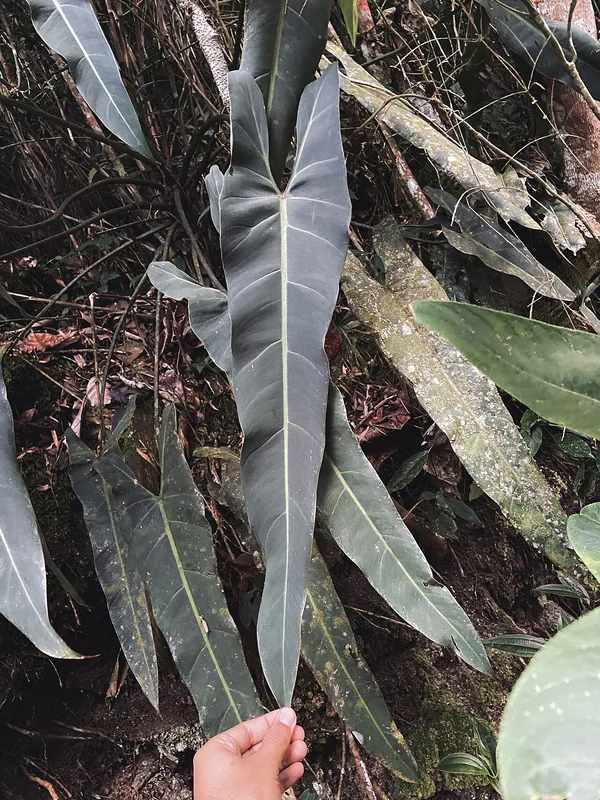 Featured photophilodendron-spiritus-sancti.jpg
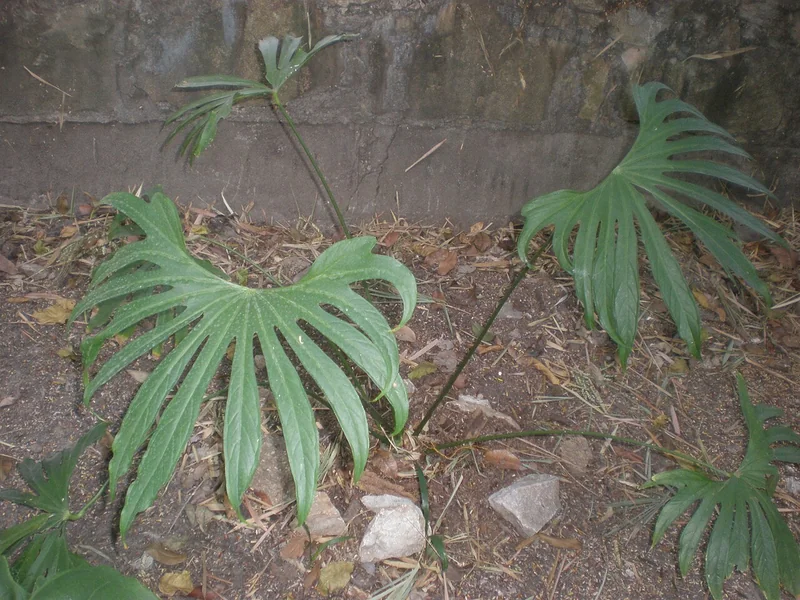
Philodendron spiritus-sancti is one of the rarest philodendrons in both the wild and cultivation — a critically endangered endemic species from Espírito Santo state, Brazil, believed to survive at only a single small wild population. It produces extraordinarily long, narrow, drooping, dark-green leaves that can reach 70 to 90 cm in length with a distinctive pendant quality unlike any other philodendron. Virtually all specimens in cultivation have been propagated vegetatively from a small number of original plants, and it commands among the highest prices of any houseplant.
Care facts at a glance
- Light
- Bright indirect
- Water
- Water when the top 3 to 5 cm of substrate has dried; every 7 to 10 days in the growing season.
- Humidity
- 65–85 %
- Temperature
- 18–30 °C
- Soil
- Well-draining, airy aroid mix: coarse bark, perlite, and sphagnum moss; avoid compacting substrates.
- Origin
- Atlantic Forest of Espírito Santo state, Brazil; critically endangered with a single known wild population.
- Mature size
- Hemiepiphytic climber; leaves 60 to 90 cm long and 15 to 25 cm wide at maturity.
Overview
Philodendron spiritus-sancti was described by G.S.Bunting in 1987 from a small population in the Atlantic Forest of Espírito Santo (the species name is Latin for 'Holy Spirit', the name of that Brazilian state). It is classified as Critically Endangered on the IUCN Red List and is subject to CITES protection against international trade in wild-collected specimens. In its native forest it grows hemiepiphytically — beginning growth on the forest floor and climbing trees as it matures. The pendant, elongated leaves — unlike the broad, heart-shaped leaves of most philodendrons — are an adaptation that may help channel water down the leaf blade. All cultivated specimens descend from a handful of legally collected plants.
Care Priorities
- High humidity above 65 percent is the most critical care requirement; insufficient humidity causes curled, distorted new leaves and prevents the extraordinary elongated leaf form from fully developing.
- A substantial moss pole or large tree fern support is needed to allow the plant to climb and develop mature leaf size; without vertical climbing the leaves remain smaller and less elongated.
- The substrate must be exceptionally well-draining — given the plant's rarity and value, root rot is an unacceptable risk; use a chunky aroid mix with significant bark and perlite.
- Consistent warmth above 18 °C is essential; cold exposure is particularly harmful to this species.
Common Problems
Leaves failing to elongate fully and remaining stubby or wide indicate insufficient humidity during the expansion period; ensure the growing environment maintains above 65 percent at all times. Spider mites are the most significant pest risk — the long, exposed leaf surface provides substantial feeding habitat and infestations can progress from mild to severe rapidly; inspect weekly and treat promptly with neem oil or systemic insecticide. Root rot from overwatering this slow-growing species is particularly costly given the plant's value; prioritise excellent drainage and allow meaningful drying between waterings. Bacterial leaf spot from water sitting on the leaves causes expanding brown lesions; always water at the substrate level.
Sources & further reading (2)
- botanical-garden — accessed 2026-05-08
- encyclopedia — accessed 2026-05-08
Frequently asked questions
Is it legal to own one?
Yes — CITES regulates international trade in wild-collected specimens, not possession of legally propagated cultivated plants. All legitimately sold specimens are vegetatively propagated from legally obtained stock, which is legal to own worldwide.
What makes the leaves so unusually shaped?
The pendant, elongated leaf form is unique in the genus and may have evolved as an adaptation in its specific Atlantic Forest microhabitat. The exact selective pressure that drove this extreme leaf shape is not definitively understood.
Will it ever be affordable?
Tissue culture propagation has begun to scale the supply of cultivated specimens and prices have declined from peak levels. As more tissue culture plants mature and are multiplied, availability should increase over the coming years.