Paphiopedilum callosum
Paphiopedilum callosum Care Guide
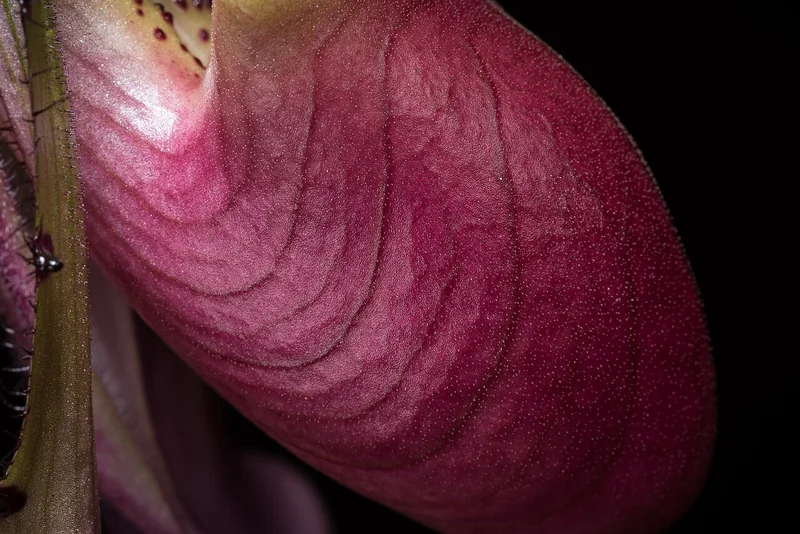 Featured photopaphiopedilum-callosum.jpg
Paphiopedilum callosum is a warm-growing slipper orchid from the tropical forests of Thailand, Cambodia, Vietnam, and peninsular Malaysia, prized for both its beautifully tessellated (checkerboard-patterned) dark-green and silver leaves and its large, striking flowers — held singly on tall stems with a distinctive slipper-shaped pouch in maroon-green and white petals with dark veining. It is one of the most reliable and forgiving Paphiopedilum species for indoor cultivation, blooming in spring and requiring no cool rest period, making it accessible to growers without cool greenhouse facilit...
Care facts at a glance
- Light
- Low light
- Water
- Water every 5 to 7 days; keep consistently moist. Never allow the medium to dry out completely.
- Humidity
- 55–80 %
- Temperature
- 18–30 °C
- Soil
- Fine to medium orchid bark with added perlite and sphagnum moss. Slightly moisture-retentive mix is appropriate.
- Origin
- Tropical lowland and foothill forests of Thailand, Cambodia, Vietnam, and Peninsular Malaysia.
- Mature size
- Single-stemmed rosettes; leaves 15–25 cm long. Flower spike 25–40 cm with one large flower.
Overview
Paphiopedilum callosum (Rchb.f.) Stein was described in 1892. It is a member of the warm-growing maudiae group within Paphiopedilum, characterised by tessellated (chequered) foliage. All Paphiopedilum species are protected under CITES — buy only from registered nurseries producing plants from cultivated stock, not wild-collected specimens. Unlike most orchids, Paphiopedilum has no pseudobulbs; all water is stored in its fleshy leaves and roots, requiring consistent moisture. The 'slipper' shape of the pouch (labellum) acts as an insect trap — insects slide into the pouch, are unable to exit the way they entered, and crawl past the pollen as they exit through a small opening at the back.
Care Priorities
- Never allow the medium to fully dry — the absence of pseudobulbs means this orchid cannot recover from water stress as quickly as other genera.
- Low to moderate light suits this forest-floor orchid; bright indirect light near an east window is ideal.
- No cool rest is needed for this warm-growing species — consistent warmth year-round is appropriate.
- Never let water sit in the crown (between the leaves); crown rot can destroy the growing point within days.
- Repot every 2 years into fresh bark; the old medium degrades and becomes too moisture-retentive.
Common Problems
Crown rot is the most serious and rapid-onset problem; caused by water pooling in the leaf crown, it blackens and softens the growing point within days. After watering, tilt the pot slightly or use a squeeze of air to remove water from the crown. Scale insects on the undersides of leaves are common; treat with horticultural oil. Root rot from poor drainage or overwatering produces yellowing, drooping leaves; unpot, trim dead roots, and repot into fresh medium. Flowers failing to open fully (remaining partially closed) indicate low humidity; increase ambient humidity to 60%+.
Sources & further reading (2)
- botanical-garden — accessed 2026-05-27
- encyclopedia — accessed 2026-05-27
Frequently asked questions
Is it legal to buy slipper orchids?
All Paphiopedilum species are CITES-listed. Legally sold plants in trade must be from nursery-propagated stock with appropriate documentation. Reputable orchid nurseries routinely sell legal, nursery-grown plants. Wild-collected plants are illegal to trade; avoid suspiciously cheap or unlabelled plants from unofficial sources.
How long do the flowers last?
The single flower on each spike is long-lasting — 6–10 weeks is typical in cool to moderate indoor conditions. The robust, waxy texture of the pouch contributes to this longevity. Avoid placing the plant near heat vents or in direct sun when in bloom, as this shortens flower life.
Will it bloom every year?
Yes, typically annually if grown well. Each growth (rosette) blooms once; after flowering the plant produces a new side growth that will carry the next flower. Maintain good light, consistent moisture, and regular feeding to build healthy new growths each season.