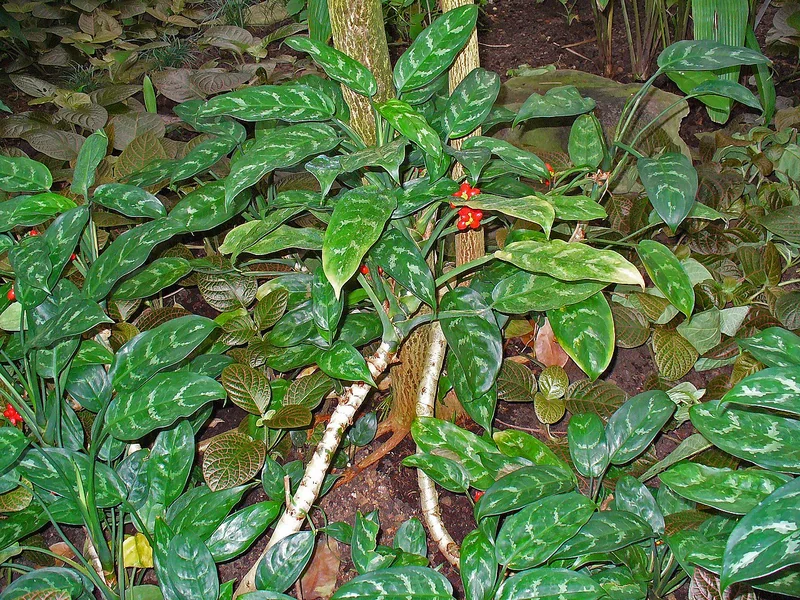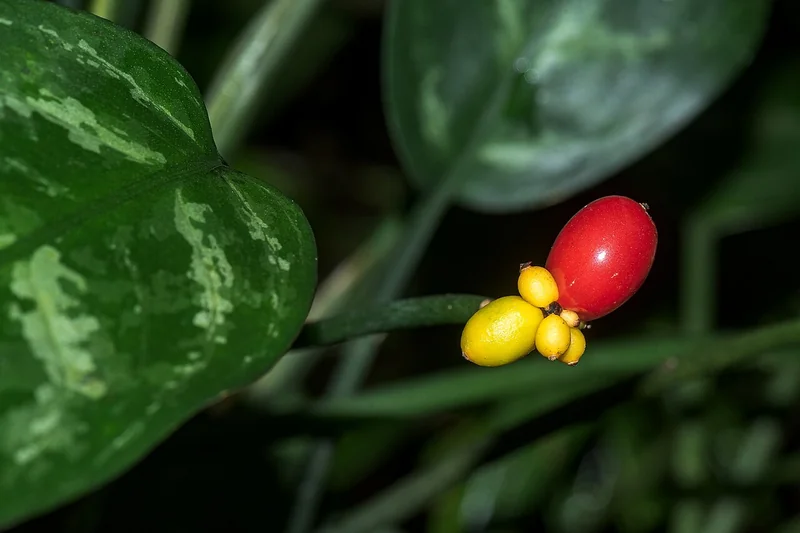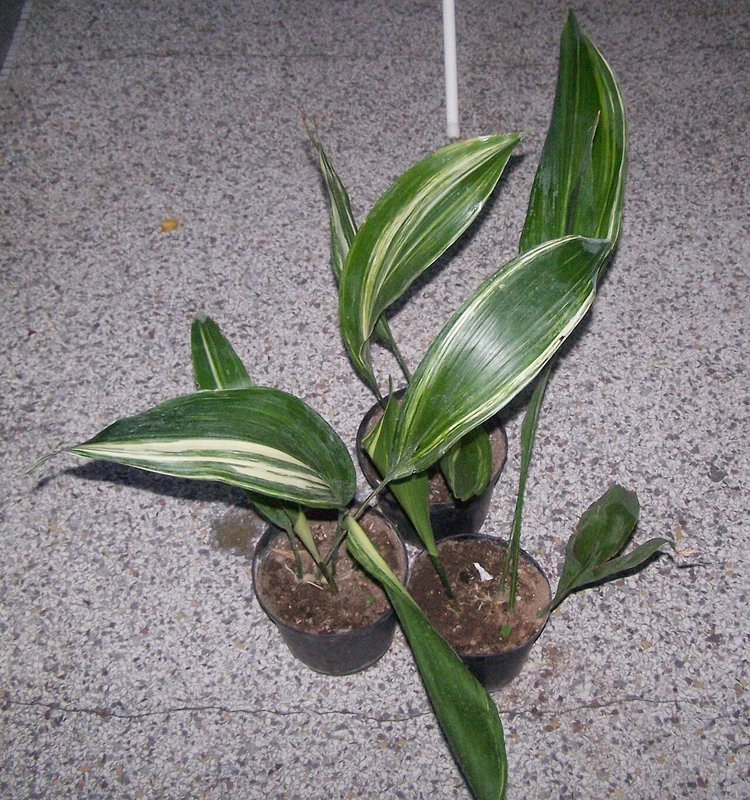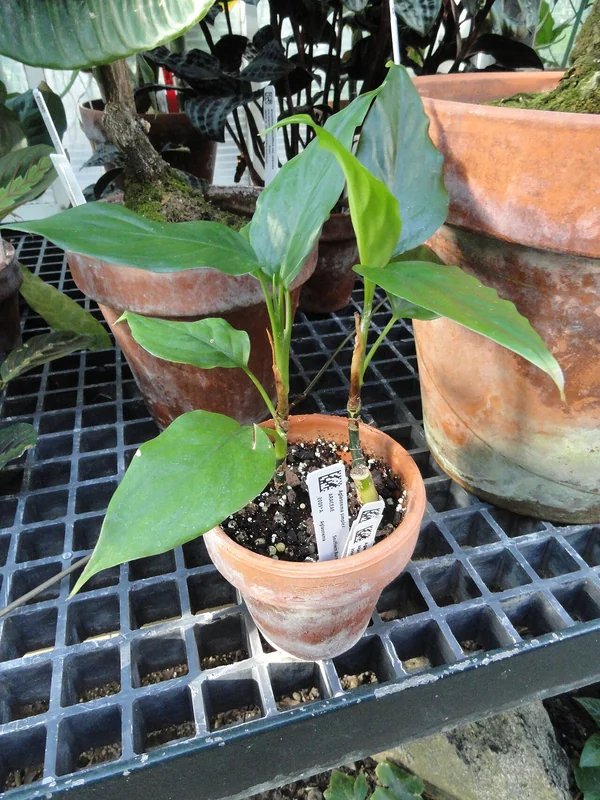
Aglaonema simplex, sold as Simple-leaf Chinese Evergreen, is one of the most forgiving Asian aroids in cultivation. A widespread Southeast Asian species with simple, plain green lance-shaped leaves, prized as a robust low-light plant. It tolerates lower light than most patterned houseplants, accepts ordinary indoor humidity, and bounces back from missed waterings, which is why Aglaonema is a staple of office and low-light rooms.
Care facts at a glance
- Light
- Low light
- Water
- Water when the top 3 to 4 cm of mix has dried.
- Humidity
- 40–60 %
- Temperature
- 18–27 °C
- Soil
- Standard houseplant mix with added perlite for drainage.
- Origin
- Tropical and subtropical forests of Asia and New Guinea.
- Mature size
- 30 to 90 cm tall, similar spread.
Overview
Aglaonema simplex is one of about 25 species in the genus Aglaonema, all native to Asian and New Guinean understorey forests. A widespread Southeast Asian species with simple, plain green lance-shaped leaves, prized as a robust low-light plant. The patterned-foliage species in cultivation today are mostly hybrids, but the wild parent species remain in collections.
Care Priorities
- Tolerates low to medium indirect light; brighter light deepens variegation.
- Water when the top 3 to 4 cm of soil dries.
- Average household humidity (40 to 60 percent) is fine.
- Keep above 16 °C — Aglaonema is cold-sensitive and leaves blacken below 13 °C.
- Wipe leaves occasionally to keep stomata clear and pattern visible.
Common Problems
Yellow lower leaves usually indicate overwatering. Brown leaf tips suggest cold drafts, dry air, or fluoride-heavy tap water. Sticky residue on leaves is a sign of mealybugs or scale on the stem.
Sources & further reading (2)
- encyclopedia — accessed 2026-04-28
- botanical-garden — accessed 2026-04-28
Frequently asked questions
Why does Aglaonema simplex have plain green leaves?
Unlike the variegated hybrids, A. simplex is a wild type that evolved without the variegation selected for in horticulture. The plain green form is highly shade-tolerant — useful for very dim corners.
How often should I repot?
Aglaonema is slow-growing and prefers to be slightly root-bound. Repot every 2 to 3 years in spring, sizing up only one pot diameter at a time.
Why are my Aglaonema leaves losing their pattern?
Aglaonema variegation fades in low light or under cool drafts. Move to medium-bright filtered light, keep above 16 °C, and the variegation typically returns on new growth.