Hoya globulosa
Hoya globulosa Care Guide
 Featured photohoya-globulosa.jpg
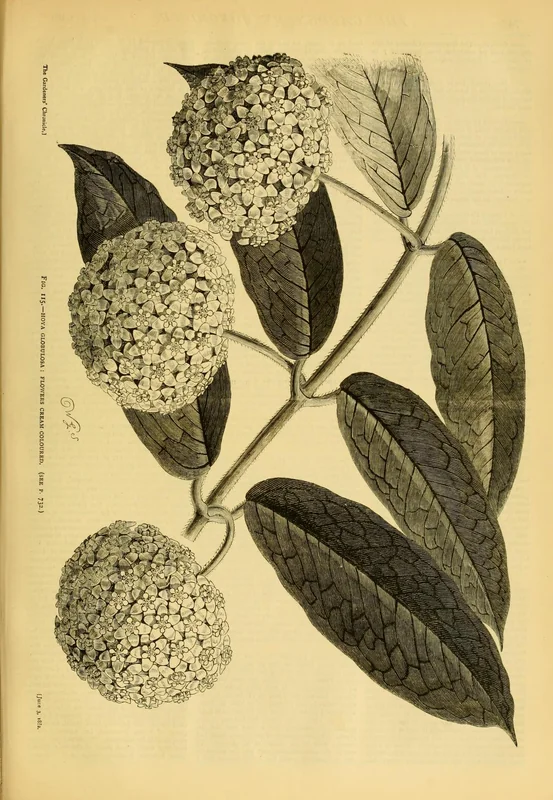
Hoya globulosa is a large-leafed hoya from the Himalayan foothills of India, Nepal, and Bhutan, producing substantial, softly hairy, deep-green ovate leaves and distinctive globe-shaped umbels of pure-white, slightly translucent, waxy flowers with a rich, sweet fragrance combining rose and honey notes. The large leaf size and high-altitude origin mean it tolerates cooler temperatures than most hoyas, making it suitable for cool rooms and conservatories.
Care facts at a glance
- Light
- Bright indirect
- Water
- Water every 10 to 14 days; allow the top half of medium to dry. More drought-tolerant in cool conditions.
- Humidity
- 55–80 %
- Temperature
- 8–28 °C
- Soil
- Well-draining hoya mix with added perlite; slightly more moisture-retentive than for tropical hoyas.
- Origin
- Himalayan foothills of India (Assam, Sikkim), Nepal, and Bhutan; subtropical forest margins.
- Mature size
- Trailing or climbing stems to 2+ m; leaves 10–18 cm long.
Overview
Hoya globulosa Hook.f. was described in 1883 from Himalayan collections. Its name refers to the rounded, globe-like form of the flower umbels, where the individual florets press together so tightly that the entire cluster appears spherical. Native to elevations of 1,000–2,500 m in the Himalayan foothills, it is adapted to cooler temperatures and higher humidity than most tropical hoyas, which is reflected in its tolerance of temperatures down to 8 °C — unusual in the genus.
Care Priorities
- Cool temperatures are tolerated and actually beneficial; it performs well in rooms that stay at 15–22 °C year-round.
- The softly hairy leaves should not be misted overhead — moisture on the hairs encourages fungal disease; water at the soil level only.
- Bright, indirect light is essential for flowering; the large leaves need adequate light energy to support the substantial flower umbels.
- In very hot rooms (above 30 °C) the plant will become stressed; move to a cooler position in summer.
Common Problems
Botrytis (grey mould) can develop on the hairy leaf surface in cool, humid, poorly ventilated conditions; improve airflow and avoid overhead watering. Root rot in cool, wet conditions is fast-moving — reduce watering significantly in winter. The softly textured leaves are more susceptible to physical damage than waxy-leaved hoyas; avoid frequently disturbing the plant. Spider mites prefer the warm, dry conditions of centrally heated rooms; increase humidity slightly in winter.
Sources & further reading (2)
- botanical-garden — accessed 2026-05-27
- encyclopedia — accessed 2026-05-27
Frequently asked questions
Does it need a cool winter?
A cooler winter is beneficial rather than strictly required. Temperatures of 12–18 °C with reduced watering from November to February tend to trigger reliable flower bud formation in spring. In a constantly warm room it may flower less reliably.
How large do the umbels get?
Large umbels on established plants can contain 30–50 individual florets pressed tightly together in a globe shape up to 8–10 cm across. The combined fragrance from such an umbel is exceptional.
Can it grow outside in summer?
Yes — in sheltered, partly shaded positions outdoors in summer (above 10 °C nights) it grows more vigorously than indoors. Bring inside before temperatures drop below 8 °C.