Hoya aldrichii
Hoya aldrichii Care Guide
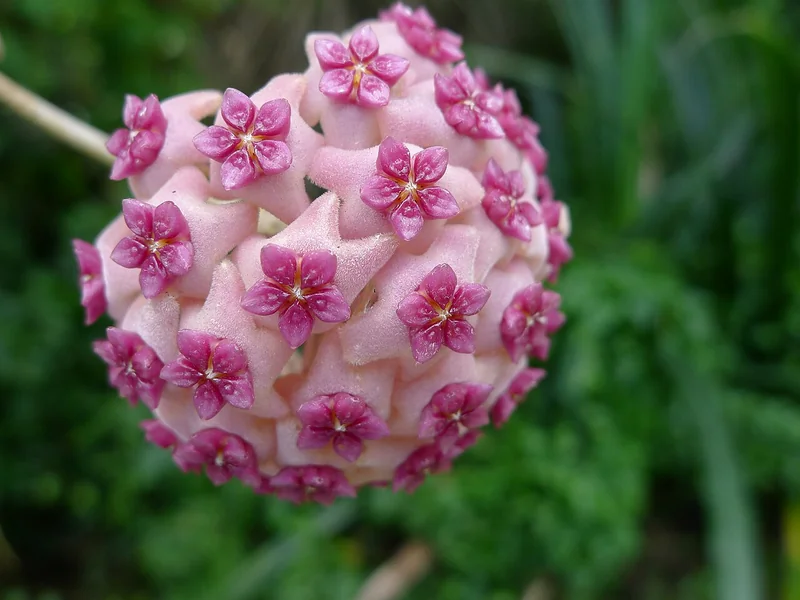 Featured photohoya-aldrichii.jpg
Hoya aldrichii is an Australian hoya endemic to Western Australia, producing leathery, oval to elliptical, deep-green leaves and pendant umbels of starry, waxy white flowers with a distinctive deep-red to maroon star-shaped corona. It is one of the more compact Australian hoyas, well-suited to hanging baskets and windowsill cultivation. Its relatively low humidity requirements and adaptability to moderate light make it an accessible species for collectors building a diverse hoya collection.
Care facts at a glance
- Light
- Bright indirect
- Water
- Water when the top half of the potting medium has dried; approximately every 10 to 14 days in the growing season.
- Humidity
- 40–65 %
- Temperature
- 10–30 °C
- Soil
- Very well-draining hoya mix: orchid bark, perlite, and a small amount of potting mix.
- Origin
- Western Australia, in coastal and near-coastal woodland habitats.
- Mature size
- Trailing stems to 1.5 m; compact bushy habit in hanging baskets.
Overview
Hoya aldrichii W.V.Fitzg. was described in 1918 and is endemic to the southwestern corner of Western Australia, where it grows as an epiphytic and lithophytic climber in coastal heath and woodland. It is one of the few Australian hoya species commonly available in cultivation. Like most hoyas it blooms on spurs — persistent short stems that remain on the plant and bloom again in subsequent seasons. Never remove old peduncles (flower stems), as future blooms arise from the same point.
Care Priorities
- Leave all spent flower peduncles intact — removing them prevents future blooming from that spur.
- Bright, indirect light with some morning direct sun produces the most reliable flowering.
- Well-draining medium is essential; the roots must dry out between waterings.
- A slightly cool winter rest (12–15 °C with reduced watering) triggers flower bud formation in spring.
Common Problems
Failure to bloom despite good care usually results from one of three causes: peduncles removed (removing the flowering spur prevents reblooming), insufficient light, or insufficient rest period in winter. Mealybugs shelter in leaf axils and along stems; treat with diluted isopropyl alcohol. Root rot develops in overwatered or compact, poorly draining media; repot into a very airy orchid bark-based mix if the current mix retains excessive moisture.
Sources & further reading (2)
- botanical-garden — accessed 2026-05-27
- encyclopedia — accessed 2026-05-27
Frequently asked questions
Can I remove the old flower stems?
No — never remove hoya peduncles (the short stubs where flowers were produced). Future flower clusters will arise from the same point. Removing peduncles resets the clock on flowering and can mean waiting 1–2 additional years for the next bloom.
How is it different from H. australis?
Both are Australian hoyas with white flowers, but H. aldrichii has a deeper, more contrasting dark-red corona and slightly thicker, more leathery leaves. H. australis has a lighter, yellowish-red corona and is a more vigorous climber. Both are adaptable and rewarding houseplants.
Does it have a fragrance?
Yes — the flowers emit a light, sweet fragrance most noticeable in the evening. The scent is pleasant and mild, not overpowering, and intensifies when multiple flowers in an umbel are open simultaneously.