Begonia carolineifolia
Begonia carolineifolia Care Guide
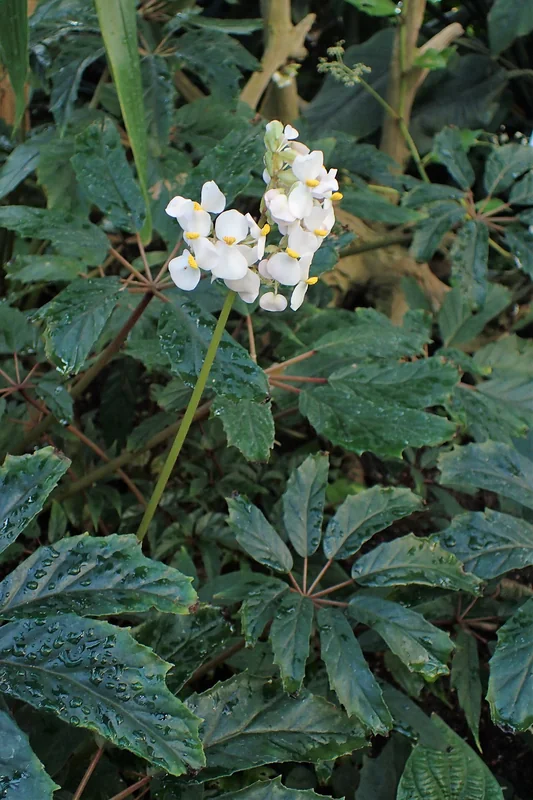 Featured photobegonia-carolineifolia.jpg
Begonia carolineifolia is a striking rhizomatous begonia from Mexico and Central America that produces large, palmately compound leaves — an almost unique trait in the genus — with 7 to 9 narrow leaflets radiating from a central point, giving each leaf a palm-frond silhouette. It grows from a thick, creeping rhizome and produces cascading stems of pale pink flowers in late winter to spring. The unusual leaf form, the large scale it can reach, and its relative ease of cultivation make it a favourite among begonia collectors seeking something architecturally distinctive.
Care facts at a glance
- Light
- Bright indirect
- Water
- Water when the top 3 to 4 cm of substrate has dried; roughly every 10 to 14 days in summer.
- Humidity
- 50–70 %
- Temperature
- 13–28 °C
- Soil
- Well-draining, slightly gritty mix: potting compost, perlite, and coarse sand.
- Origin
- Shaded hillside forests of southern Mexico and Guatemala.
- Mature size
- 50 to 90 cm tall; individual leaves up to 40 cm across.
Overview
Begonia carolineifolia was described by Regel and is named for its palmate leaf structure, which recalls the fronds of a palm or the compound leaves of Carolina vegetation. It is one of only a handful of begonias with truly compound leaves, a characteristic that sets it apart visually from the overwhelming majority of the genus. The rhizome is thick and fleshy, storing water and nutrients, and can be divided easily to produce new plants. In good conditions the plant makes a bold, architectural statement as a specimen houseplant.
Care Priorities
- Bright, indirect light produces the largest, most dramatic leaves; lower light results in smaller, less well-formed leaflets.
- The thick rhizome provides drought tolerance; water deeply and then allow thorough drying between waterings.
- The palmate leaves are susceptible to powdery mildew in poorly ventilated conditions; maintain good airflow.
- Repot in spring every 2 to 3 years; the horizontal rhizome grows best in a wide, shallow pot rather than a deep one.
Common Problems
Powdery mildew as white patches on the leaflets is the most common problem, triggered by stagnant humid air; improve ventilation and treat with a bicarbonate or sulphur-based spray. Yellowing and collapse of leaflets often points to overwatering and rhizome rot; remove damaged sections, allow the rhizome to dry slightly, and repot in fresh, well-draining substrate. Vine weevil larvae in the substrate can eat rhizome tissue invisibly; if plants wilt unexpectedly, investigate the rhizome and roots.
Sources & further reading (2)
- botanical-garden — accessed 2026-05-08
- encyclopedia — accessed 2026-05-08
Frequently asked questions
Why are the leaves palmately compound?
It is one of the rare begonias with compound rather than simple leaves. The adaptation likely evolved for efficient light capture in the dappled forest understorey where it grows natively.
Does it flower reliably indoors?
Yes — it typically flowers in late winter to early spring when grown in bright indirect light. The flower stems cascade attractively beneath the leaf canopy with clusters of pale pink blossoms.
What pot shape works best?
A wide, shallow pan or azalea pot suits the horizontal rhizome growth pattern better than a tall, deep pot. Ensure drainage holes are adequate as the rhizome rots easily in stagnant water.