Peperomia caperata
Peperomia caperata (Emerald Ripple) Care Guide
 Featured photopeperomia-caperata.jpg
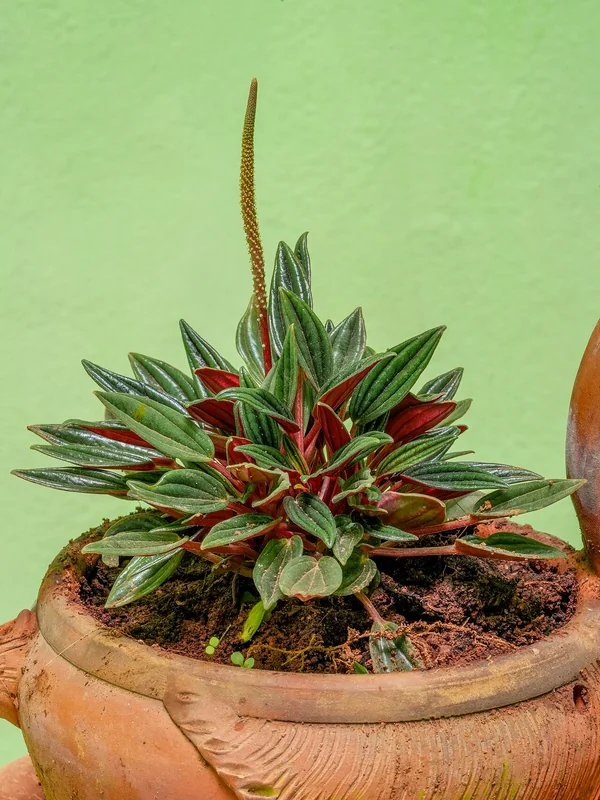
Peperomia caperata is the emerald ripple peperomia — small, heart-shaped leaves with deeply ridged, almost quilted surfaces, often with reddish undertones. It is one of the most ornamental peperomias and one of the few that flowers regularly indoors with thin white rat-tail spikes that add a textural contrast to the foliage.
Care facts at a glance
- Light
- Bright indirect
- Water
- Water when the top 2 cm of mix has dried.
- Humidity
- 50–70 %
- Temperature
- 18–27 °C
- Soil
- Well-draining peat or coir mix with perlite.
- Origin
- Forests of Brazil.
- Mature size
- 15 to 25 cm tall.
Overview
Peperomia caperata was described in the early 1900s and has produced many cultivars including Rosso (deep red leaves), Frost (silver with green veins), and Schumi Red. All share the deeply quilted leaf texture.
Care Priorities
- Bright filtered light keeps the leaf colours saturated.
- Water on the dry side of moist.
- Avoid wetting the leaves; the deep ridges hold water and cause fungal spots.
- Pinch off spent flower spikes to redirect energy into foliage.
Common Problems
Yellow leaves are overwatering. Crispy edges are dry air. Long bare stems with leaves only at the tips mean low light or aging stems.
Sources & further reading (2)
- encyclopedia — accessed 2026-04-28
- botanical-garden — accessed 2026-04-28
Frequently asked questions
Are the spiky white things flowers?
Yes — the inflorescences look more like rat tails than typical blooms. They are species-typical for many peperomias and harmless.
Caperata vs Rosso vs Frost — same plant?
All cultivars of Peperomia caperata. Rosso has deep-red leaves, Frost has silver-green tones, and the species type has dark green with reddish undertones.
Why are my leaves shedding?
Sudden leaf shed is usually a stress reaction — temperature drop, repotting, or watering swing. The plant typically pushes new leaves once conditions stabilise.