Canis lupus familiaris
Wirehaired Vizsla
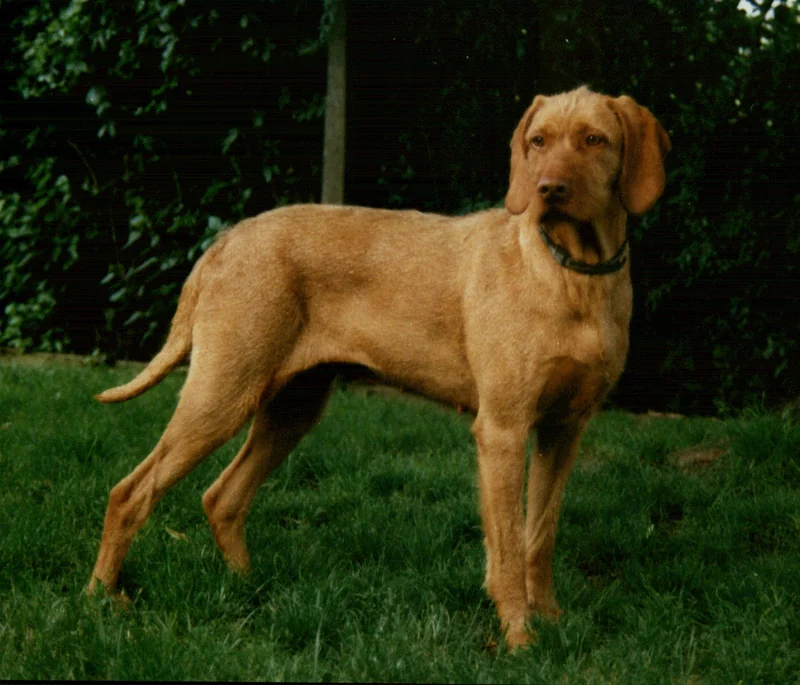 Featured photowirehaired-vizsla.jpg
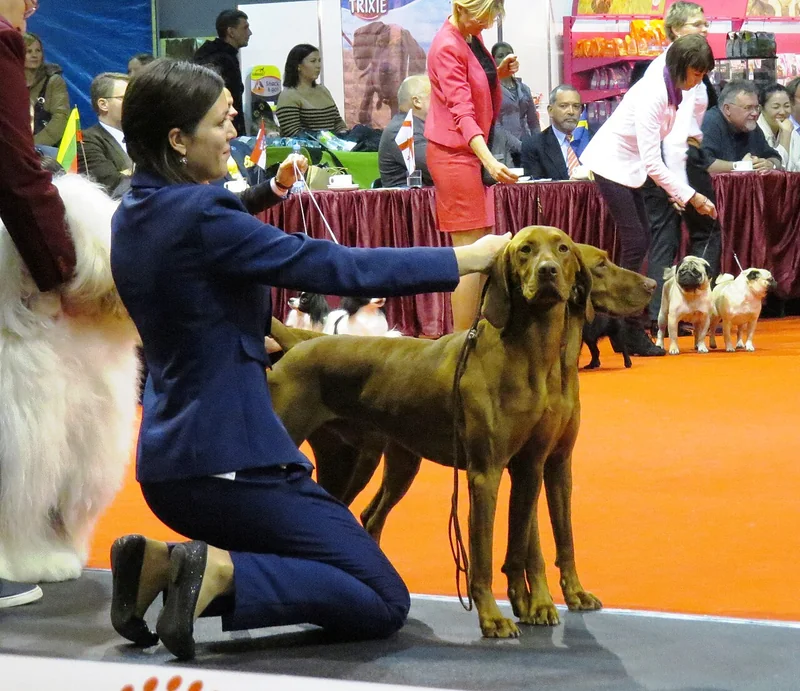
The Wirehaired Vizsla is a medium-sized Hungarian multipurpose gundog developed in the 1930s by crossing the smooth Vizsla with the German Wirehaired Pointer to produce a dog capable of working cold marshland and dense cover that the smooth-coated ancestor found challenging. The breed carries a dense, wiry, weather-resistant coat and a beard and eyebrows. The FCI (No. 239) has recognised the breed since 1966; the AKC admitted it in 1986 and places it in the Sporting Group. Males stand 57–62 cm.
Quick facts
- AKC group
- Sporting
- Origin country
- Hungary
- Origin period
- 1930s
- Coat type
- Wirehaired
- Coat colors
- Golden Rust, Dark Sandy Gold, Brownish Gold
- Average lifespan
- 12-14 years
- Recognition
- AKC 1986 · FCI 1966 · UKC 2006 · Group 7 — Pointing Dogs (Section 1.1: Continental Pointing Dogs, Braque type)
Origin
The breed was deliberately created in Hungary in the early 1930s by a small group of hunters who recognised that the smooth-coated Vizsla, though an outstanding nose dog, was vulnerable to cold water, thick brush, and the harsh winter conditions common in the Carpathian Basin marshes and foothills. The founding crosses were made between selected Smooth Vizslas and German Wirehaired Pointers. Vasas József and Gresznarik László are credited as primary architects; some sources add a small Pudelpointer contribution. The Hungarian Kennel Club registered the resulting breed in 1943, though World War II disrupted breeding programs severely.
Recognition
The Federation Cynologique Internationale recognised the Wirehaired Vizsla in 1966 under standard No. 239, holding Hungary as patron country and placing the breed in Group 7 (Pointing Dogs), Section 1.1. The AKC admitted the breed to the Miscellaneous Class in 1983 and granted full Sporting Group recognition in 1986. The UKC followed in 2006.
Standard
The FCI and AKC standards describe a medium-sized, robust dog of noble bearing with a lean, muscular build. The defining feature is the dense, close-lying, wiry coat — approximately 2–4 cm long — with a thick, water-repellent undercoat, a beard on the lower jaw, and pronounced eyebrows. The coat colour is a distinctive golden rust or brownish gold; the nose, lips, and eye rims are brown (not black), harmonising with the coat. Males stand 57–62 cm at the withers; females 54–60 cm.
Sources & further reading (3)
- kennel-club-registry — accessed 2026-05-27
- encyclopedia — accessed 2026-05-27
- fci-standard — accessed 2026-05-27
Frequently asked questions
How does the Wirehaired Vizsla differ from the Vizsla?
The Wirehaired Vizsla was deliberately developed from the smooth Vizsla in the 1930s by crossing it with the German Wirehaired Pointer. The principal differences are the wiry, dense, weather-resistant outer coat with a thick undercoat (in contrast to the Vizsla's short, smooth coat), the beard and eyebrows, and a slightly heavier, more robust build. Both breeds share the same golden rust colouring and the same brown — rather than black — nose and eye rims. The AKC and FCI register them as separate breeds.
When was the Wirehaired Vizsla recognised by the AKC?
The AKC granted the Wirehaired Vizsla full Sporting Group recognition in 1986, after the breed entered the Miscellaneous Class in 1983. The FCI had recognised the breed in 1966 under standard No. 239, with Hungary as patron country.
What FCI group is the Wirehaired Vizsla in?
The FCI assigns the Wirehaired Vizsla to Group 7 — Pointing Dogs, Section 1.1 (Continental Pointing Dogs, Braque type), FCI No. 239. The breed is patronised by Hungary and considered a national breed alongside the smooth Vizsla (FCI No. 57).