Canis lupus familiaris
Small Münsterländer
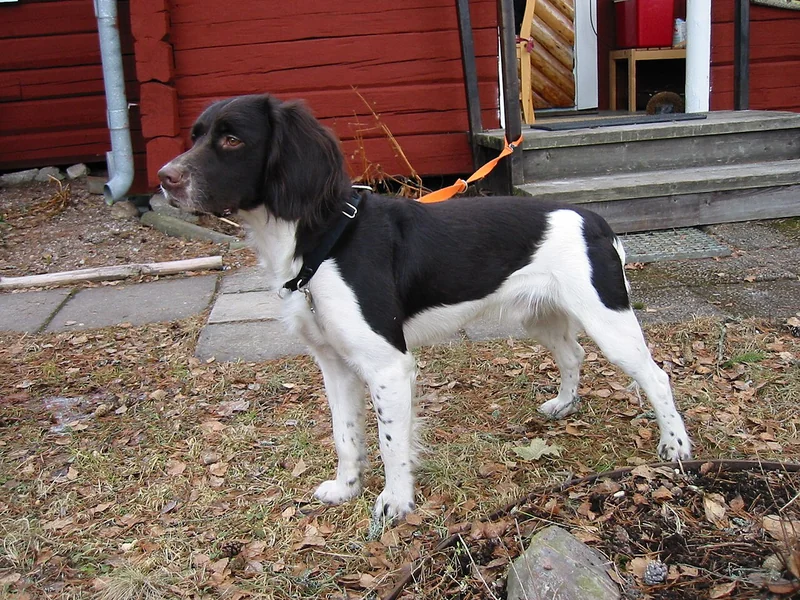 Featured photosmall-munsterlander.jpg
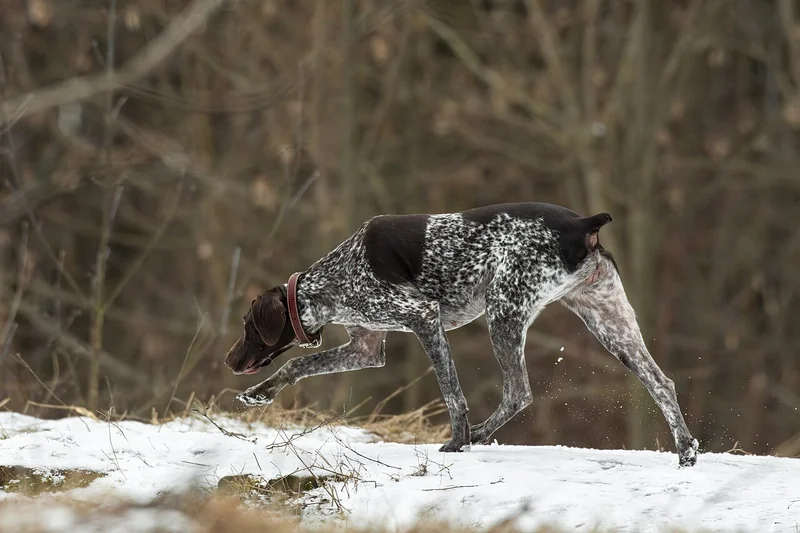
The Small Münsterländer is a medium-sized German pointing spaniel from the Münsterland region, developed as a versatile all-round gundog combining pointing, flushing, and retrieving from both land and water. The breed was standardised in 1912 by Baron Zedlitz and Neukirch and the Club für Kleine Münsterländer was founded in 1912. The FCI registers it as No. 102 under Germany's patronage. Males stand 50–56 cm.
Quick facts
- AKC group
- Sporting
- Origin country
- Germany
- Origin period
- Late 19th century (standardised 1912)
- Coat type
- Medium
- Coat colors
- Brown and White with Ticking, Brown Roan, Brown with White Patches
- Average lifespan
- 12-14 years
- Recognition
- FCI 1954 · UKC 2006 · Group 7 — Pointing Dogs (Section 1.2: Continental Pointing Dogs, Spaniel type)
Origin
The Small Münsterländer descends from the Continental spaniel-type hunting dogs used on the estates and farmlands of the Münsterland region of Westphalia since at least the 18th century. These dogs, sometimes called 'Heidewachtel', were versatile bird dogs that worked before and after the shot — pointing to locate game, flushing at command, and retrieving from both land and water. Baron Zedlitz und Neukirch and Friedrich Jungklaus, recognising that this regional type was being absorbed into other hunting dog populations, undertook systematic breed preservation from 1906.
Recognition
The Club für Kleine Münsterländer Vorstehhunde e.V. was founded in Osnabrück in 1912 and the breed standard was published in the same year. The Jagdgebrauchshundverband (German Working Dog Club) registered the breed, and the FCI recognised it under standard No. 102 in 1954, placing it in Group 7, Section 1.2 (Continental Pointing Dogs, Spaniel type) with Germany as patron country. The UKC recognised the breed in 2006. The AKC has not granted full recognition.
Standard
The FCI standard describes a medium-sized, well-balanced pointing spaniel slightly longer than tall, with a long, moderately wide head, pendant, well-feathered ears, and dark brown eyes with a firm, energetic expression. The coat is medium length, smooth to slightly wavy, with longer feathering on the ears, chest, backs of the legs, and a full tail. The colour is always brown and white — in ticked, roan, or patched patterns. Males stand 50–56 cm; females 48–54 cm.
Sources & further reading (3)
- fci-standard — accessed 2026-05-27
- encyclopedia — accessed 2026-05-27
- kennel-club-registry — accessed 2026-05-27
Frequently asked questions
How does the Small Münsterländer differ from the Large Münsterländer?
The Small Münsterländer (FCI No. 102) and Large Münsterländer (FCI No. 118) are related but distinct breeds. The Small is brown and white (brown being the required base colour); the Large is black and white. The Small is 50–56 cm; the Large is 58–65 cm. Both were standardised from the German Münsterland region's hunting spaniels but are managed by separate breed clubs. The colour difference is the most immediate distinguishing feature.
Is the Small Münsterländer AKC recognised?
The Small Münsterländer is not fully recognised by the AKC. The FCI has recognised the breed since 1954 under standard No. 102, and the UKC since 2006. The breed is particularly popular in Germany, the Netherlands, and Scandinavia as a versatile working gundog.
What does 'Vorstehhund' mean in the club's full name?
'Vorstehhund' is German for 'pointing dog' — from 'vorstehen' (to stand before or point). The full club name, Club für Kleine Münsterländer Vorstehhunde e.V., translates as the Club for Small Münsterland Pointing Dogs. The breed is classified in FCI Group 7 (Pointing Dogs), and 'Vorstehhund' is the German generic term for all pointing breeds.