Canis lupus familiaris
Greater Swiss Mountain Dog
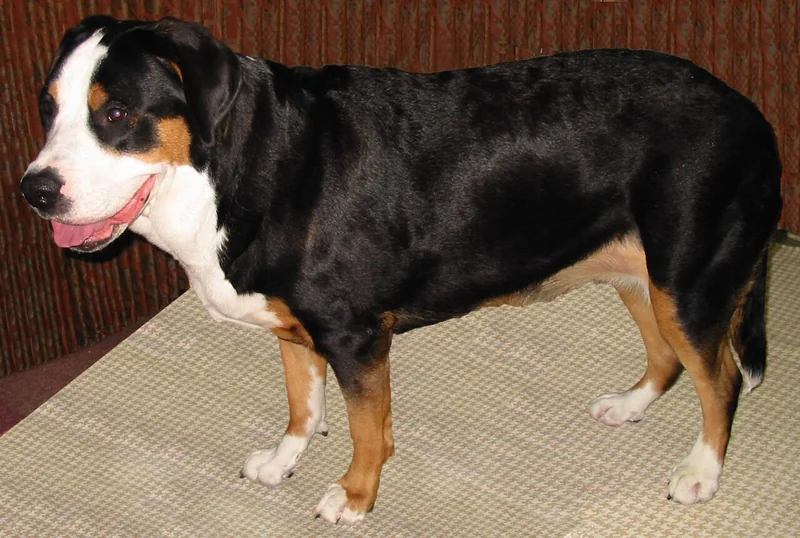 Featured photogreater-swiss-mountain-dog.jpg
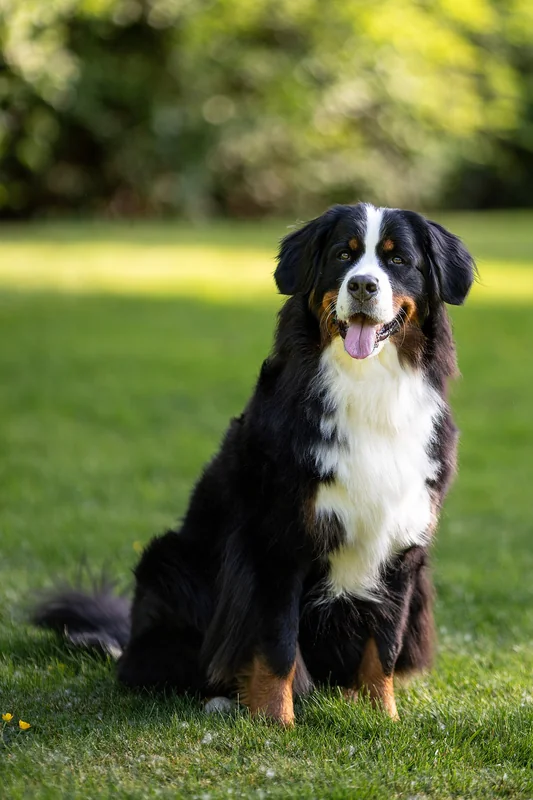
The Greater Swiss Mountain Dog is the largest and oldest of the four Swiss Sennenhund breeds, a powerful and heavy-boned tricolor working dog bred in the Swiss Alps for centuries as a draught animal, a cattle drover, and a butcher's dog. Its bold black, white, and rust markings and massive frame reflect the Roman mastiff heritage common to all four Sennenhund breeds. Nearly extinct by the early 20th century, the breed was rediscovered and systematised by Professor Albert Heim beginning in 1908. The AKC admitted the breed in 1995. Males stand 65–72 cm and weigh 36–61 kg.
Quick facts
- AKC group
- Working
- Origin country
- Switzerland
- Origin period
- Ancient
- Coat type
- Double
- Coat colors
- Black with White and Rust Markings
- Average lifespan
- 8-11 years
- Recognition
- AKC 1995 · FCI 1954 · UKC 1993 · Group 2 — Pinscher and Schnauzer-Molossoid Breeds, Swiss Mountain and Cattle Dogs (Section 3: Swiss Mountain and Cattle Dogs)
Origin
The Greater Swiss Mountain Dog is believed to descend from large molosser dogs brought to the Swiss Alps by Roman legions during Julius Caesar's Gallic campaigns (58–50 BCE). These Roman dogs crossbred with indigenous Celtic farm dogs over two thousand years of mountain isolation, producing the distinctive Sennenhund type. The Greater Swiss was the workhorse of Swiss alpine farm life: it pulled heavy carts laden with milk, cheese, and agricultural produce, drove cattle between high summer pastures and valley markets, and guarded farms. It is the oldest and largest of the four Sennenhund breeds.
Recognition
By the early 20th century, mechanisation had displaced the draught dog's role and the Greater Swiss population had crashed to near-extinction. At the 1908 Swiss Kennel Club jubilee show, Franz Schertenleib presented two dogs he called Short-Haired Bernese; Professor Albert Heim recognised them as specimens of the nearly lost Greater Swiss type and began a formal revival campaign. The Swiss Stud Book opened registrations in 1909. The FCI (FCI No. 58) recognised the breed in 1954. The AKC admitted the breed to the Working Group in 1995.
Standard
The FCI and AKC standards describe a heavy, large-boned dog with a slightly longer body than height, powerful hindquarters, and a strong, flat, broad back. The coat is double — a dense outer coat of approximately 3–5 cm and a thick undercoat — in the standard Sennenhund tricolor pattern: black with rust/tan and white markings in precise locations. The white blaze on the muzzle, the chest stripe, white paws, and the rust 'eyebrows' and cheek patches are all specified by the standard. Males stand 65–72 cm.
Sources & further reading (3)
- kennel-club-registry — accessed 2026-05-07
- encyclopedia — accessed 2026-05-07
- fci-standard — accessed 2026-05-07
Frequently asked questions
What AKC group does the Greater Swiss Mountain Dog belong to?
The AKC places the Greater Swiss Mountain Dog in the Working Group. The breed is the largest and oldest of the four Swiss Sennenhund (mountain dog) breeds, historically used as a powerful draught animal, cattle drover, and farm guardian in the Swiss Alps. The other three Sennenhund breeds — Bernese Mountain Dog, Entlebucher, and Appenzeller — are also in the AKC Working Group.
How was the Greater Swiss Mountain Dog saved from extinction?
By the early 20th century, mechanisation had made draught dogs economically redundant and the Greater Swiss population had dwindled to near-extinction. The breed was rediscovered in 1908 when Franz Schertenleib presented two unusual short-haired mountain dogs to Professor Albert Heim of the Swiss Cynological Society, who identified them as surviving specimens of the old Greater Swiss type. Heim led a systematic revival, the Swiss Stud Book opened in 1909, and the population was rebuilt over subsequent decades.
When was the Greater Swiss Mountain Dog recognised by the AKC?
The AKC granted full recognition to the Greater Swiss Mountain Dog in 1995, placing it in the Working Group. The FCI had recognised it since 1954 (FCI No. 58) with Switzerland as patron country. The Swiss Stud Book first registered the breed in 1909, following Professor Albert Heim's 1908 revival effort.