Canis lupus familiaris
Entlebucher Mountain Dog
 Featured photoentlebucher-mountain-dog.jpg
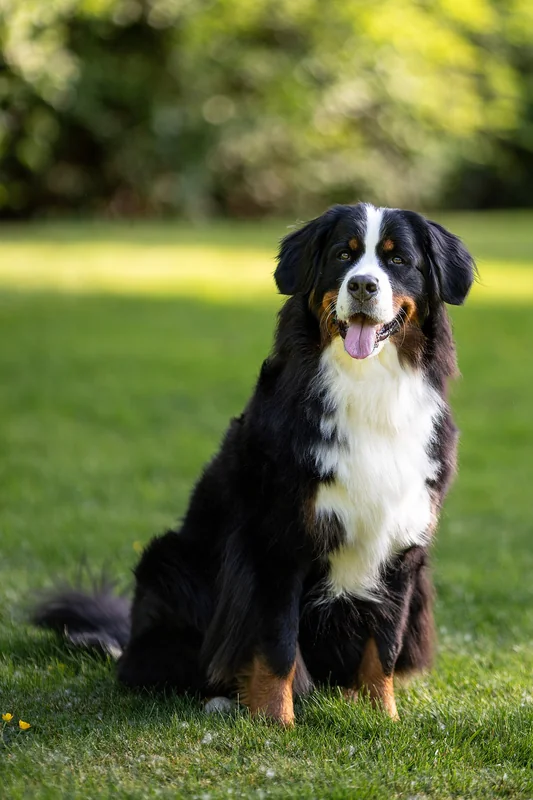
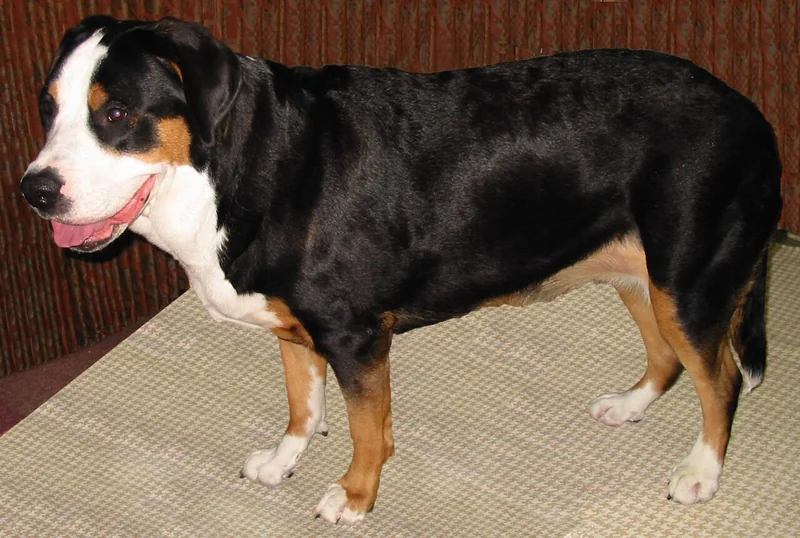
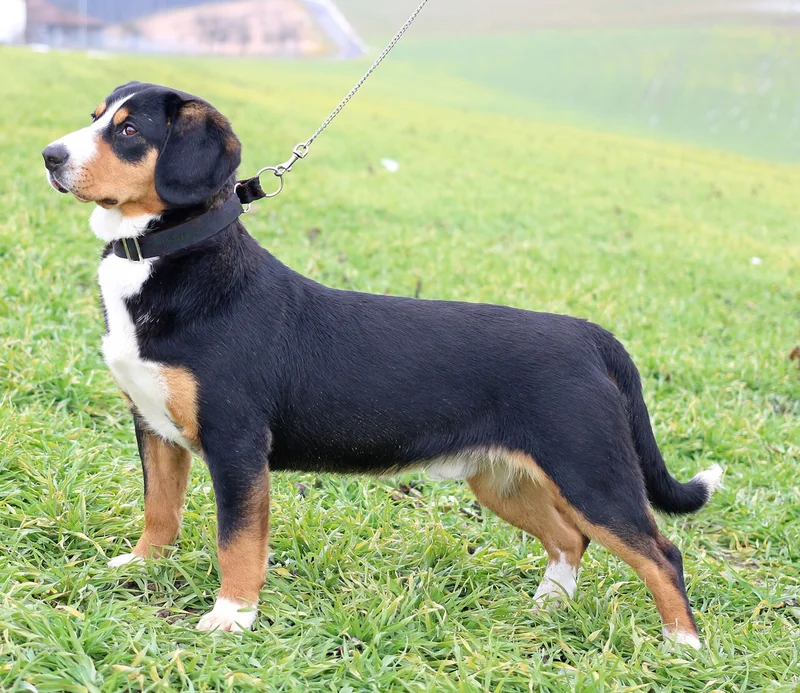
The Entlebucher Mountain Dog is the smallest of the four Swiss Sennenhund breeds, all of which share the same tricolor (black, white, and tan) markings and Swiss Alpine working heritage. Named for the Entlebuch Valley in the cantons of Lucerne and Berne, this compact, square, and muscular dog was used for centuries to drive cattle between mountain pastures and markets. It is the only Sennenhund breed that is naturally bobtailed in some individuals. The AKC admitted the breed in 2011. Males stand 44–50 cm and weigh 20–30 kg.
Quick facts
- AKC group
- Working
- Origin country
- Switzerland
- Origin period
- Ancient, documented from 19th century
- Coat type
- Short
- Coat colors
- Black with White and Tan Markings
- Average lifespan
- 11-13 years
- Recognition
- AKC 2011 · FCI 1954 · UKC 2009 · Group 2 — Pinscher and Schnauzer-Molossoid Breeds, Swiss Mountain and Cattle Dogs (Section 3: Swiss Mountain and Cattle Dogs)
Origin
The Entlebucher Mountain Dog takes its name from the Entlebuch Valley, a region of the pre-Alps in the Swiss cantons of Lucerne and Berne. Like its three Sennenhund cousins, the Entlebucher is believed to descend from large Roman mastiff-type dogs that arrived in the Alps with Caesar's legions and subsequently interbred with indigenous Celtic herding dogs over two millennia of alpine isolation. The Entlebucher was the nimble cattle-driving dog of the mountain pastoralists (Sennen), its smaller size compared to the Bernese Mountain Dog giving it greater speed and agility on steep mountain terrain.
Recognition
Professor Albert Heim first documented the Entlebucher as a breed type distinct from the Appenzeller in 1889 in his survey of Swiss dog breeds. The Swiss Stud Book began registrations in 1926 with a founding cohort of 16 dogs. The Schweizerische Klub für Entlebucher Sennenhunde was founded the same year. The FCI (FCI No. 47) recognised the breed in 1954. The AKC entered the Entlebucher in the Miscellaneous Class in 2009 and granted full Working Group recognition in 2011.
Standard
The FCI and AKC standards describe a compact, square, and well-muscled cattle dog with a slightly rounded skull, a moderately strong muzzle, and a clean-cut, alert expression. The short, close, hard coat is tricolored in a specific pattern: a black base with symmetrical rust/tan and white markings — two rust spots above the eyes, white on the muzzle tip, chest, and paws, and rust between the black and white. Natural bobtails occur in some individuals; docking is not permitted under FCI or AKC rules. Males stand 44–52 cm.
Sources & further reading (3)
- kennel-club-registry — accessed 2026-05-07
- encyclopedia — accessed 2026-05-07
- fci-standard — accessed 2026-05-07
Frequently asked questions
What AKC group does the Entlebucher Mountain Dog belong to?
The AKC places the Entlebucher Mountain Dog in the Working Group. The breed is the smallest of four related Swiss mountain dog breeds — the others being the Greater Swiss Mountain Dog (largest), Bernese Mountain Dog (medium-large), and Appenzeller Sennenhund (similar in size to the Entlebucher). All four were historically used as droving and farm dogs in the Swiss Alps.
What is unique about the Entlebucher compared to the other Swiss mountain dogs?
The Entlebucher is notable for being the smallest of the four Sennenhund breeds and for being the only one in which natural bobtails (dogs born with little or no tail) occur. All four breeds share the same tricolor (black, white, and tan) coat pattern and Swiss Alpine working heritage, but the Entlebucher was specifically selected for nimble cattle-driving on steep mountain terrain rather than for draught work like the Greater Swiss or heavy work like the Bernese.
When was the Entlebucher Mountain Dog recognised by the AKC?
The AKC granted full recognition to the Entlebucher Mountain Dog in 2011, placing it in the Working Group. The breed entered the Miscellaneous Class in 2009. The FCI had recognised it since 1954 (FCI No. 47), and the Swiss Stud Book began registrations in 1926 when the breed club was established.