Canis lupus familiaris
Eurasier
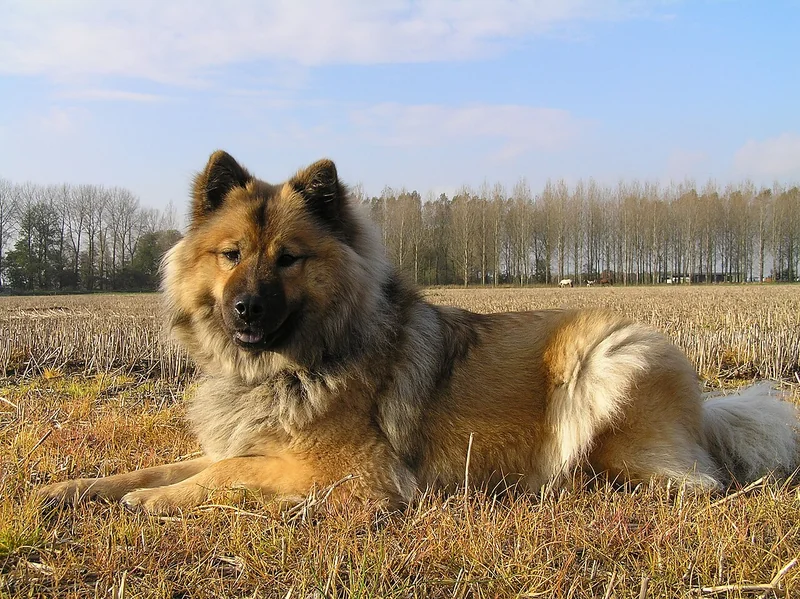 Featured photoeurasier.jpg
The Eurasier is a medium-sized German Spitz-type companion breed created in the 1960s by the German writer and dog breeder Julius Wipfel, who crossed the Wolfspitz (German Spitz) with the Chow Chow and later incorporated Samoyed blood. The breed was designed to combine the best physical and character traits of the Asian and European Spitz lineages. The FCI recognised it as No. 291 in 1973 under Germany's patronage. Males stand 52–60 cm.
Quick facts
- AKC group
- Non-Sporting
- Origin country
- Germany
- Origin period
- 1960s
- Coat type
- Double
- Coat colors
- All colours and combinations permitted, Pure white, liver (brown), and spotted patterns are disqualified
- Average lifespan
- 12-14 years
- Recognition
- FCI 1973 · Group 5 — Spitz and Primitive Types (Section 5: Asian Spitz and related breeds)
Origin
Julius Wipfel began his systematic breeding program in Weinheim, Baden-Württemberg, in 1960, motivated by the belief that the ideal family companion could be achieved by crossing European and Asian Spitz types. His original cross was the Wolfspitz (a large, grey Keeshond type) with the Chow Chow; the first-generation 'Wolf-Chow' dogs were exhibited publicly in Weinheim in 1966 to considerable interest. In 1972, Samoyed was introduced to expand the genetic base and diversify the permitted colour range. Wipfel named the breed 'Eurasier' (from Eurasia) to reflect its blended continental origins.
Recognition
The Verein für Deutsche Spitze e.V. and the Verband für das Deutsche Hundewesen (VDH) registered the breed in Germany, and the FCI granted recognition in 1973 under standard No. 291, assigning the breed to Group 5 — Spitz and Primitive Types (Section 5: Asian Spitz and related breeds) with Germany as patron country. The breed is particularly popular in Germany, Switzerland, Austria, and the Netherlands. It is listed in the AKC Foundation Stock Service but has not received full AKC recognition.
Standard
The FCI standard describes a medium-sized, well-balanced Spitz-type dog slightly longer than tall, with a wedge-shaped head, almond-shaped eyes, and medium-sized upright ears. The double coat is of medium length — neither as long as the Samoyed nor as plush as the Chow Chow — with a thick, dense undercoat. All colours and colour combinations are acceptable except pure white, liver (brown), and spotted (parti-colour). Males stand 52–60 cm and weigh 23–32 kg; females 48–56 cm and 18–26 kg.
Sources & further reading (3)
- fci-standard — accessed 2026-05-27
- encyclopedia — accessed 2026-05-27
- breed-club — accessed 2026-05-27
Frequently asked questions
Who created the Eurasier?
The Eurasier was created by Julius Wipfel (1903–1972), a German writer and amateur dog breeder from Weinheim, Baden-Württemberg. He began the program in 1960, making initial crosses between the Wolfspitz (Keeshond) and the Chow Chow, and later adding Samoyed blood in 1972. The breed was first publicly exhibited in 1966 under the working name 'Wolf-Chow' and renamed 'Eurasier' to reflect its blended Eurasian origins.
When was the Eurasier recognised by the FCI?
The FCI recognised the Eurasier under standard No. 291 in 1973, just three years after the breed was first publicly shown in its standardised form. Germany is the patron country. The breed is not currently recognised by the AKC (it is listed in the Foundation Stock Service) but is widely recognised across European kennel clubs.
What three breeds were used to create the Eurasier?
The Eurasier was developed from three foundation breeds: the Wolfspitz (German Spitz / Keeshond) provided the European Spitz base; the Chow Chow contributed a blue-black tongue, physical substance, and Asian Spitz character; and the Samoyed (introduced in 1972) broadened the genetic base and diversified the colour range. The FCI assigns the Eurasier to Group 5, Section 5 (Asian Spitz and related breeds), reflecting the predominantly Asian Spitz influence in its lineage.