Canis lupus familiaris
Boerboel
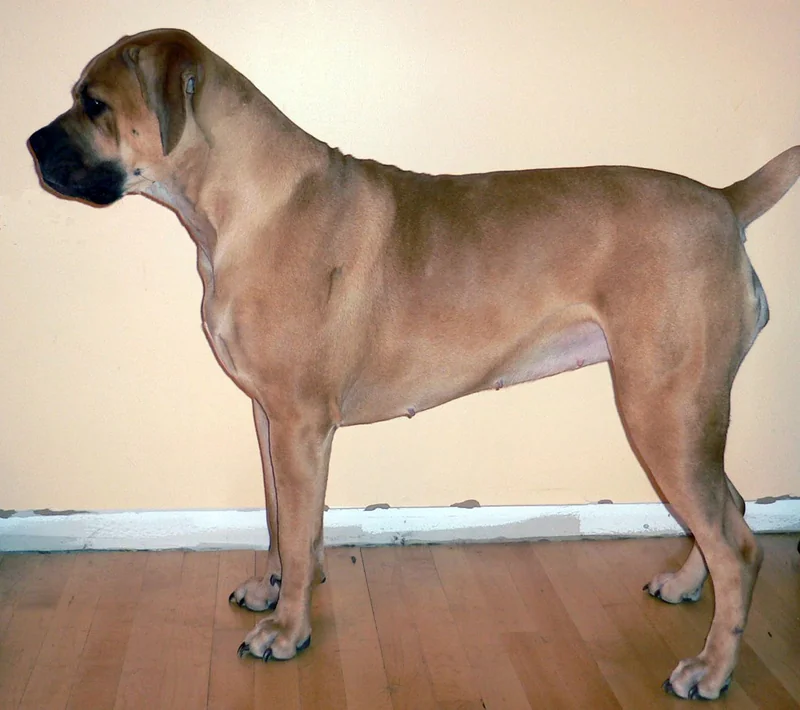 Featured photoboerboel.jpg
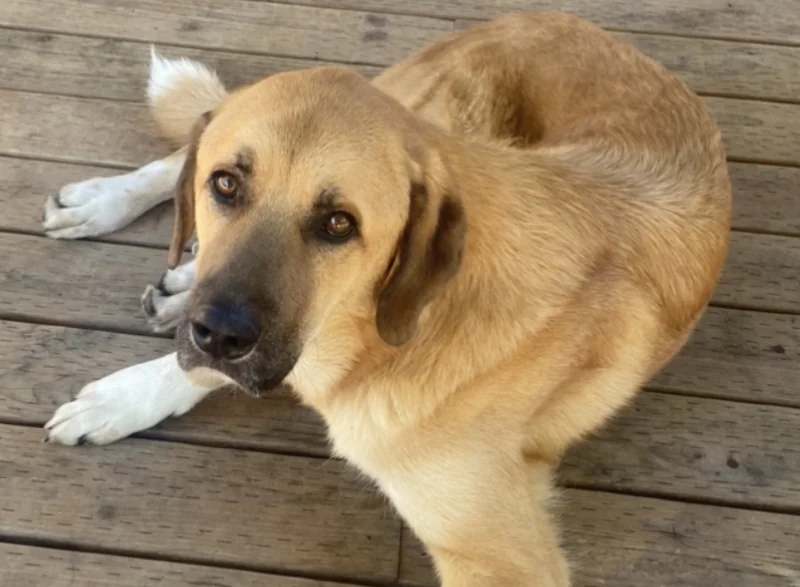
The Boerboel is a large, powerful South African mastiff-type working dog developed by Dutch, German, and Huguenot settlers — collectively known as Boers — who arrived at the Cape of Good Hope from the 17th century onward. The name means 'farmer's dog' in Afrikaans. Bred to protect remote farmsteads and family members from the predators of the southern African wilderness — including lions, leopards, and baboons — the Boerboel is one of the most powerful dog breeds recognised by the AKC. The AKC admitted it in 2015. Males stand 61–68 cm and weigh 65–90 kg.
Quick facts
- AKC group
- Working
- Origin country
- South Africa
- Origin period
- 17th century
- Coat type
- Short
- Coat colors
- Fawn, Red, Brown, Brindle, Irish Marked
- Average lifespan
- 9-11 years
- Recognition
- AKC 2015 · FCI 2010 · UKC 2006 · Group 2 — Pinscher and Schnauzer-Molossoid Breeds, Swiss Mountain and Cattle Dogs (Section 2.1: Molossoid breeds, Mastiff type)
Origin
Dutch settlers of the VOC (Dutch East India Company) arrived at the Cape of Good Hope in 1652, bringing European mastiff and bulldog-type dogs. German and Huguenot settlers followed, adding to the genetic pool. Isolation on remote southern African farms over the following two centuries created intense functional selection pressure: dogs that could not defend the homestead from lion, leopard, hyena, and baboon were not bred. Bullmastiff stock, imported by diamond mining companies in the mid-19th century, further refined the type. The result was a large, agile, block-headed mastiff of exceptional physical power adapted to Africa's climate.
Recognition
The South African Boerboel Breeders' Association (SABBA) was established in 1983 to document and standardise breeding. SABBA conducted rural surveys to locate specimens conforming to the traditional farm-dog type, registering qualifying animals by physical evaluation. The FCI recognised the Boerboel in 2010 (FCI No. 84) with South Africa as patron country. The AKC admitted the breed to the Miscellaneous Class in 2010 and granted full Working Group recognition in 2015.
Standard
The AKC and FCI standards describe a large, well-muscled, symmetrical dog with a blocky, square head and a short, broad muzzle. The skin is thick, with loose neck folds but tight elsewhere. The short, dense coat lies flat. Accepted colours include all shades of fawn, red, brown, and brindle, with or without black facial mask and Irish markings (white on chest, feet, and neck); piebald is not acceptable. Males stand 61–68 cm and weigh 65–90 kg.
Sources & further reading (3)
- kennel-club-registry — accessed 2026-05-07
- encyclopedia — accessed 2026-05-07
- fci-standard — accessed 2026-05-07
Frequently asked questions
What AKC group does the Boerboel belong to?
The AKC places the Boerboel in the Working Group. The breed is a large guard and estate-protection dog developed in South Africa for protecting remote farms from large African predators. The FCI classifies it in Group 2, Section 2.1 (Molossoid breeds, Mastiff type) alongside the Rottweiler, Bullmastiff, and Dogue de Bordeaux.
What does 'Boerboel' mean?
Boerboel is an Afrikaans word meaning 'farmer's dog' — 'boer' means farmer (or Boer settler) and 'boel' is an informal Afrikaans term for a large dog. The name accurately describes the breed's function as the working dog of Boer farming communities in southern Africa. It is pronounced approximately 'boo-r-bool'.
When was the Boerboel recognised by the AKC?
The AKC granted full recognition to the Boerboel in 2015, placing it in the Working Group. The breed entered the Miscellaneous Class in 2010. The FCI recognised it in 2010 (FCI No. 84) with South Africa as patron country, and the South African Boerboel Breeders' Association began formal standardisation in 1983.