Felis catus
Tennessee Rex
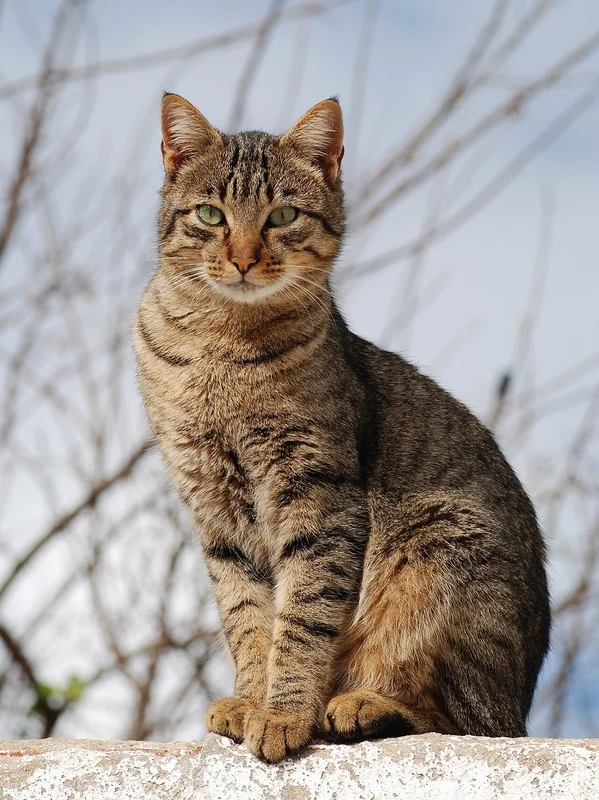 Featured phototennessee-rex.jpg
The Tennessee Rex is a TICA experimental cat breed with a curly coat and a distinctive satin or shimmery sheen to the fur. First documented in 2004 when a feral orange tabby kitten was found in Tennessee by Franklin Whittenburg, the breed's curly coat carries a dominant mutation that also affects the hair shaft's light-reflecting properties, producing an unusual metallic sheen. TICA accepted the Tennessee Rex into its experimental registry.
Quick facts
- Origin country
- United States
- Origin period
- First documented 2004, Tennessee; TICA experimental registration
- Coat type
- Curly
- Coat colors
- All colors; distinctive satin sheen on curly coat
- Size category
- Medium
- Average lifespan
- 12-15 years
- Recognition
- TICA 2005
Origin
The Tennessee Rex was discovered in Tennessee in 2004 by Franklin Whittenburg, who found a feral kitten with an unusual curly, satin-sheened coat. The founding kitten, Donatello, was an orange tabby with a tightly curled coat that had a noticeably different light-reflecting quality compared to other Rex breeds. The Whittenburgs began a breeding program to establish and document the trait. TICA accepted the Tennessee Rex into its experimental new breed program. The mutation appears to be dominant: a single copy produces the curly coat and satin sheen.
The Satin Sheen
The most distinctive feature of the Tennessee Rex, beyond its curly coat, is the metallic or satin sheen of the fur. This optical effect is caused by how the hair shafts reflect light differently from the typical matte or slightly glossy finish of other Rex coats. The precise mechanism producing this satin effect has been described by breeders as resulting from a different interaction of the hair shaft structure with light compared to other Rex mutations. The sheen is visible in multiple coat colors and appears as a shimmery or metallic quality on the curly coat surface.
Appearance
The Tennessee Rex is a medium-sized cat of moderate, semi-foreign type. The coat is curly, ranging from wavy to tightly curled, with the satin sheen visible throughout. The whiskers are typically curled or kinked. The body is moderately muscular without extreme features. All colors are accepted. The breeding population is small, keeping the breed rare, but TICA's experimental registration has allowed breeders to exhibit Tennessee Rex cats at sanctioned shows and continue breed development documentation.
Sources & further reading (2)
- encyclopedia — accessed 2026-05-07
- registry-breed-profile — accessed 2026-05-07
Frequently asked questions
What makes the Tennessee Rex different from other Rex breeds?
The Tennessee Rex has both a curly coat and a distinctive satin or metallic sheen that other Rex breeds lack. The satin quality is caused by a property of the hair shaft that affects how it reflects light, producing a shimmery or metallic finish. This satin sheen is the trait most commonly cited to distinguish the Tennessee Rex from the Cornish Rex, Devon Rex, and Selkirk Rex.
When did TICA recognize the Tennessee Rex?
TICA accepted the Tennessee Rex into its experimental new breed program in 2005, one year after the founding cat Donatello was discovered in Tennessee. The breed has remained in experimental status and has not achieved full TICA championship recognition as of 2026.
Is the Tennessee Rex mutation dominant or recessive?
The Tennessee Rex mutation appears to be dominant: cats carrying a single copy of the mutation express the curly coat and satin sheen. This is different from some Rex mutations (such as the Cornish Rex) that are recessive. A dominant mutation means that crossing a Tennessee Rex with a non-Rex produces approximately half curly-coated offspring.