Felis catus
California Rex
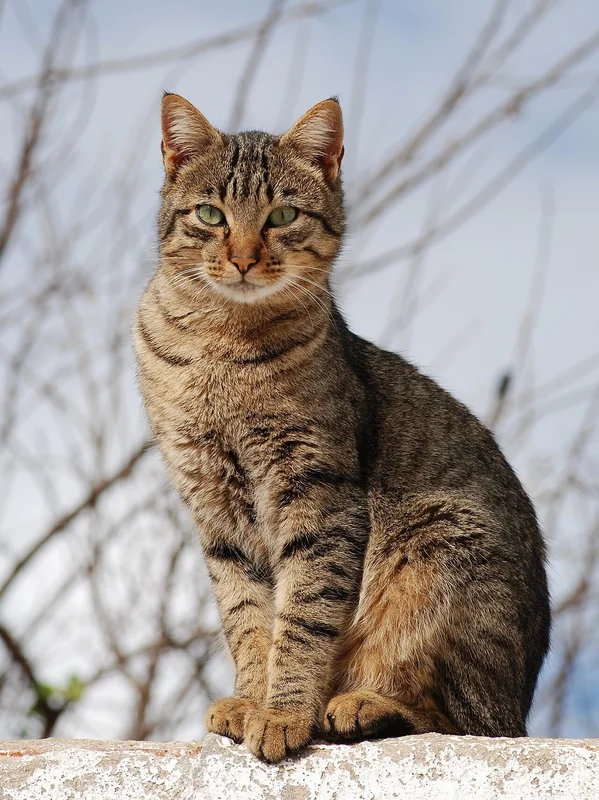 Featured photocalifornia-rex.jpg
The California Rex was a curly-coated Rex cat breed first documented in California, USA in the 1950s, distinct from the concurrent Cornish Rex, Oregon Rex, and later Devon Rex mutations. The California Rex mutation was developed for a period in the American cat fancy before being absorbed into the broader Rex breeding programs through crosses with Cornish and Devon Rex cats. Like the Oregon Rex, the California Rex is now a historical breed with its specific mutation no longer existing as a pure line.
Quick facts
- Origin country
- United States
- Origin period
- First documented 1950s, California; absorbed into Rex lines, extinct as pure breed by 1980s
- Coat type
- Curly
- Coat colors
- All colors (historical breed)
- Size category
- Medium
- Average lifespan
- 10-15 years
- Recognition
- —
Origin
The California Rex appeared in California in the 1950s as a spontaneous curly-coat mutation in domestic cat populations. Early cat fancy literature sometimes called it the Marcel Rex, after the Marcel wave hair-styling technique, to describe the wave pattern of the coat. The California Rex mutation was demonstrated to be genetically distinct from the concurrent Cornish Rex through test crosses that produced straight-coated F1 kittens, confirming the two mutations were at different loci. American breeders exhibited the California Rex alongside the Oregon Rex and Cornish Rex as evidence of the multiple independent Rex mutations arising worldwide in the mid-20th century.
Absorption
The California Rex, like the Oregon Rex, was gradually absorbed into the Devon Rex and Cornish Rex gene pools through selective crosses in the 1960s and 1970s. American breeders crossed California Rex cats with the internationally recognized Rex breeds to improve body type and standardize the Rex gene pool. As pure California Rex lines were not maintained separately, the specific California Rex mutation became diluted and was eventually lost as a distinct allele. By the 1980s, no pure California Rex lines were documented in the American cat fancy.
Historical Significance
The California Rex, alongside the Oregon Rex, the Cornish Rex, and others, forms part of the documented history of spontaneously occurring Rex mutations in domestic cats worldwide in the 20th century. These mutations demonstrate that the curly-coat trait can arise repeatedly and independently from different genetic causes. The pattern of independent Rex mutations appearing in different geographic locations — including England (Cornish, Devon), Germany (German Rex), the United States (Oregon, California, Selkirk, Tennessee), Russia (Urals), and the Czech Republic (Bohemian) — is one of the remarkable features of domestic cat genetics.
Sources & further reading (2)
- encyclopedia — accessed 2026-05-07
- encyclopedia — accessed 2026-05-07
Frequently asked questions
Is the California Rex extinct?
Yes. The pure California Rex mutation is no longer present in any living cat breed. The specific mutation was absorbed into the Cornish Rex and Devon Rex gene pools through crosses in the 1960s-1970s. The California Rex is documented in mid-20th-century American cat fancy literature as one of several independently arising Rex mutations of that period.
What was the Marcel Rex?
Marcel Rex was an alternative name for the California Rex used in some early American cat fancy literature. The name referenced the Marcel wave technique, a popular 1920s-1950s hair-styling method that created a similar-looking wave pattern, which breeders used to describe the coat of the California Rex kittens.
How many distinct Rex mutations have been documented in cats?
Multiple distinct Rex mutations have been documented in domestic cats. Known distinct mutations include: Cornish Rex (1950, England), Devon Rex (1960, England), Oregon Rex (1944, USA), California Rex (1950s, USA), German Rex (1930s, Germany), Selkirk Rex (1987, USA), LaPerm (1982, USA), Tennessee Rex (2004, USA), Urals Rex (mid-20th century, Russia), Bohemian Rex (Czech Republic), and others. Each is caused by a different gene or allele affecting hair structure.