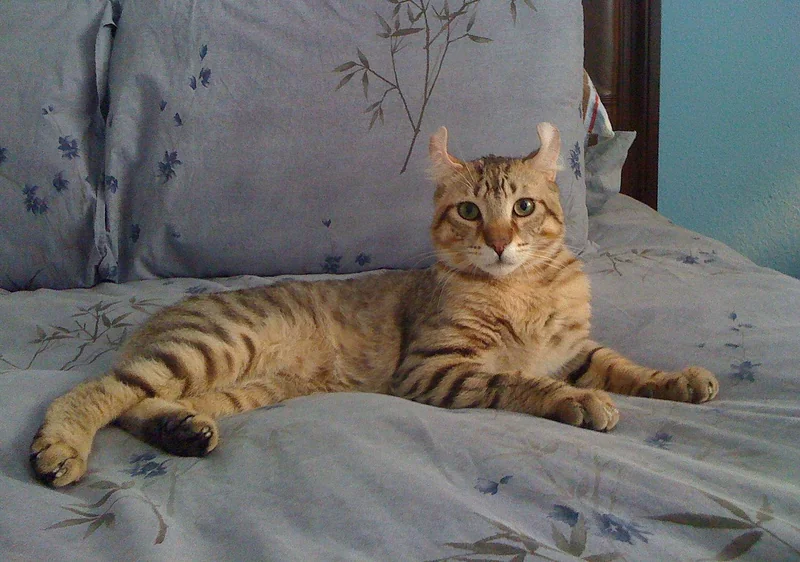
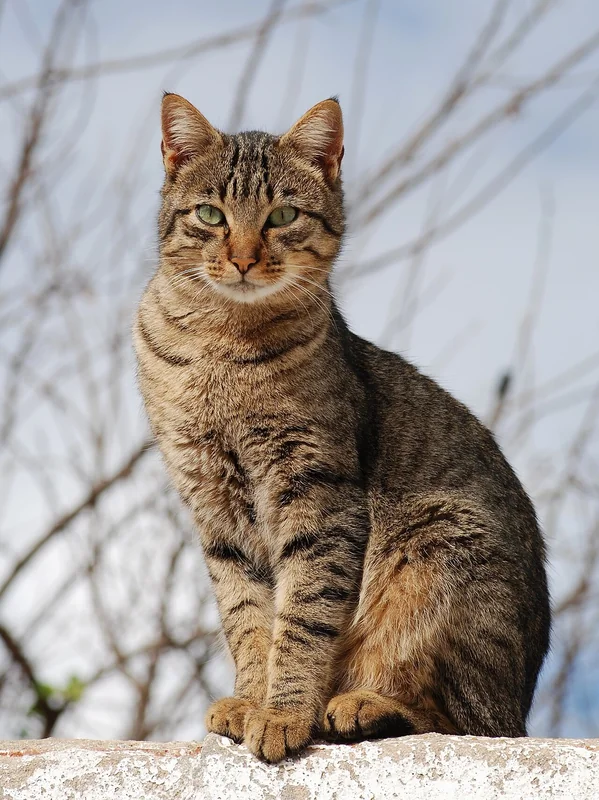
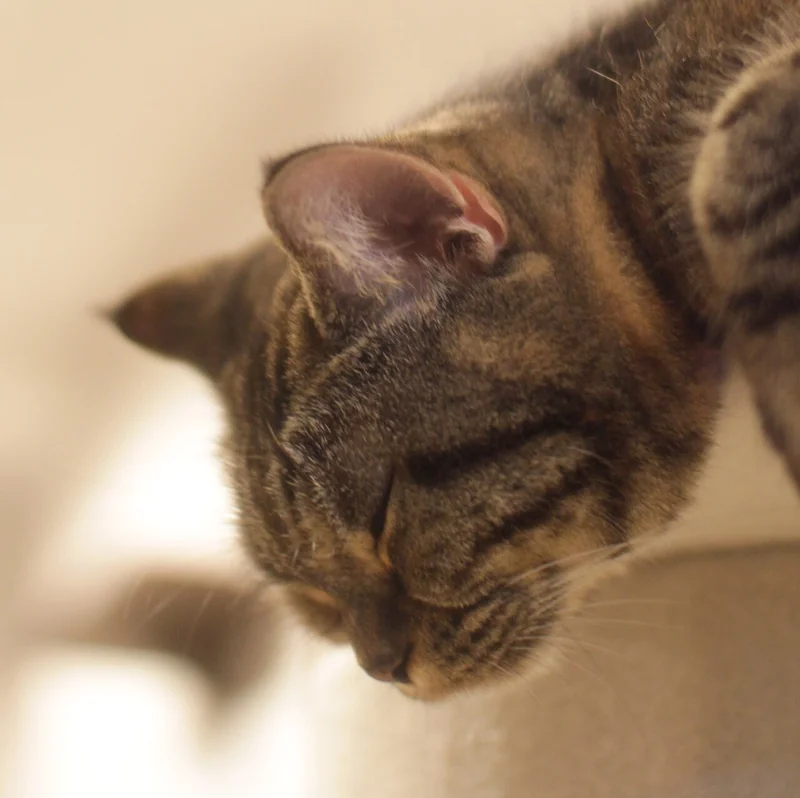
Felis catus
American Bobtail
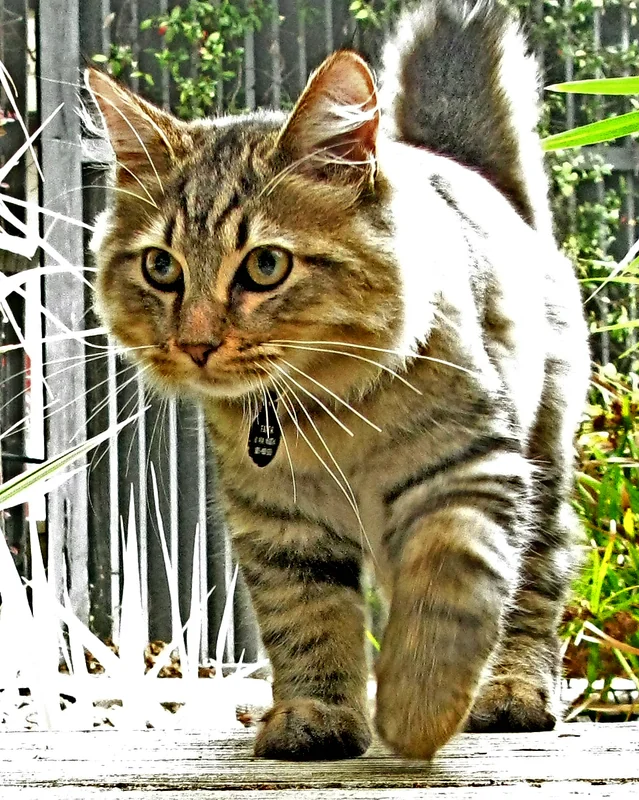 Featured photoamerican-bobtail.jpg
The American Bobtail is a North American breed defined by a natural short, kinked tail caused by a dominant gene distinct from the Manx, Japanese Bobtail, and Kurilian Bobtail mutations. The foundation cat, Yodi, was found by John and Brenda Sanders on an Arizona Native American reservation in the 1960s. TICA recognized the breed in 1989 and CFA granted championship status in 2006. The standard describes a medium-large, muscular cat with a wild bobcat-like silhouette and a tail one-third to one-half the length of a normal cat tail.
Quick facts
- Origin country
- United States
- Origin period
- 1960s natural mutation in Arizona (Yodi); modern programme from 1970s (Sanders)
- Coat type
- Short
- Coat colors
- All colours and patterns recognized in shorthair and longhair varieties; tabby and bicolour are most common
- Size category
- Medium
- Average lifespan
- 13-15 years
- Recognition
- CFA 2006 · TICA 1989
Origin
John and Brenda Sanders found a short-tailed brown tabby kitten on an Arizona Native American reservation in the 1960s and named him Yodi. Yodi was crossed with the Sanders' Siamese-Burmese pet Mishi, producing bobtailed offspring that confirmed the dominant inheritance of the gene. Subsequent breeders developed the lineage through outcrosses to other naturally bobtailed cats found across North America, deliberately avoiding crosses to known Asian bobtail breeds so the gene pool remained genetically distinct from the Japanese Bobtail and Kurilian Bobtail.
Recognition
TICA accepted the American Bobtail for registration in 1989 and granted championship status. CFA accepted the breed for registration in 2002 and granted full championship status in 2006. GCCF and FIFe have not published American Bobtail standards. Both shorthair and longhair varieties are recognized under a single breed standard by both CFA and TICA.
Standard
The CFA standard describes a medium to large, well-muscled cat with a strongly hunter-like appearance — broad chest, substantial bone, and slightly longer hind legs giving an almost bobcat-like silhouette. The head is a broad modified wedge with prominent brow ridge, wide-set ears, and almond-shaped eyes. The defining characteristic is the natural short tail: one-third to one-half the length of a normal cat tail, with bumps, kinks, or curves. The shorthair coat is medium in length with a slight loft; the longhair variety has a similar texture with longer guard hairs and a slight ruff.
Sources & further reading (3)
- registry-breed-profile — accessed 2026-04-30
- encyclopedia — accessed 2026-04-30
- tica-standard — accessed 2026-04-30
Frequently asked questions
Is the American Bobtail tail the same mutation as the Manx?
No. The American Bobtail's bobtail gene is autosomal dominant but is not allelic with the Manx, Japanese Bobtail, or Kurilian Bobtail mutations. Breeders deliberately avoided crosses with those breeds to maintain a genetically distinct line. The American Bobtail tail is typically longer (one-third to one-half normal tail length) than the Manx Rumpy or Japanese Bobtail pom-pom.
When was the American Bobtail recognized?
TICA accepted the American Bobtail for registration in 1989 and granted championship. CFA accepted the breed in 2002 and granted full championship status in 2006. GCCF and FIFe have not published American Bobtail standards.
Are short and long-haired American Bobtails the same breed?
Yes. CFA and TICA recognize both shorthair and longhair American Bobtails as a single breed under the same standard. The only difference is coat length and texture; all other body and tail characteristics are identical between the two varieties.