Felis catus
Kuchinta
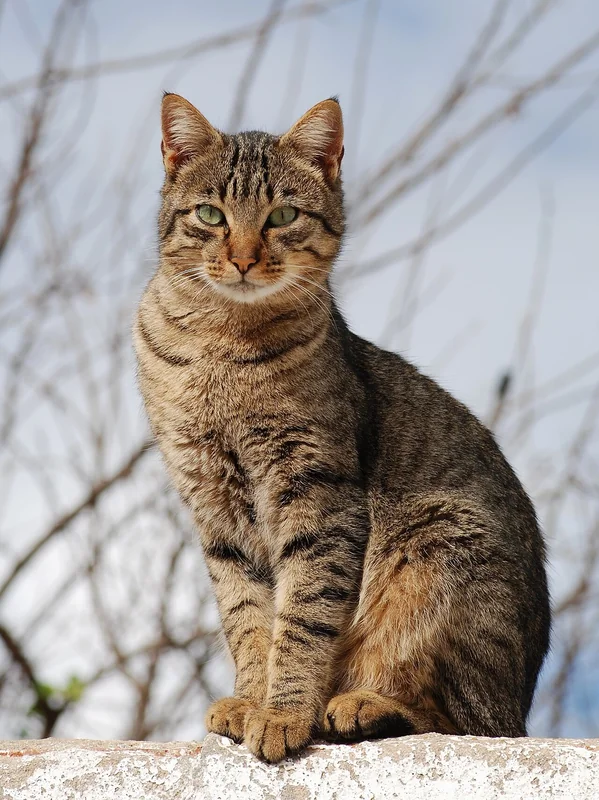 Featured photokuchinta.jpg
The Kuchinta (also Kucing Malaysia or Piawaian Kucing Malaysia) is a natural short-tailed domestic cat native to peninsular Malaysia. Short-tailed cats are common throughout Southeast Asia; the Malaysian variant has been present for centuries and is distinct from the more widely known Japanese Bobtail and Kurilian Bobtail in its genetic basis and regional history. Malaysian cat preservation efforts since the 2000s have worked to document and promote recognition for the Kuchinta as a distinct heritage breed.
Quick facts
- Origin country
- Malaysia
- Origin period
- Ancient Malaysian native breed; modern documentation from 2000s
- Coat type
- Short
- Coat colors
- All colors and patterns, Tabby common, Bicolor, Solid
- Size category
- Medium
- Average lifespan
- 12-17 years
- Recognition
- —
Origin
Short-tailed cats are found throughout Southeast Asia from Japan to Indonesia, suggesting that bobtail mutations arose multiple times independently or spread along ancient trade routes. The Kuchinta represents the specifically Malaysian form of the Southeast Asian bobtail type. Cats with short tails and the other Kuchinta characteristics have been part of Malaysian domestic cat populations for centuries. The modern breed recognition effort began in the early 2000s when Malaysian cat fanciers drafted a standard and began presenting the Kuchinta at Malaysian and international cat events as a heritage breed.
Recognition Efforts
The Kuchinta is recognized by the Persatuan Kucing Malaysia (Malaysia Cat Society) and some affiliated Southeast Asian cat organizations. Major international registries including CFA, TICA, GCCF, and FIFe had not accepted the Kuchinta as of 2026. The breed shares its registration challenges with other regional heritage cats such as the Bahraini Dilmun and Lao cat, which also lack major registry recognition despite having documented histories in their home regions.
Appearance
The Kuchinta is a medium-sized, moderately foreign cat of typical Southeast Asian domestic type: a moderately triangular head, medium-sized ears, almond-shaped eyes, and a lean, slightly tubular body. The most distinctive feature is the short tail, which may be a simple stump, a kinked short tail, or a curled-over spiral like that of the Southeast Asian bobtail type. The tail length and shape vary between individuals. The coat is short, smooth, and lies flat. All colors and patterns occur in the natural population; no single color dominates the breed standard.
Sources & further reading (2)
- encyclopedia — accessed 2026-05-07
- encyclopedia — accessed 2026-05-07
Frequently asked questions
Is the Kuchinta the same as the Japanese Bobtail?
No. The Kuchinta and Japanese Bobtail are both short-tailed Southeast Asian cats, but they are distinct regional populations with different histories. The Japanese Bobtail has a fully documented history, has been recognized by CFA and TICA since 1976, and carries a specific genetic mutation. The Kuchinta is a Malaysian heritage breed with a separate documentation and recognition effort that had not achieved major registry status as of 2026.
What does Kuchinta mean?
Kuchinta means 'short-tailed cat' in Malay. The word refers to the cat's most distinctive physical feature: the naturally short or kinked tail. In Malaysia, short-tailed domestic cats are found throughout the peninsula and are considered a natural part of the local cat fauna.
Can Kuchinta cats be registered internationally?
As of 2026, major international registries (CFA, TICA, GCCF, FIFe) do not maintain separate Kuchinta registrations. Malaysian cat organizations recognize the breed, and efforts to achieve international recognition continue. Until formal registry recognition is achieved, Kuchinta cats bred outside Malaysia cannot be registered under their breed name with major international cat registries.