Felis catus
European Longhair
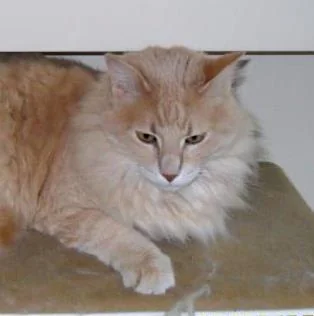
The European Longhair is the semi-longhaired counterpart of the European Shorthair, derived from the same Central European landrace cat population. The World Cat Federation and several European national registries recognize the breed. The standard describes a medium to large, sturdy cat with a semi-long, dense coat and a diverse range of traditional colours and patterns.
Quick facts
- Origin country
- Central Europe
- Origin period
- Standardized as a longhaired counterpart to the European Shorthair; WCF recognition
- Coat type
- Long
- Coat colors
- Black, Blue, Red, Cream, Tortoiseshell, Blue-cream, All tabby patterns, Bicolour and van patterns, Smoke and shaded
- Size category
- Large
- Average lifespan
- 12–16 years
- Recognition
- —
Origin
The European Longhair is bred from the same indigenous Central European domestic cat gene pool as the European Shorthair. Longhaired individuals arise naturally in this population through the recessive long-hair gene. European cat fanciers selectively bred and standardized these longhaired individuals into a breed distinct from the Norwegian Forest Cat and Maine Coon, emphasizing a stockier, more cobby type with a broad range of traditional colours and patterns.
Standard
The WCF standard describes a medium to large, robust, well-muscled cat with a rounded head, medium-sized ears, and large round eyes. The coat is semi-long to long, dense, with a substantial undercoat and a prominent ruff. Tail and ear tufts are desirable. All traditional colours and patterns are accepted; colourpoint is not accepted in most national standards for this breed.
Relationship to Other European Longhairs
The European Longhair occupies a niche between the Norwegian Forest Cat (wild-type, forest-adapted, FIFe-recognized) and the non-pedigree European domestic longhair. The WCF standard distinguishes it from the Norwegian Forest Cat by its rounder head, less triangular facial structure, and broader colour acceptance. Unlike the Siberian (Russian origin) and the Norwegian Forest Cat (Scandinavian origin), the European Longhair represents Central European longhair diversity — cats that lack the specific adaptations of the Nordic breeds.
Sources & further reading (2)
- encyclopedia — accessed 2026-05-27
- registry-breed-profile — accessed 2026-05-27
Frequently asked questions
How does the European Longhair differ from the Norwegian Forest Cat?
The Norwegian Forest Cat has a more triangular head, a longer body, a distinctly water-repellent double coat adapted to Nordic conditions, and a specific tufted ear and paw profile. The European Longhair has a rounder head, a more cobby body type, and a broader range of accepted colours including non-tabby patterns rarely seen in the NFC standard.
Does FIFe recognize the European Longhair?
FIFe does not separately recognize the European Longhair. FIFe's Continental longhair breeds are the Norwegian Forest Cat, Maine Coon, and Siberian. The European Longhair is recognized by the WCF and several national registries in Continental Europe.
Is the European Longhair recognized by FIFe?
FIFe does not separately recognize the European Longhair. FIFe's semi-longhair category includes the Norwegian Forest Cat, Maine Coon, Siberian, and Ragdoll among others, but not a separate European Longhair breed. The WCF and several Continental European national registries recognize the European Longhair independently.