Felis catus
American Polydactyl Longhair
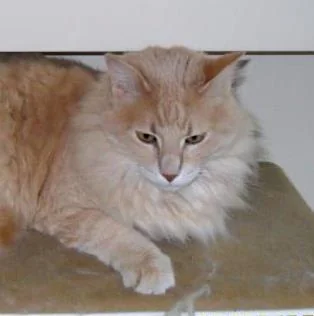
The American Polydactyl Longhair is the longhaired division of the American Polydactyl, a naturally occurring polydactyl breed with roots in New England and the maritime tradition of keeping multi-toed cats as ship's cats. TICA carries the breed in its registration programme. The standard describes a medium to large, sturdy cat with extra toes and a semi-long to long, silky coat.
Quick facts
- Origin country
- United States (New England)
- Origin period
- Natural polydactyl gene pool documented in New England from at least the 17th century; TICA registration programme
- Coat type
- Long
- Coat colors
- All colours and patterns
- Size category
- Large
- Average lifespan
- 12–16 years
- Recognition
- —
Origin
Polydactyl cats in New England are documented in records from the 17th century. Sailors favored them as ship's cats, believing the extra toes provided balance. The Hemingway home in Key West, Florida, maintains a colony of polydactyl descendants today. The American Polydactyl breed standard distinguishes the breed by focusing on the polydactyl trait as a defining characteristic, separate from other breeds that may also exhibit polydactyly.
Standard
The TICA draft standard describes a medium to large, sturdy, well-muscled cat with extra toes — typically 6–7 on the forefeet — resulting from the dominant Pd gene. The head is broad with medium-large ears and round to oval eyes. The longhair division has a semi-long to long, silky coat with a full ruff and plumed tail. All colours and patterns are accepted.
Polydactyl Gene and CFA Position
The American Polydactyl carries the autosomal dominant Pd gene, which produces extra digits on the forepaws (and occasionally the hind paws). CFA does not recognize the breed and penalizes polydactyly as a disqualifying fault in all other breed standards. TICA's acceptance of the American Polydactyl in its registration programme represents a deliberate divergence from CFA policy, recognizing polydactyly as a defining characteristic rather than a structural fault.
Sources & further reading (2)
- encyclopedia — accessed 2026-05-27
- registry-breed-profile — accessed 2026-05-27
Frequently asked questions
Is the American Polydactyl the same as the Hemingway Cat?
The Hemingway Cat is an informal name for any polydactyl cat associated with the Hemingway Key West colony. The American Polydactyl is a formally standardized breed that carries the same dominant Pd gene but is bred to a specific conformation standard separate from the general polydactyl cat population.
Does CFA recognize the American Polydactyl?
CFA does not recognize the American Polydactyl as a separate breed and penalizes polydactyly as a disqualifying fault in most breed standards. TICA accepts it in its registration programme.
Can an American Polydactyl Longhair be shown at CFA shows?
No. CFA does not recognize the American Polydactyl and disqualifies polydactyly in all other breed standards. American Polydactyl Longhairs can be shown through TICA's registration programme exhibitions.