Felis catus
Ceylon Longhair
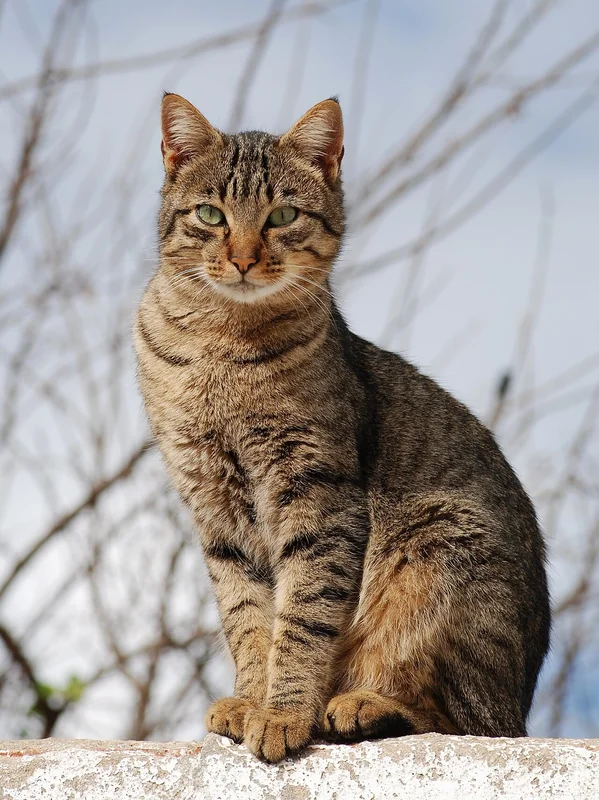
The Ceylon Longhair is the longhaired division of the Ceylon cat, a natural landrace breed from Sri Lanka recognized by FIFe in 1984. The standard describes a small to medium-sized, slender cat with a ticked tabby pattern and a soft, silky semi-long coat.
Quick facts
- Origin country
- Sri Lanka (formerly Ceylon)
- Origin period
- Natural landrace of Sri Lanka; Italian veterinarian Paolo Pellegatta introduced it to Italy 1984; FIFe recognition 1984
- Coat type
- Long
- Coat colors
- Black ticked tabby (Mannikin), Blue ticked tabby, Red ticked tabby, Tortoiseshell ticked tabby, All ticked tabby colours
- Size category
- Small
- Average lifespan
- 12–15 years
- Recognition
- FIFe 1984
Origin
The Ceylon cat originates from the natural domestic cat population of Sri Lanka (formerly Ceylon). Italian veterinarian Paolo Pellegatta discovered the breed while working in Sri Lanka in the early 1980s and introduced foundation cats to Italy. FIFe recognized the breed in 1984 — one of the first recognitions of a South Asian landrace breed by a major international registry. The breed is concentrated in Italy; the longhair division reflects the natural semi-long coat expression found within the Sri Lankan population.
Standard
The FIFe standard describes a small to medium-sized, slender, elegant cat with a slightly rounded wedge head, large eyes, and a short, silky ticked agouti coat. The defining characteristic is the ticked tabby pattern: each hair has multiple bands of colour, and the body shows no distinct tabby striping (analogous to the Abyssinian pattern). The longhair division has a semi-long, fine, silky coat with the same ticking, a full ruff, and a plumed tail. All ticked tabby colour permutations are accepted.
Italian Connection
The Ceylon cat's discovery and introduction to international felinology was the work of one person: Italian veterinarian Paolo Pellegatta, who worked in Sri Lanka in the early 1980s. Pellegatta recognized the distinctive ticked tabby cats of Sri Lanka as a potentially unique breed and imported foundation cats to Italy. Italy remains the primary stronghold of Ceylon cat breeding outside Sri Lanka. FIFe's 1984 recognition was partly facilitated by the Italian felinological community's advocacy for the breed.
Sources & further reading (2)
- encyclopedia — accessed 2026-05-27
- registry-breed-profile — accessed 2026-05-27
Frequently asked questions
Is the Ceylon cat related to the Abyssinian?
Both the Ceylon and the Abyssinian have ticked agouti coats. The ticked pattern is ancestral in domestic cats and occurs independently in many landrace populations. The Ceylon is not derived from the Abyssinian; its ticked coat reflects independent selection within the Sri Lankan landrace rather than shared recent ancestry.
Where is the Ceylon cat most popular?
The Ceylon cat is most popular in Italy, where it was introduced by Paolo Pellegatta in the early 1980s. FIFe recognition has supported its spread in Continental Europe. The breed remains rare in North America and the UK.
Can the Ceylon cat be shown at CFA shows?
No. CFA does not recognize the Ceylon cat. The breed is recognized by FIFe and is shown primarily in FIFe-affiliated shows in Continental Europe, particularly Italy, Germany, and France. TICA does not currently carry the Ceylon cat.