Felis catus
Bristol Cat
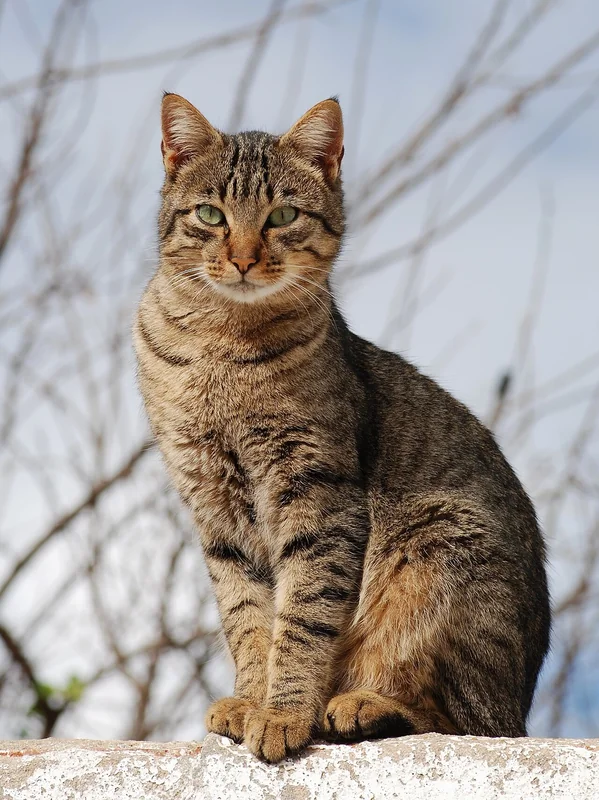 Featured photobristol.jpg
The Bristol was an experimental hybrid developed in the United States during the 1970s by crossing domestic cats with Margay wildcats. Breeders sought to capture the exotic spotted coat of the Margay in a domestic companion. Breeding challenges and ethical concerns over wildcat hybridization led to the program's discontinuation. The Bristol never achieved formal registry recognition and is now considered an extinct experimental breed, remembered as one of the earliest attempts to blend wild felid genetics into the domestic cat fancy.
Quick facts
- Origin country
- United States
- Origin period
- 1970s
- Coat type
- Short
- Coat colors
- spotted tabby, marbled tabby, brown spotted, tawny spotted
- Size category
- Medium
- Average lifespan
- 12-15 years
- Recognition
- —
Wild Origins
The Margay, a small wild felid of Central and South American rainforests, provided the exotic foundation for the Bristol. Known for its large luminous eyes and striking spotted coat, the Margay was selected to introduce visual drama not easily replicated through domestic breeding alone. Early-generation Bristol hybrids displayed bold rosette-like spots and intricate marbled patterns inherited from their wild parent.
Breeding Challenges and Decline
Wildcat hybrids frequently exhibit reduced fertility and behavioral unpredictability in early generations. Bristol F1 and F2 hybrids often showed wariness uncommon in domestic cats, and successive generations saw diluted spotting intensity. Without a reliable path to stable temperament combined with consistent wild patterning, breeders found the Bristol impractical to develop at scale, and the project was abandoned before the breed could be registered.
Legacy in Hybrid Cat History
The Bristol occupies a minor but notable place in hybrid cat history, developed in parallel with early Bengal breeding efforts. Both programs reflected a 1970s fascination with wild felid aesthetics in domestic settings. Where the Bengal succeeded using the Asian Leopard Cat, the Bristol's Margay foundation proved too challenging. The breed is occasionally cited in academic surveys of domestic-wild cat hybridization as an instructive example of the genetic and ethical complexities involved.
Sources & further reading (2)
- registry-breed-profile — accessed 2026-05-07
- external-reference — accessed 2026-05-07
Frequently asked questions
Is the Bristol cat still bred today?
No. The Bristol is considered an extinct experimental breed. The breeding program was discontinued in the 1970s before formal registry recognition was achieved, and no known active breeding programs exist.
What wild cat was used to create the Bristol?
The Margay (Leopardus wiedii), a small spotted wild felid native to Central and South America, was crossed with domestic cats to produce the Bristol hybrid.
Was the Bristol ever officially recognized by cat registries?
No. The Bristol was never recognized by CFA, TICA, GCCF, FIFe, or any major international cat registry. It remains an unregistered experimental breed in historical records.