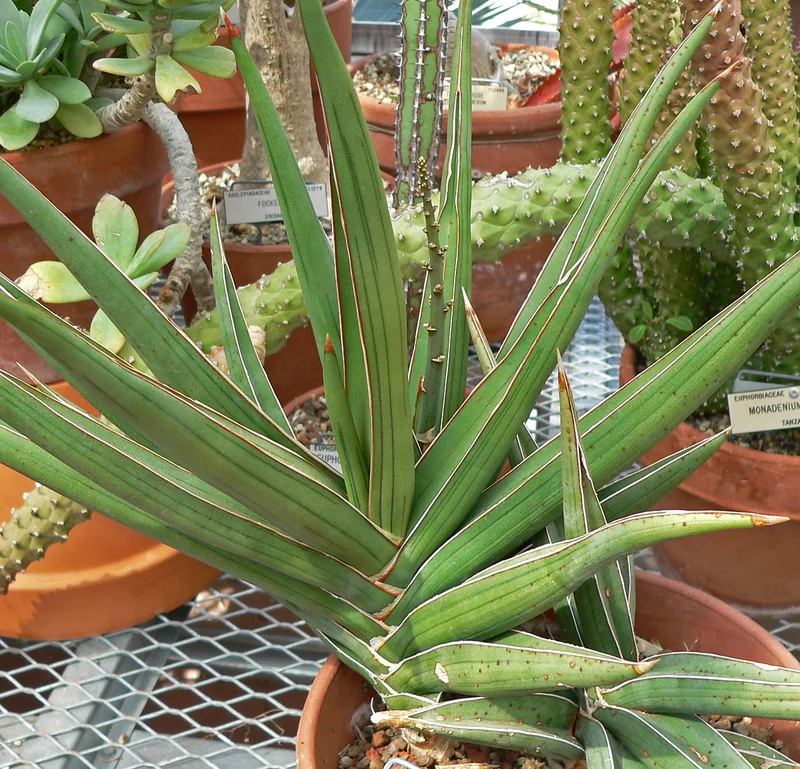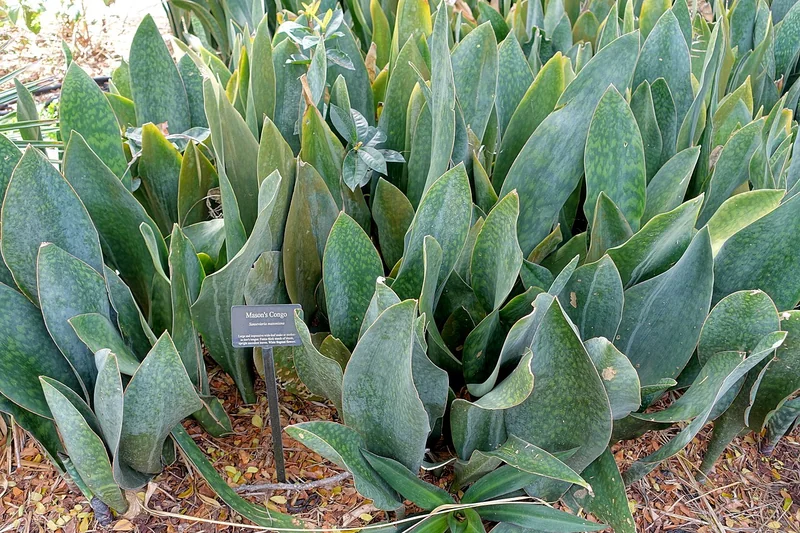
Sansevieria masoniana, now Dracaena masoniana, is the whale fin snake plant — a Congolese species that produces a single broad, paddle-shaped leaf per offset, growing up to 50 cm wide on a mature plant. The leaf is mottled in green and silver and the form is so striking that single-leaf rooted plants sell for high prices. Care is identical to other snake plants.
Care facts at a glance
- Light
- Bright indirect
- Water
- Water when the mix is fully dry — typically every 3 to 6 weeks.
- Humidity
- 30–50 %
- Temperature
- 15–29 °C
- Soil
- Cactus or succulent mix with extra perlite or pumice.
- Origin
- Forests of the Democratic Republic of the Congo.
- Mature size
- 60 to 120 cm tall, single leaves up to 50 cm wide.
Overview
Dracaena masoniana was described in the 1900s and named after the British plantsman L. Maurice Mason. The single-leaf form is species-typical — each new offset produces one large paddle leaf rather than the multi-leaf rosettes of other snake plants.
Care Priorities
- Bright filtered light or a few hours of direct sun.
- Water rarely; thick leaves store reserves for weeks.
- Use a heavy pot — single-leaf plants are top-heavy and tip easily.
- Free-draining cactus mix is non-negotiable.
Common Problems
Mushy leaf bases is overwatering — the leading cause of failure. Slow-to-no offsets is normal; whale fins push pups every 12 to 24 months. Brown leaf tips are usually old age.
Sources & further reading (2)
- encyclopedia — accessed 2026-04-28
- botanical-garden — accessed 2026-04-28
Frequently asked questions
Will my single-leaf whale fin produce more leaves?
Eventually, yes — but it can take a year or two. Each new offset emerges from the rhizome with its own single paddle leaf.
Sansevieria or Dracaena?
Reclassified into Dracaena in 2017. Trade still uses Sansevieria masoniana widely.
Why is my whale fin tipping over?
Single leaves are top-heavy. Use a wide, weighted pot or repot deeper into a larger container.