Haworthiopsis attenuata
Haworthiopsis attenuata (Zebra Plant) Care Guide
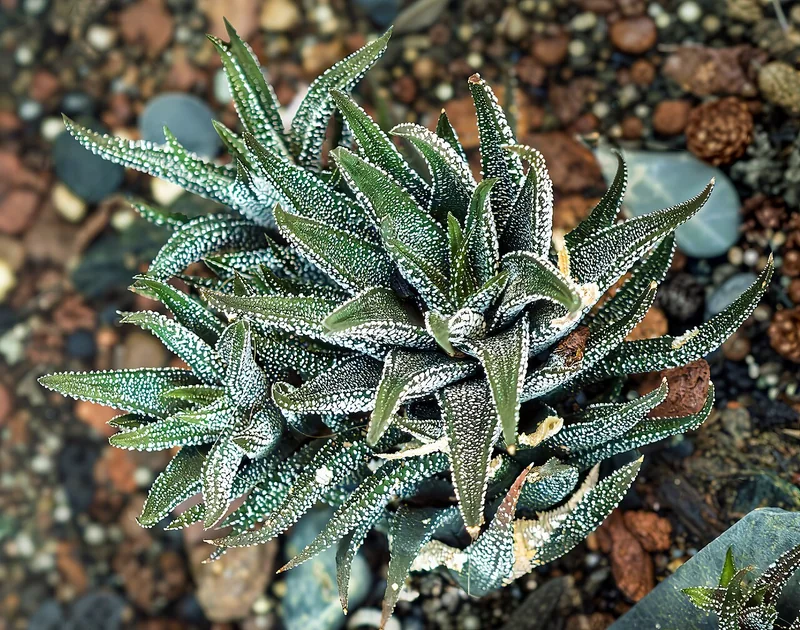 Featured photohaworthiopsis-attenuata.jpg
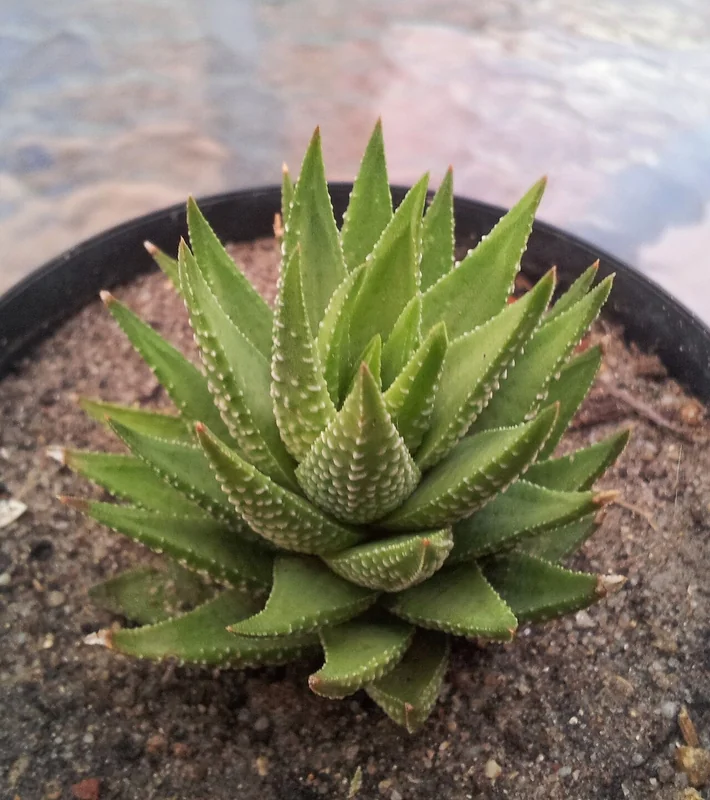
Haworthiopsis attenuata is the zebra plant succulent, a South African rosette succulent very similar to H. fasciata but with white tubercles on both upper and lower leaf surfaces, giving a heavier overall pattern. It tolerates the same lower-light conditions and is one of the easiest succulents for beginners. Most plants sold as Haworthia zebra are actually attenuata.
Care facts at a glance
- Light
- Bright indirect
- Water
- Water when the mix is fully dry.
- Humidity
- 30–50 %
- Temperature
- 15–27 °C
- Soil
- Free-draining cactus or succulent mix.
- Origin
- Eastern Cape, South Africa.
- Mature size
- 10 to 15 cm tall and wide.
Overview
Haworthiopsis attenuata is closely related to fasciata and easily confused with it. The double-sided tubercles are the diagnostic feature.
Care Priorities
- Bright indirect light or a little direct sun.
- Water rarely.
- Free-draining mix.
- Detach offsets in spring to propagate.
Common Problems
Mushy base is rot. Stretched rosette is low light. Brown tips are normal aging.
Sources & further reading (2)
- encyclopedia — accessed 2026-04-28
- botanical-garden — accessed 2026-04-28
Frequently asked questions
Attenuata vs fasciata?
Attenuata has tubercles on both upper and lower leaf surfaces; fasciata has them only underneath. Both look similar at a glance.
Best for beginners?
Yes — one of the easiest succulents because of its tolerance for lower light and irregular watering.
How often does it offset?
Mature plants produce 2 to 4 offsets per year in good conditions.