Kalanchoe marmorata
Kalanchoe marmorata (Penwiper Plant) Care Guide
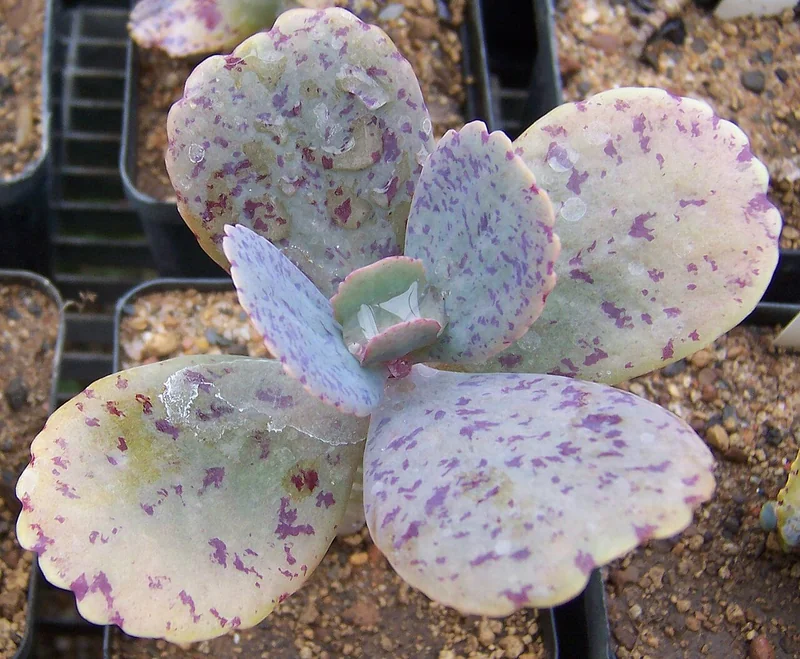 Featured photokalanchoe-marmorata.jpg
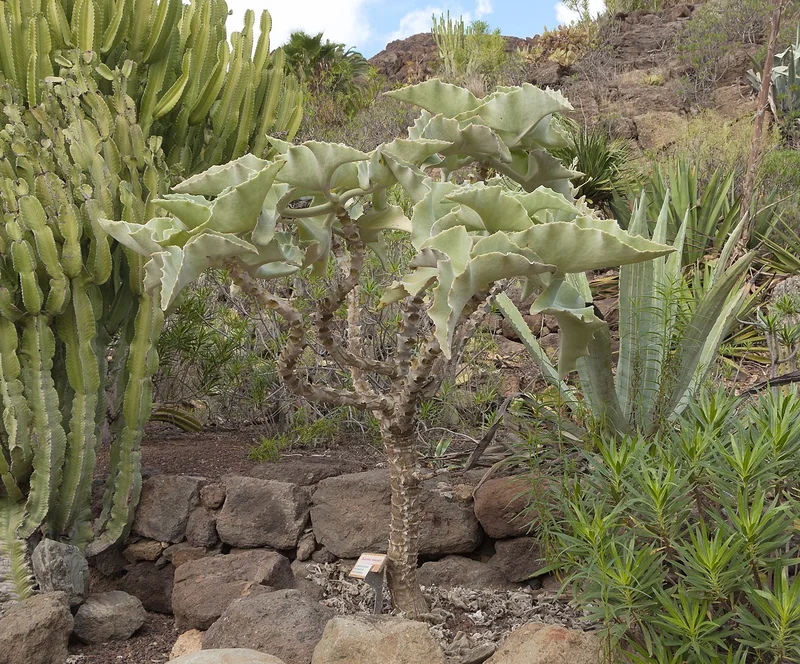
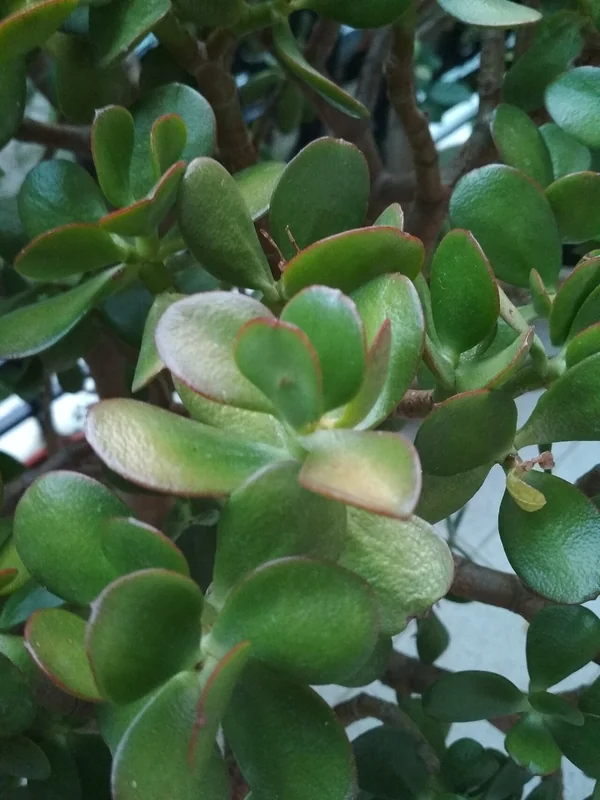
Kalanchoe marmorata, sold as Penwiper Plant, is a member of *Kalanchoe*, a genus of about 125 succulent Crassulaceae mostly from Madagascar and tropical Africa. An East African upright succulent with broad spoon-shaped pale grey-blue leaves marked with brown-purple irregular spots and blotches, hence the trade name 'Penwiper'. Reaches around 60 cm tall. Kalanchoe tolerates long dry spells, propagates readily from cuttings, and is one of the easiest succulent groups for indoor cultivation.
Care facts at a glance
- Light
- Bright indirect
- Water
- Water when the mix is fully dry.
- Humidity
- 30–50 %
- Temperature
- 15–27 °C
- Soil
- Free-draining cactus or succulent mix.
- Origin
- Madagascar and tropical Africa, with a few species across south-east Asia.
- Mature size
- 30 to 100 cm tall depending on species.
Overview
Kalanchoe marmorata sits in Kalanchoe, a genus that radiated extensively across Madagascar — the island holds the bulk of the species. An East African upright succulent with broad spoon-shaped pale grey-blue leaves marked with brown-purple irregular spots and blotches, hence the trade name 'Penwiper'. Reaches around 60 cm tall. Most cultivated kalanchoes share a strong tolerance of neglect, rapid propagation from cuttings, and a tendency to bloom heavily in late winter or early spring.
Care Priorities
- Bright filtered light or a few hours of direct morning sun.
- Water deeply when the mix is fully dry, then drain.
- Free-draining gritty mix.
- Cool dry winter rest encourages flowering.
Common Problems
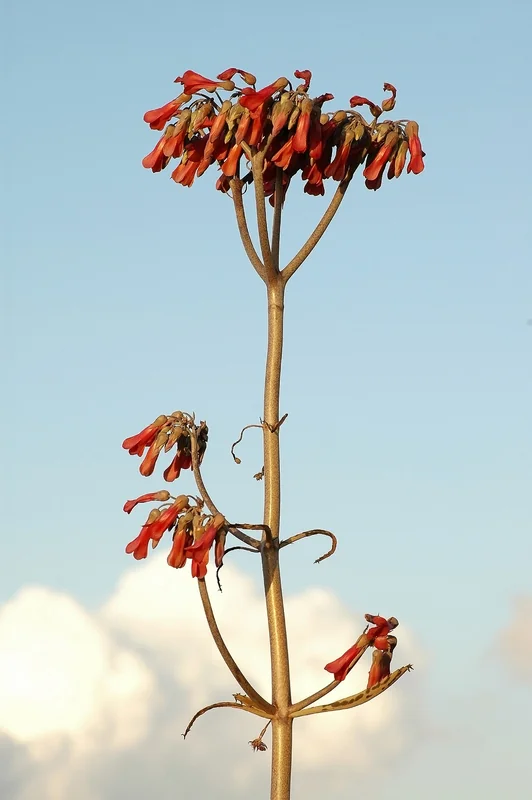
Mushy stems are overwatering — almost always fatal once it spreads to the base. Wilted leaves on a dry plant recover quickly after a deep watering. Aphids cluster on flower stalks and are easy to dislodge with a strong water spray.
Sources & further reading (2)
- encyclopedia — accessed 2026-04-29
- botanical-garden — accessed 2026-04-29
Frequently asked questions
Why are the leaves spotted?
The brown-purple spotting on K. marmorata leaves is genetic and species-typical, not a sign of disease. The pattern intensifies in bright light and stays consistent across mature plants.
How do I encourage flowering?
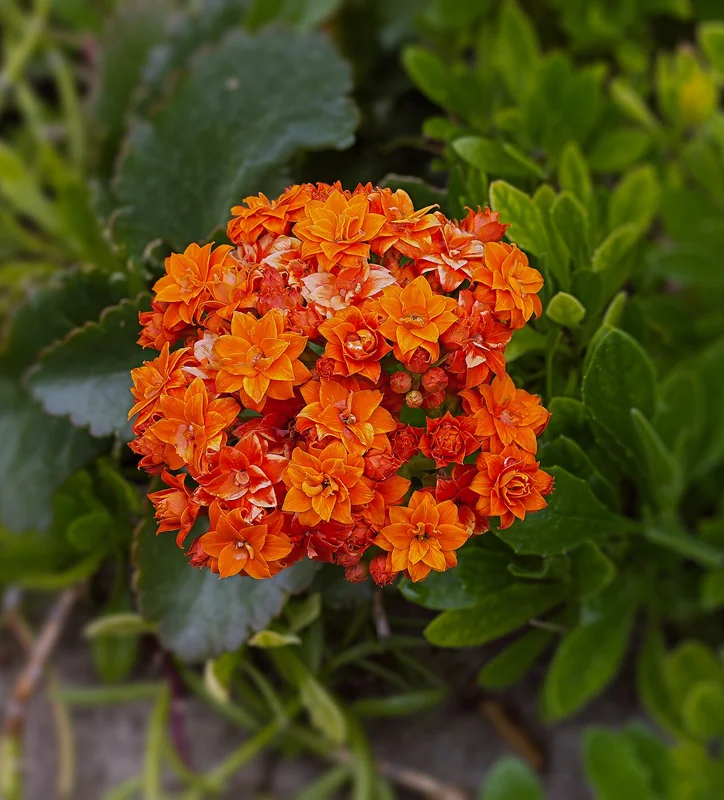
Most Kalanchoe set flower buds in response to long nights — a six-week period with about 14 hours of darkness each night reliably triggers blooming. A dark cupboard from early evening to morning works for indoor specimens.
Can I root broken pieces?
Yes — almost any leaf or stem fragment will root on dry succulent mix within a few weeks. Several Kalanchoe species (notably K. daigremontiana) even produce ready-rooted plantlets along their leaf margins.