Howea belmoreana
Howea belmoreana (Curly Palm) Care Guide
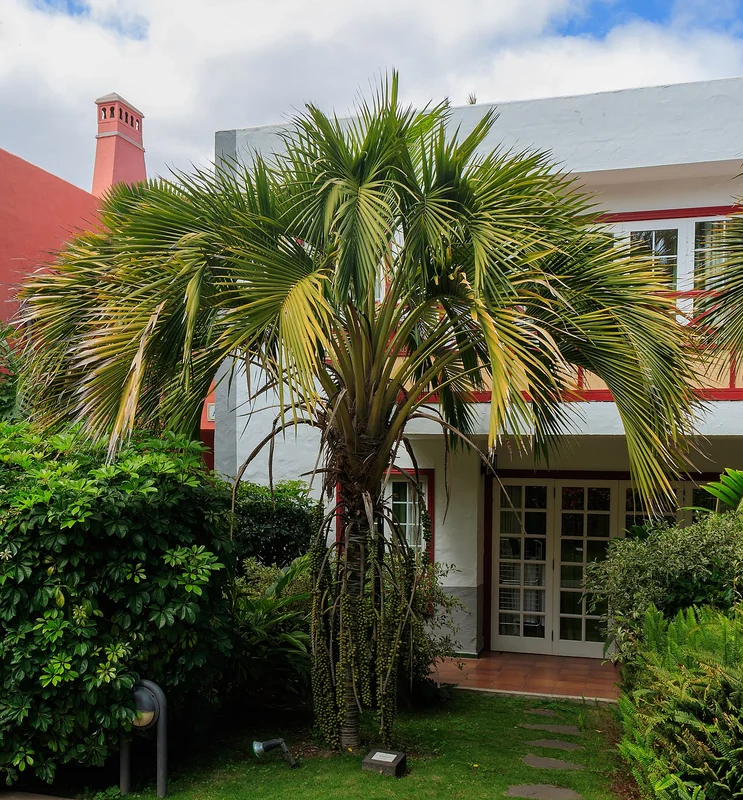 Featured photohowea-belmoreana.jpg
Howea belmoreana, sold as Curly Palm, is a member of Arecaceae, the palm family. A Lord Howe Island palm closely related to H. forsteriana but with more arched fronds whose leaflets curve upward, giving the species its 'curly' look. Slower-growing than H. forsteriana and rarer in cultivation. Indoor palms are slow growing in pots and tolerate lower light than most flowering plants — the small understorey palms have been kept indoors since Victorian conservatories and remain among the most reliable upright tropicals for indoor cultivation.
Care facts at a glance
- Light
- Bright indirect
- Water
- Water when the top 3 cm of mix has dried.
- Humidity
- 40–60 %
- Temperature
- 16–27 °C
- Soil
- Free-draining loamy palm mix with extra perlite for aeration; palms dislike heavy water-retentive substrate.
- Origin
- Specific origins vary by genus — Chamaedorea from Central America, Howea from Lord Howe Island, Rhapis from southern China and Vietnam.
- Mature size
- 1 to 3 m tall in cultivation depending on species; larger in habitat.
Overview
Howea belmoreana is a member of Arecaceae, the palm family, with about 2,600 species across the tropics and subtropics. A Lord Howe Island palm closely related to H. forsteriana but with more arched fronds whose leaflets curve upward, giving the species its 'curly' look. Slower-growing than H. forsteriana and rarer in cultivation. Most palms grow slowly and resent root disturbance — repot only when the roots have densely filled the existing pot, and then size up by a single pot diameter rather than dramatically.
Care Priorities
- Bright filtered light, never direct midday sun (which scorches the fronds).
- Free-draining loamy mix; palms resent heavy water-retentive substrate.
- Water when the top 3 cm of mix has dried; reduce in winter.
- Wipe fronds occasionally to keep stomata clear and check for spider mites.
Common Problems
Brown frond tips usually trace back to dry air, fluoride in tap water, or under-watering. Spider mite infestations are very common in dry indoor air; rinse fronds monthly to discourage them. Yellow lower fronds are normal aging — trim at the base.
Sources & further reading (2)
- encyclopedia — accessed 2026-04-29
- botanical-garden — accessed 2026-04-29
Frequently asked questions
How is H. belmoreana different from H. forsteriana?
Both species share Lord Howe Island and look similar at first glance. H. belmoreana has more strongly arched fronds with curved leaflets, while H. forsteriana has straighter, more horizontal fronds. H. belmoreana also grows more slowly and stays more compact indoors.
How often should I repot a palm?
Most indoor palms prefer to stay slightly root-bound. Repot every three to five years, sizing up only one pot diameter at a time and always in spring. Frequent repotting checks growth and stresses the rootball.
Why are spider mites so bad on palms?
Indoor palms are particularly prone to spider mites because dry indoor air suits the mites and the dense pinnate fronds give them excellent shelter. A monthly leaf rinse with lukewarm water dislodges mite populations and is the most reliable preventative measure.